Ramsey MediaWorks Appears On THE OAKLEY PODCAST

Ramsey MediaWorks Appears On THE OAKLEY PODCAST

2025-04-07 Marketing and Advertising
← Back to Blog

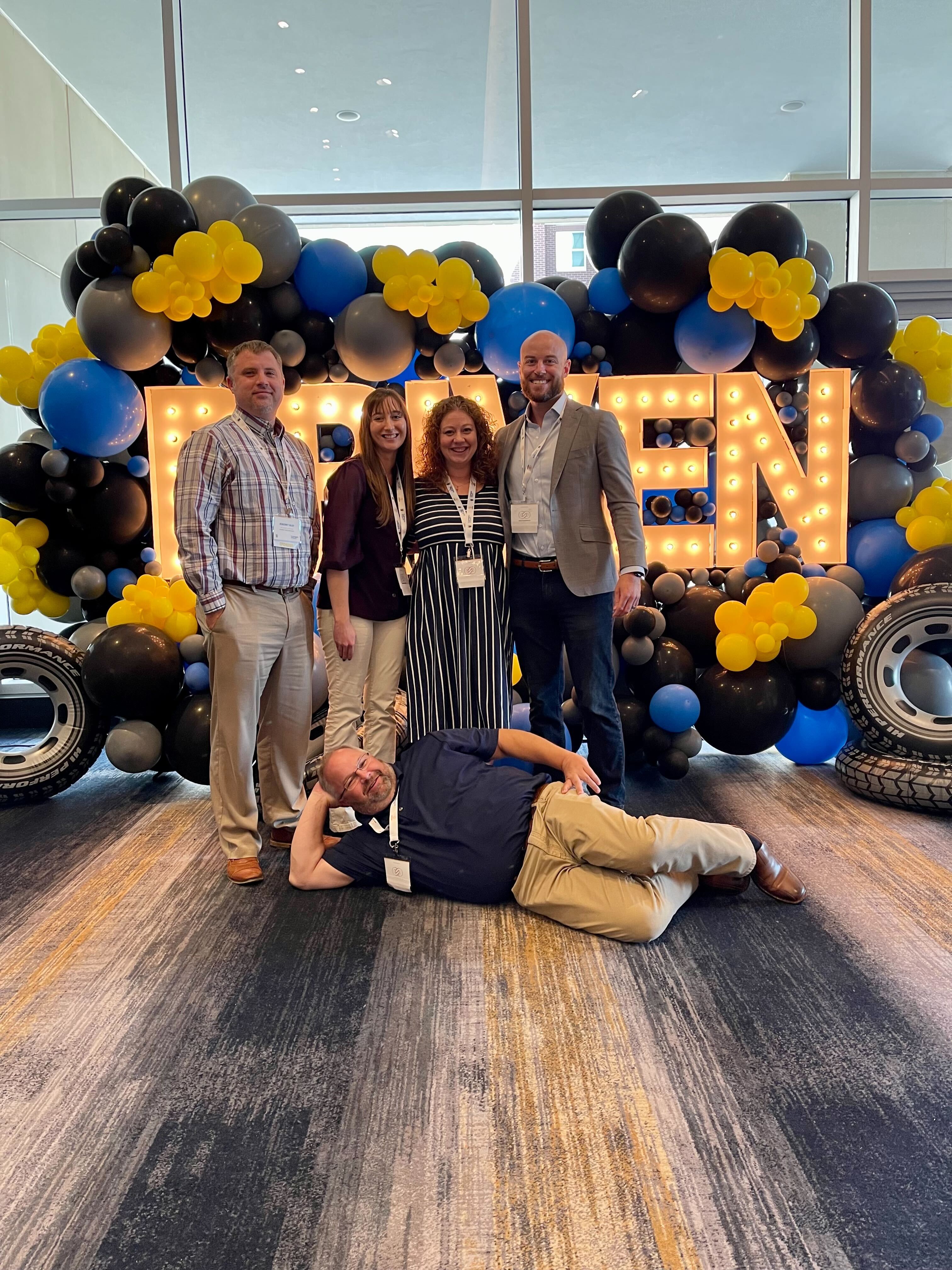
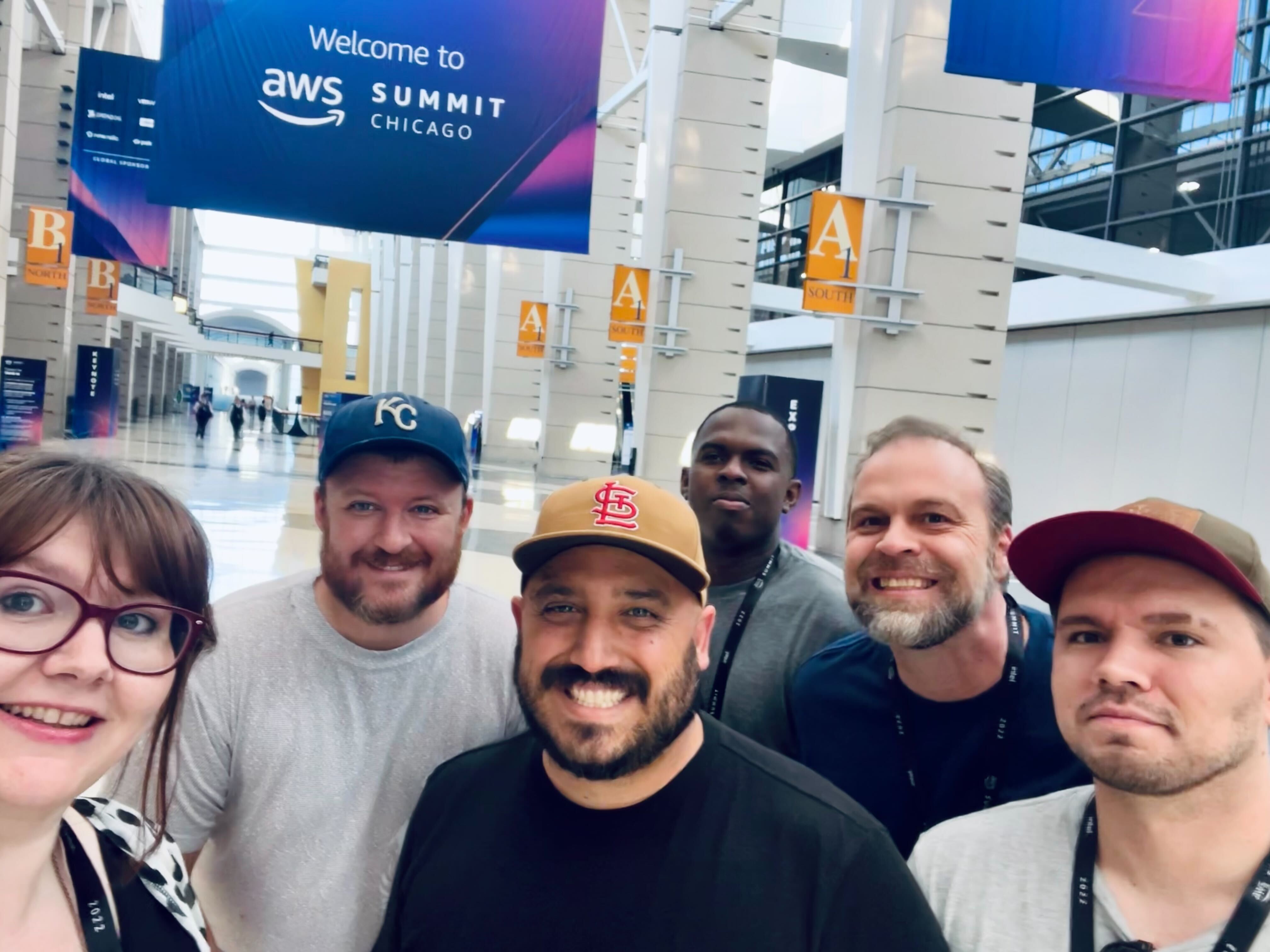
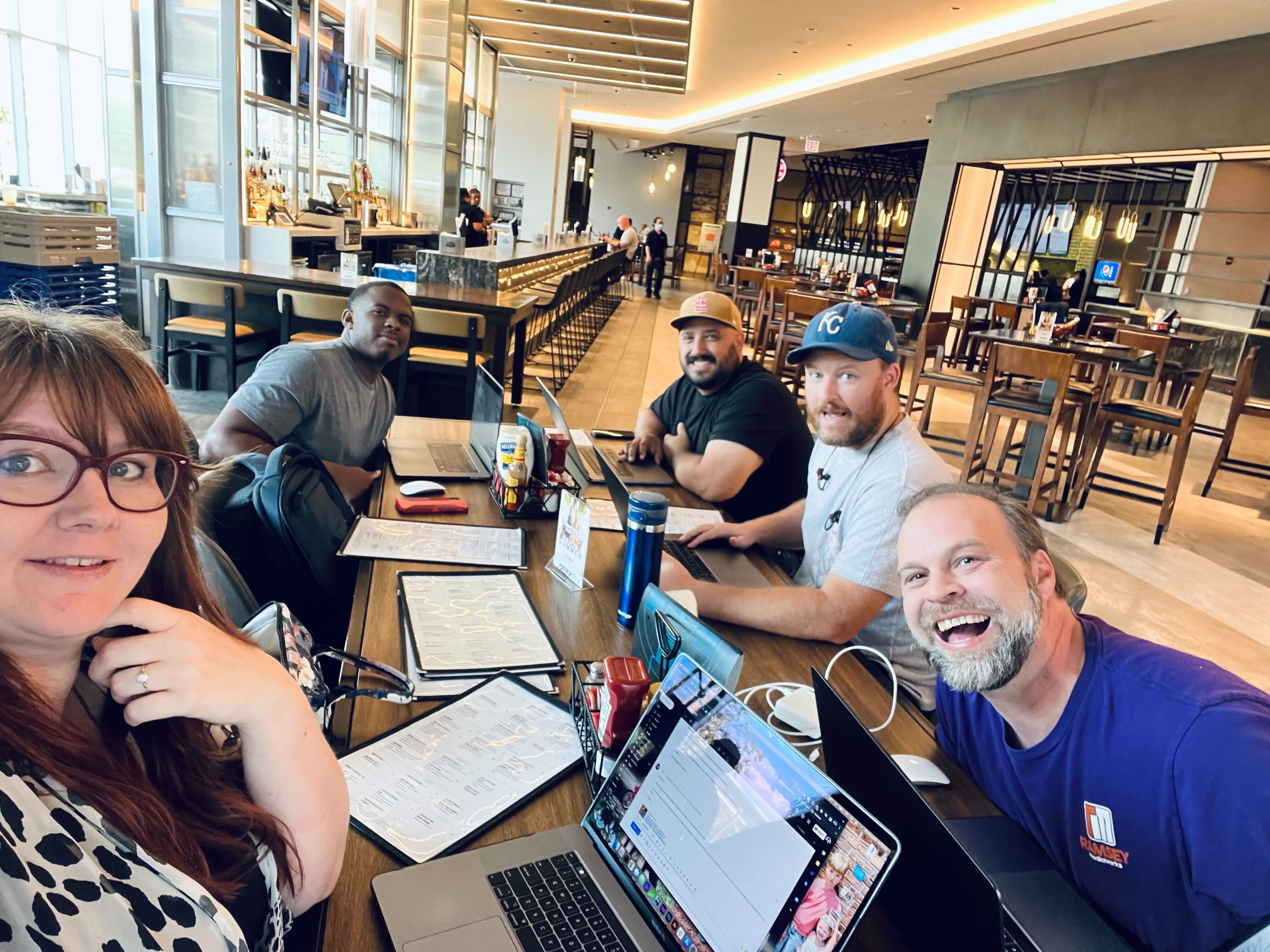
It's travel season here at Ramsey MediaWorks! That means we've been making the rounds, going to conventions, seeing old friends... you know the drill. 

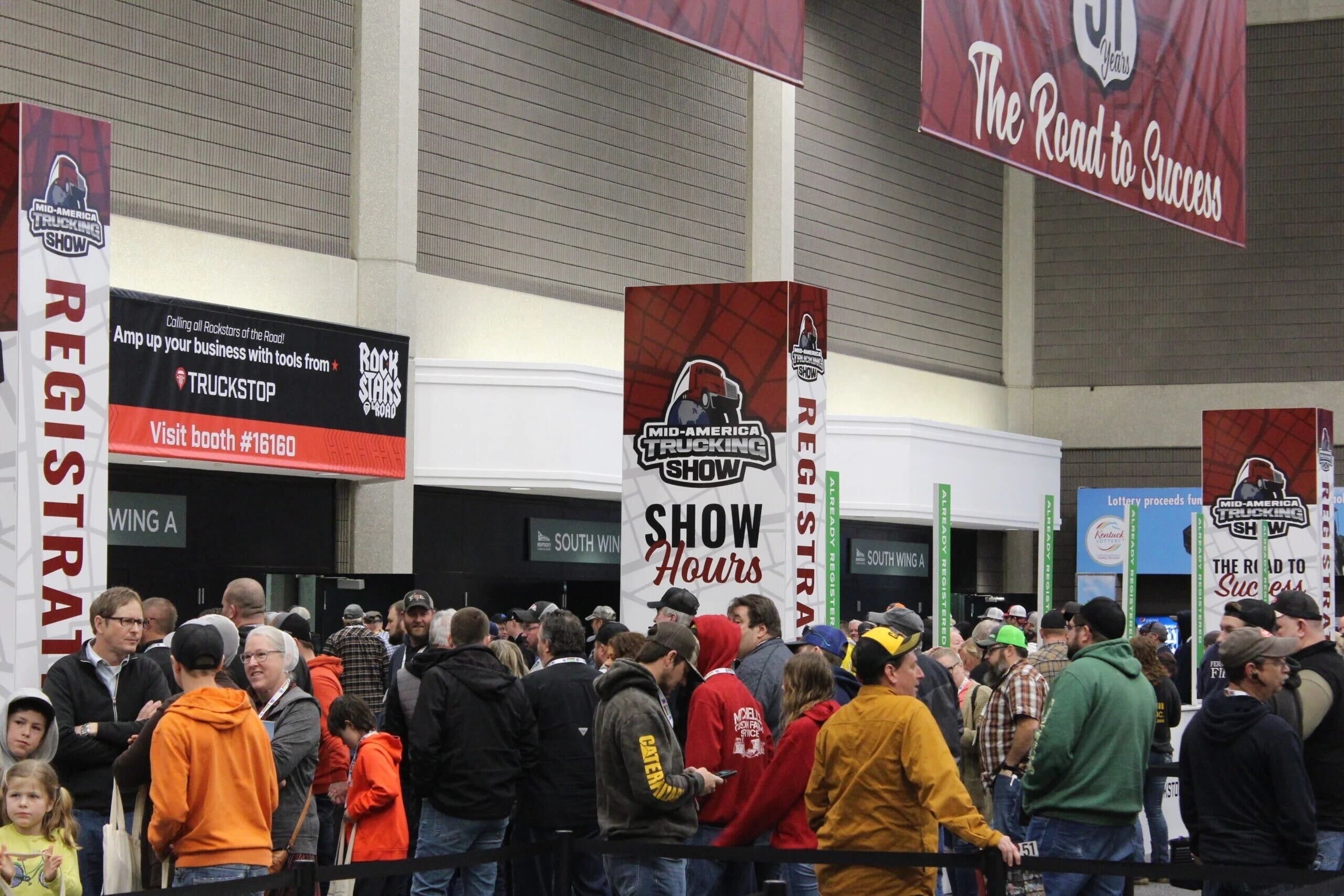
Part of that blitz of activity included a stop at Oakley Trucking to appear on their great show THE OAKLEY PODCAST: TRUCKING, BUSINESS, & FAMILY. Host Jeremy Kellett discusses modern marketing techniques with RMW's VP of Sales Matt Lee, our VP of Client Services Jeremy May, and Account Representative Colin Harrison, and the conversation is truly a joy to behold. We may be biased but to us this is sure to be the media event of the year!

 
  • Introducing Today’s Topic (0:12)
  • Evolution of Advertising (3:13)
  • Changes in Marketing Strategies (4:43)
  • Fragmentation of Audiences (6:39)
  • Challenges of Targeting Drivers (10:16)
  • Common Marketing Mistakes (12:43)
  • Importance of Authentic Messaging (15:10)
  • Introduction to Digital Advertising (18:00)
  • Local Advertising Success (19:53)
  • YouTube’s Role in Company Culture (22:08)
  • The Impact of Short-Form Content (25:31)
  • Role of Pixels in Digital Marketing (28:34)
  • Geo-Targeting in Advertising (33:33)
  • Future of AI in Marketing (36:41
  • Finding the Right Job (39:14)
  • Thankful for Truck Drivers and Parting Thoughts (42:17)
You can also download the podcast from your podcast provider of choice. 
Share this article:
Give This Priority On Your 2025 Things-To-Do List

Give This Priority On Your 2025 Things-To-Do List

2024-12-20 Online Advertising
← Back to Blog

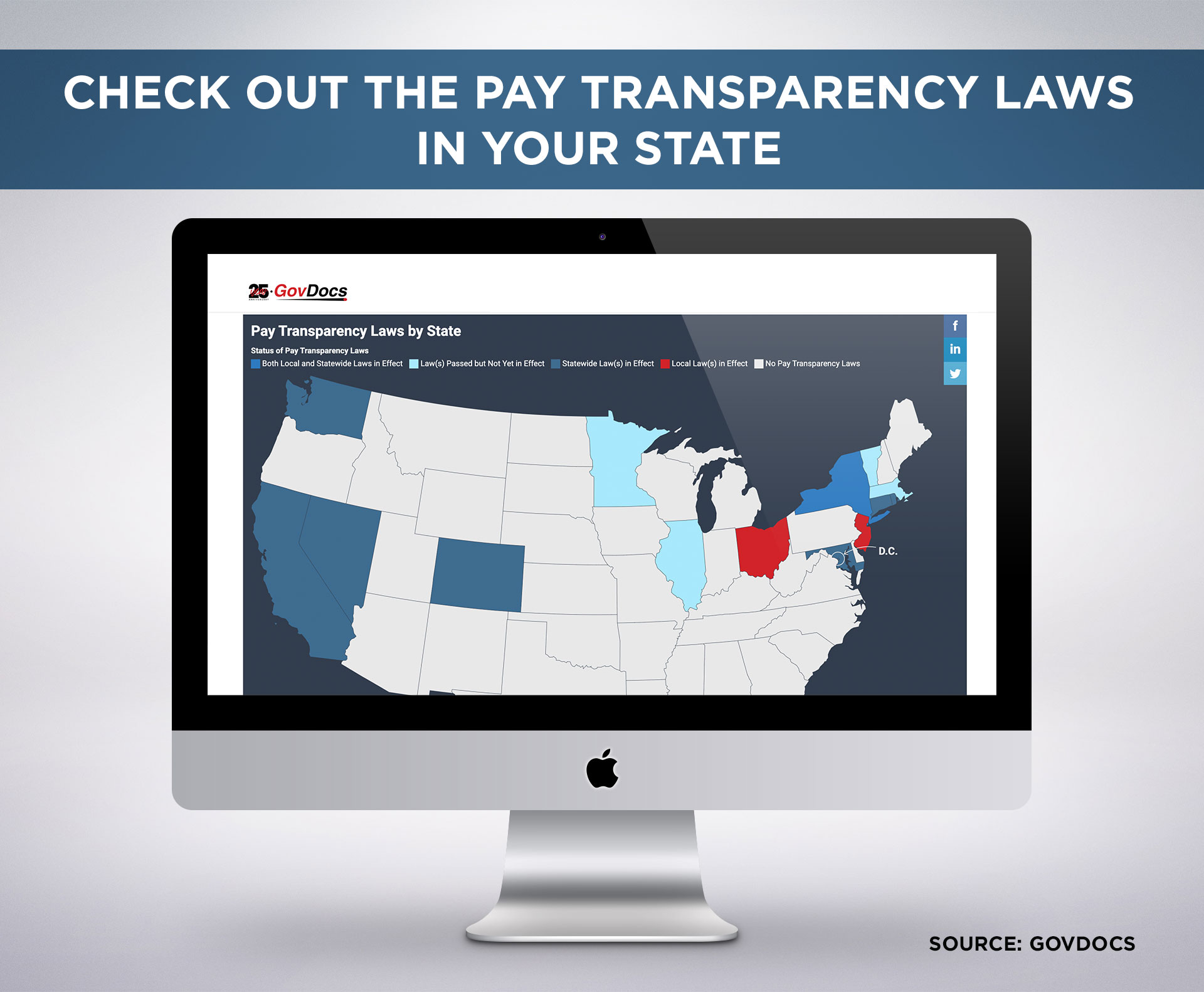
Perhaps you’ve heard rumblings about pay transparency laws. The issue – embraced by some states, ignored by others – always feels like tomorrow’s problem, something not worth worrying about yet. 

Unfortunately, tomorrow has arrived. 

This is no longer a “Washington-only” issue. More and more states are getting on board with the idea. Given that constantly evolving target, and given the potential for extreme financial penalties your company can incur for noncompliance, we highly recommend a blanket approach to pay transparency. 

In short: adhere to the tenets of the strictest jurisdiction and apply it across all 50 states. You won’t enjoy it, but we’re confident you’ll enjoy a lawsuit even less.

So what does that look like?

  • Type of pay offered (hourly, cpm, etc.)
  • Annual salary range estimate, from minimum to maximum
  • Description of all compensation and taxable benefits (insurance, bonuses, paid time off, etc.)
  • Date application window closes, or statement that job opening is ongoing
  • For 1099 positions, a statement that your position offers no taxable benefits (1099, no taxable benefits available)

Currently, thirteen jurisdictions have passed pay transparency laws, a number of which become active throughout this next year. Five more feature laws that require some disclosures but not others. More will join them.

In terms of penalties, let’s look at Washington, one of the more extreme examples. In Washington, for every applicant who applies to a job without transparent pay details, your company can be fined $5,000. Now imagine how many applicants you get each week. They don’t even have to be qualified to apply, so long as they put an application in.

Hopefully, the seriousness is coming into focus.

We are here to help you through this process, which we understand will be a big undertaking. But as you can see, the consequences are worth avoiding. It is imperative you update all your ads as soon as you can, regardless of state with an annual pay range and clear definition of benefits. 

Some more notes:

  • The annual pay range can be broad but must include a minimum and maximum
  • There is a “good faith” element at play that your advertised pay range should be actual or what you intend to pay for the position
  • Laws apply to any job posting, not just paid ads 
  • Cannot use phrases such as “average pay” or “$xxxx per week and higher”; it must be a true range
  • Document how you came up with pay range
  • 1099 jobs may need to include average pay ranges on a per-state and per-contract basis. Get advisement from your legal counsel where applicable
  • CPM and percentage of gross alone are not accepted descriptions. You can list it but you must also include a pay range

As you can see, this is a complicated but also very serious issue. The more informed you and the more help you have, the more likely you are to avoid severe penalties in the future. Please let us know if you have any questions. We’ll be more than happy to hold further discussions on this ever-changing topic.

SOURCE: https://www.govdocs.com/pay-transparency-laws/

Share this article:
One Month In: Transitioning From Hightower To Ramsey MediaWorks

One Month In: Transitioning From Hightower To Ramsey MediaWorks

2024-11-06 Behind the Works
← Back to Blog

Randy Scheel

Director of Growth

319-573-4896

randy.scheel@ramseymediaworks.com

It’s never easy to hear that the company you work for has been acquired. I’ve been on the other side of this process several times in the past, but after a great twenty-one years with The Hightower Agency, I found myself facing a much different perspective when I learned of the decision to transition our agency to Ramsey MediaWorks. What started as fear turned into interest and quickly into excitement as more details became apparent and a few conversations were shared.

I have known Todd and Garrett Ramsey for over a decade. We have spent plenty of time both in deer camps and shared phone calls since we first met. I have also known several of RMW’s other team members. I knew the cultures of our two companies were very similar. I knew both agencies were customer-focused. While it was sad to think of leaving behind the Hightower name, I knew this was a great opportunity for me and several members of our team.

In speaking with our customers to let them know of the acquisition and our goals, it was very humbling to hear their support and commitment to join us at RMW repeated from one phone call to the next. We were thrilled to learn that every customer was making the transition with us! Not only will we continue to take care of them as we have in the past, but each will gain the advantage of new tools and a larger support team as we continue to move through this transition.

Now that the dust has settled on our first month, I look back and realize how quickly it went. Whew! But I also continue to learn more about the opportunities our customers have available to them. I fully expected the RMW team to take care of our customers, but I did not realize how far they would exceed my expectations. As mentioned at the start, an acquisition is not usually a fun experience. Nonetheless, this has truly become a very positive development in my career.

Share this article:
Acquisition of The Hightower Agency by Ramsey MediaWorks

Acquisition of The Hightower Agency by Ramsey MediaWorks

2024-10-03 RMW Capabilities | RMW News
← Back to Blog

Ramsey MediaWorks Announces Acquisition of The Hightower Agency, Expanding its Leadership in Recruitment Advertising

JOPLIN, MO – October 3, 2024 – Ramsey MediaWorks, a leading advertising agency specializing in Talent Acquisition (TA) Marketing, is excited to announce the acquisition of The Hightower Agency, a legacy firm in the transportation recruitment marketing industry. This acquisition strengthens Ramsey MediaWorks’ position as a leader in providing cutting-edge, custom advertising solutions and enhances its ability to serve a broader range of clients with advanced technology and automation tools.

The Hightower Agency, established in 1990, has built a solid reputation for delivering effective client-first recruitment marketing campaigns. With a strong and highly respected long-term client base, The Hightower Agency has successfully supported employers in finding and attracting quality talent for over three decades. The integration of Hightower’s strengths into an already robust portfolio will allow Ramsey MediaWorks to offer unmatched customer service in the talent acquisition landscape.

“We are excited to welcome The Hightower Agency into the Ramsey MediaWorks family. When we look at the current TA/Recruitment Marketing landscape, it’s full of companies providing overly standardized solutions and products that funnel their clients into the same mold,” said Garrett Ramsey, President. “This acquisition aligns with our mission to relentlessly serve our clients via an embedded and customized approach. With Hightower’s long-standing reputation for client-first service, it was a no-brainer to bring them under our umbrella and provide them with advanced tech and automation tools to help bolster their client offering moving forward.” 

The acquisition will enhance Ramsey MediaWorks’ service offerings, including:

Expanded Relationships: The Hightower Agency’s years of experience in recruitment marketing will bring familiar faces into the Ramsey MediaWorks family. 

Advanced Technology & Automation Tools: Ramsey MediaWorks has been relentlessly pursuing and adopting new technology and automation tools into our clients’ first-party ecosystems. By integrating The Hightower Agency’s relationships with Ramsey MediaWorks’ cutting-edge technology, clients will benefit from an enhanced ability to reach top-tier candidates quickly and efficiently.

Broader Client Reach: The combined resources and talent of both agencies will enable Ramsey MediaWorks to support larger-scale projects and service new entities across the transportation industry and beyond.

“This is a pivotal chapter for us,” said Pat Hightower, President of The Hightower Agency. “We’re excited about the new opportunities that will be available to several of our employees and long-standing clients. With Ramsey MediaWorks’ advanced technologies and a shared client-first approach, I am thrilled to see what the future holds.” 

The acquisition is expected to be fully integrated by November 1, 2024, with no disruption to current services. Clients of both agencies will continue to receive the high-quality service they have come to expect, along with access to new tools and resources to better achieve their TA/Recruitment Marketing goals. 

For more information or to speak with a representative, please contact:

Media Contact: 
Garrett Ramsey
President
Ramsey MediaWorks  
800.209.8536
garrett@ramseymediaworks.com
ramseymediaworks.com

About Ramsey MediaWorks  
Ramsey MediaWorks is a second-generation advertising agency specializing in custom solutions for talent acquisition teams. Leveraging the latest in technology and automation tools while never losing the human touch, Ramsey MediaWorks delivers personalized, high-impact campaigns that help employers attract top-tier talent across various industries.

About The Hightower Agency  
The Hightower Agency is a leading recruitment marketing agency known for delivering client-first, results-driven strategies that help companies attract, engage, and retain top-tier talent. With decades of experience, The Hightower Agency has been a trusted partner to employers seeking to optimize their recruitment efforts.
 

Share this article:
Listening – A Lost Art: How Recruiters Can Improve the Hiring Process

Listening – A Lost Art: How Recruiters Can Improve the Hiring Process

2024-09-16 Recruiting
← Back to Blog


  Jeremy May

  VP of Client Services

  417.782.3694

  jeremy@ramseymediaworks.com


In today's fast-paced, technology-driven world, we often forget the simple yet profound impact of genuine human connection. One area where this oversight is particularly evident is in the recruitment process. Too often, recruiters fall into the trap of robotically reciting job requirements, pay scales, and benefits, neglecting the most crucial aspect of their role – listening to their applicants. 

Let's explore how embracing the lost art of listening can revolutionize the hiring process and create meaningful connections that benefit both recruiters and candidates.

The Current State of Recruitment

The recruitment process has become increasingly transactional. With the advent of automated application systems and standardized interview scripts, recruiters can process more candidates than ever before. However, this efficiency comes at a cost. Many candidates feel like just another number, a checkbox on a recruiter's list. This approach not only alienates potential hires but also prevents recruiters from truly understanding the unique value each candidate brings to the table.

The Power of Listening

Listening is more than just hearing words; it's about understanding the person behind those words. When recruiters take the time to actively listen, they gain insights into a candidate's motivations, aspirations, and values. This deeper understanding allows recruiters to:

Match Candidates with the Right Roles: By listening to what candidates are truly looking for, recruiters can better align their strengths and interests with the right positions. This leads to higher job satisfaction and retention rates.

Build Stronger Relationships: Candidates who feel heard and understood are more likely to view the recruiter – and the company – in a positive light. This fosters trust and loyalty, which can lead to referrals and a stronger talent pipeline.

Identify Potential Red Flags: Listening attentively can reveal potential issues that might not be apparent through scripted questions. Understanding a candidate's concerns or hesitations early on can help address them before they become deal-breakers.

Enhance Candidate Experience: A recruitment process that values listening stands out in a crowded job market. Candidates are more likely to recommend a company where they feel genuinely heard, improving the company's employer brand.

Practical Tips for Recruiters

So, how can recruiters cultivate better listening skills? Here are some practical tips:

Ask Open-Ended Questions: Encourage candidates to share their stories, experiences, and goals by asking open-ended questions. Instead of asking "Do you have experience with X?", try "Can you tell me about a time when you worked on X?"

Practice Active Listening: Show candidates that you are engaged by summarizing their responses, and maintaining eye contact if in person.  Avoid interrupting and give them space to fully express their thoughts. For those of you conducting conversations over the phone, don’t discount the fact “motion” creates “emotion”. So move about, use hand gestures and become fully engaged. 

Follow Up on Responses: Demonstrate that you are listening by following up on what candidates say. If they mention a particular achievement or challenge, delve deeper to understand the context and significance.

Create a Comfortable Environment: Make candidates feel at ease by creating a relaxed and welcoming conversation. This can help them open up and share more authentically which in turn helps you better qualify them. 

Be Present: In a world full of distractions, being fully present is a rare and valuable skill. Put away your phone, close unnecessary tabs, and give candidates your undivided attention. They will notice and respond accordingly. 

Listening may be a lost art, but it is one that recruiters can and should revive. Technology can certainly help us recruit, but it’s not going to replace listening anytime soon for a position that requires a human. By prioritizing listening over robotic recitations of job details, recruiters can forge genuine connections, better understand their candidates, and ultimately make more informed hiring decisions. In doing so, they not only enhance the candidate experience but also contribute to a more human-centric and effective recruitment process. So, let's put down the scripts and start listening – our candidates, and our companies, will thank us for it.

Share this article:
Addressing the Demand for “More Apps” in Recruiting

Addressing the Demand for “More Apps” in Recruiting

2024-09-09 Marketing and Advertising
← Back to Blog


 Doug Smith

 Director of Client Relations

 417.782.3694

 doug.smith@ramseymediaworks.com


If you've ever led a talent acquisition campaign, you’ve probably heard the same thing over and over:

“We need more apps!”

“Can we get more apps?”

“I just NEED more apps!”

It’s like a broken record. While asking for more candidates isn't totally wrong, chasing more applications for the sake of numbers isn’t always the best approach. The good news is there are ways to address this without completely dismissing the concern. Here are three strategies we feel can help keep everyone happy without just flooding inboxes with more applications and resumes.

1. Use Pre-Qualifying Tools to Target the Right People

Getting more applications isn’t the hard part — it’s getting the RIGHT ones. Pre-qualifying tools can help make sure you're attracting candidates who are actually a fit for the role, which means fewer (but better quality) applications.

Targeted Marketing

Rather than posting your job ad everywhere and hoping the right people see it, focus on targeting the right people from the get-go. You can use platforms like LinkedIn, Indeed, or Google Ads to be super specific about who sees your job posting. Fewer random applicants, more of the good ones.

Knock-Out Questions

Adding knock-out questions early in the process can help you filter out the candidates who clearly don’t fit. These questions could cover things like certifications, endorsements, experience levels, or availability. It helps narrow the pool early, so you’re not wasting time on unqualified applicants, and your team won't feel like they need “more apps”.

2. Tap Into the Goldmine You Already Have (Your ATS)

Ever said, “We’ll keep your resume on file and reach out if something comes up”? Yeah, most people have, but here’s the kicker — almost nobody actually does it. Your Applicant Tracking System (ATS) is FULL of potential talent, and it’s time to put that to use.

Revisit Old Applications

Digging through your old candidate files is a smart way to find people who were great but maybe not the right fit at the time. Chances are, some of those folks could be exactly what you're looking for now. They've already shown interest in your company, so reaching out will likely get a good response.

Follow Up for Real

How many candidates have been told “We’ll keep your resume on file” and never heard from the company again? Probably most. Don’t be that company. Make it a point to actually keep track of past applicants and reach out when the right opportunity opens up. It’s not just good for your recruitment pipeline, but it also shows candidates that you genuinely value them.

3. Have Real, Honest Conversations with Your Hiring Managers

One of the biggest reasons people cry for “more apps” is that recruiters and hiring managers aren’t on the same page. Regular, honest check-ins with your operational teams can clear up a lot of confusion and stop the need for more apps before it even starts.

Eliminate Confusion

Frequent meetings between recruiters and hiring managers help remove gray space. These meetings allow both sides to stay aligned on expectations, role requirements, and what’s truly important. When everyone’s on the same page, you don’t need to rely on a flood of new applications to fix communication gaps.

Adapt on the Fly

Recruiting is rarely, if ever, a straight line. Priorities and job requirements change all the time. By keeping open lines of communication, you can adjust course quickly without having to toss a million new resumes into the mix. Instead, you focus on what’s needed right now and pivot as things change.

The Bottom Line

The call for “more apps” is often more about quality than quantity. By targeting the right candidates, making use of your existing talent pool, and staying in close touch with your hiring managers, you can cut down the need for endless applications and still deliver the results everyone wants.

Need another set of eyes? Let us know if you would like to talk through any of the tips above and how Ramsey MediaWorks can assist in implementing these to help silence the cries for more. 

Share this article:
The Power of Taking Time Off

The Power of Taking Time Off

2024-08-08 Recruiting
← Back to Blog


 Doug Smith

 Director of Client Relations

 417.782.3694

 doug.smith@ramseymediaworks.com


Since joining the world of Talent Acquisition and Recruiting in 2020, I've quickly learned that there is a perception of little time for rest or stepping away. We’re directly tied to hiring managers, the internal processes of our organization, and our applicants. Neglecting any one of these can mean missing out on the “perfect” hire or extending the hiring process, surely leaving someone upset.

However, we all need a break. We need time away to rest, recharge, and refocus ourselves mentally, physically, and emotionally – especially if you are like me and tend to feel the need to work twice as hard in the two weeks leading up to AND the two weeks following a vacation.

Why Taking Time Off is Essential

Recharge and Prevent Burnout:

Continuous work without breaks can lead to physical and mental exhaustion, known as burnout. Taking time off helps recharge your energy levels, improve your mood, and maintain your overall well-being.

Reminder: Your productivity and creativity will benefit from regular breaks, making you more effective when you return to work.

Improved Health:

Time off allows your body and mind to recover from the stresses of daily work. It can lead to better sleep, reduced stress levels, and improved mental health.

Reminder: Taking care of your health through regular breaks can prevent long-term health issues and improve your quality of life.

Strengthen Relationships:

Time off provides opportunities to spend quality time with family and friends, strengthening personal relationships that can sometimes be neglected due to work commitments.

Reminder: Building strong relationships outside of work can provide emotional support, increase your happiness, and create a more balanced life.

The Role of a Support Team

At this point, you may be thinking, “This is great, Doug, but I’m a doer. Even when I'm on vacation, I check my phone throughout the day or respond to emails first thing in the morning and before bed – despite the disapproving looks from my companions and family.”

This is where having a trusted support team, internally or externally, becomes essential. 

Here are three ways a support team can be beneficial for taking personal time off:

Ensured Continuity and Coverage:

With a reliable support team, your responsibilities and tasks are covered during your absence. This prevents work from piling up and maintains workflow.

Knowing your team can handle things in your absence reduces the stress and anxiety associated with taking time off, allowing you to truly disconnect and recharge.

Improved Communication and Collaboration:

A support team facilitates clear communication and collaboration, ensuring urgent issues or important decisions are managed smoothly while you're away.

Effective communication within the team means any problems are addressed promptly, and the team can adapt to changes without needing your immediate input, providing peace of mind during your time off.

Increased Trust and Team Morale:

Relying on a support team fosters a culture of trust and collaboration within your organization. Team members feel valued and trusted when given the responsibility to manage tasks in your absence.

This boosts team morale and cohesion, leading to a more supportive and resilient work environment. Additionally, it encourages others to take their personal time off, promoting a healthy work-life balance across the team.

Taking time off is not just a luxury; it's a necessity for maintaining health, productivity, and happiness. With the support of a reliable team, you can take the time you need to recharge and come back stronger than ever.

If our team at Ramsey MediaWorks can help by being your team, please connect with us. We’ll be happy to cover for you and take the lift while you’re enjoying your much-needed time away – or, while you’re in the office and need to be focused on other key initiatives and areas. 

Share this article:
Managing Talent Acquisition During a Slow Economy

Managing Talent Acquisition During a Slow Economy

2024-08-01 Marketing and Advertising
← Back to Blog


  Jeremy May

  VP of Client Services

  417.782.3694

  jeremy@ramseymediaworks.com


Many carriers are currently feeling the pinch of an economic slowdown. Some organizations may respond to this by cutting back on their recruitment budgets. On the other hand, others might use this time to ensure they are well-positioned to capture market share when freight rates and volumes cycle back up. Here are three ways to make this latter approach work for you.

Clean Up and Manage Your Database

Your database contains critical information about potential candidates and can be a great asset in targeting the right fit for your organization and respective positions. Take some time to clean yours up and ensure that your records are up to date. 

  • Reassign candidate leads: Confirm all candidates have an assigned recruiter.
  • Update candidate information: Ensure you have the latest contact details and employment history.
  • Segment your database: Organize your database into categories to retarget specific groups effectively.

Keep Your Branding Campaigns Going

You may feel tempted to cut back on branding campaigns. We recommend you keep them consistent instead.

  • Consistency is key: Maintain a consistent presence across your most relevant channels.
  • Engage with your audience: Use social media and other platforms to interact with potential candidates and keep them informed about your company’s progress.
  • Highlight your strengths: Showcase your company's strengths, values, and culture to attract the right talent.

Invest in Recruiter Training

When drivers do return, you’ll need an active and trained team of recruiters to win them over. Now is the time to train the team you have, and prepare your next generation of recruiters.

  • Enhance sourcing skills: Teach recruiters how to effectively engage candidates from various platforms.
  • Improve interviewing techniques: Train recruiters on how to conduct insightful and efficient interviews. This can also improve recruiter fatigue or burnout. 
  • Focus on candidate experience: Ensure recruiters understand the importance of providing a positive candidate experience to attract top talent.

Ready to Optimize Your Recruitment Strategy?

For leaders looking to maximize their recruitment budget during an economic slowdown, our team of experts at Ramsey MediaWorks is here to help. Contact us today at clientservices@ramseymediaworks.com to discuss how we can help you optimize your recruitment strategy, protect your bottom line, and position your company for growth. 

Share this article:
Embracing July: A Golden Opportunity for Trucking Industry Employment

Embracing July: A Golden Opportunity for Trucking Industry Employment

2024-07-08 Recruiting
← Back to Blog


 Doug Smith

 Director of Client Relations

 417.782.3694

 doug.smith@ramseymediaworks.com


As we move into July, the trucking industry finds itself at a pivotal moment. Historically, this month has been overlooked in terms of strategic planning and talent acquisition. However, savvy carriers should recognize July as a prime time to bolster their workforce and get ahead of the positive market reset. Here’s why July should be viewed as a positive month in the trucking industry for employment and why carriers should ramp up their talent acquisition marketing efforts.

1. Seasonal Economic Boost

July often marks a mid-year economic boost, driven by increased consumer spending during the summer months. With more goods being shipped, the need for efficient and reliable transportation becomes critical. This surge in activity presents an ideal opportunity for carriers to expand their workforce, ensuring they can meet heightened demand and maintain service quality.

2. Graduates Entering the Job Market

July sees a fresh influx of graduates entering the job market, eager to start their careers. This is an excellent time for the trucking industry to attract young talent. By targeting recent graduates, carriers can tap into a pool of enthusiastic and trainable individuals ready to embark on a new professional journey. Tailoring recruitment campaigns to highlight the stability, growth opportunities, and competitive salaries within the trucking industry can make it an appealing choice for these new job seekers.

3. Industry Stability and Recovery

The trucking industry has shown resilience in the face of economic challenges, and July often signals a period of stability and recovery. As market conditions improve, carriers should be proactive in their hiring strategies. By ramping up talent acquisition efforts now, carriers can position themselves advantageously for the latter half of the year, ensuring they have the necessary manpower to capitalize on market growth and recovery.

4. Strategic Planning for Peak Season

July serves as a crucial planning period for the peak holiday season later in the year. By hiring and training new employees in July, carriers can ensure their workforce is well-prepared for the increased demand during the holiday rush. Early recruitment allows for comprehensive training and integration of new hires, leading to a more efficient and cohesive team when peak season arrives.

5. Leveraging Recruitment Campaigns

To maximize the potential of July for talent acquisition, carriers should ramp up their marketing efforts. This includes:

  • Digital Campaigns: Utilizing social media, job boards, and industry-specific platforms to reach a wider audience.
  • Community Engagement: Partnering with local vocational schools, community colleges, and employment agencies to attract a diverse pool of candidates.
  • Employee Referral Programs: Encouraging current employees to refer qualified candidates and find reliable new hires.
  • Showcasing Benefits: Highlighting the advantages of working in the trucking industry, such as job security, competitive pay, and opportunities for advancement.

July presents a unique and often under-appreciated opportunity for the trucking industry to strengthen its workforce when it comes to professional drivers and support staff. By recognizing the potential of this month and ramping up talent acquisition marketing efforts, carriers can position themselves ahead of the positive market reset. Embracing July as a strategic period for recruitment will not only enhance operational efficiency but also ensure carriers are well-prepared for future growth and success. Now is the time to invest in talent and secure a brighter future for the trucking industry.

We will be happy to provide further guidance in your recruitment marketing efforts. If you’d like to talk with us, simply fill out the form below.

Share this article:
What is the Value of an Advertising Team?

What is the Value of an Advertising Team?

2024-07-02 Marketing and Advertising
← Back to Blog


  Jeremy May

  VP of Client Services

  417.782.3694

  jeremy@ramseymediaworks.com


In the fast-paced and ever-evolving world of talent acquisition, having a strategic partner to manage your advertising needs can be a game-changer. An advertising team offers a blend of expertise and bandwidth that can significantly enhance your recruitment efforts. At Ramsey MediaWorks, we bring over 20 years of industry experience, exceptional communication skills, and dedicated support to help you achieve your goals. But what exactly is the value of partnering with an advertising team? Let’s explore.

Expertise at Your Fingertips

One of the most compelling reasons to work with an advertising team is the access to specialized knowledge and expertise. Advertising is more than just placing an ad; it involves strategic planning, market research, content creation, and performance analysis. Our team at Ramsey MediaWorks stays ahead of industry trends and best practices to ensure your recruitment campaigns are effective and innovative.

With our deep understanding of various advertising platforms and tools, we can target your ideal candidates with precision. Whether it's leveraging social media, job boards, or niche industry sites, our expertise ensures that your job ads reach the right audience at the right time.

Expanding Your Bandwidth

In-house teams often struggle with limited resources and bandwidth, making it challenging to manage all aspects of an advertising campaign effectively. By partnering with Ramsey MediaWorks, you can free up your internal team to focus on core responsibilities while we handle the complexities of your advertising efforts.

Our team provides comprehensive services, from initial strategy development to ongoing campaign management and optimization. This means you can scale your recruitment advertising efforts without the need to hire additional staff or stretch your current team thin.

Exceptional Communication and Support

At Ramsey Mediaworks, we pride ourselves on being great communicators. Clear and consistent communication is the backbone of any successful partnership. We provide our clients with a direct contact who is dedicated to understanding their unique needs and goals. This ensures that you always have someone to turn to with questions, feedback, or concerns.

Our commitment to communication extends beyond just being available; it involves actively listening and providing timely updates on campaign performance and adjustments. This transparency fosters a collaborative environment where your input is valued and incorporated into the strategy.

The Ramsey Mediaworks Advantage

Partnering with Ramsey Mediaworks offers a multitude of benefits that go beyond just placing ads. Our expertise, bandwidth, communication skills, and decades of experience come together to provide a comprehensive advertising solution tailored to your needs rather than a cookie-cutter approach mega teams offer.

When you choose to work with us, you're not just getting an advertising team; you're gaining a strategic partner dedicated to your success. We understand the intricacies of talent acquisition and are committed to helping you attract the best candidates for your organization.

Conclusion

An advertising team's value is in its ability to provide expertise, expand your bandwidth, and offer unparalleled support. If you're ready to elevate your recruitment advertising efforts and achieve greater success, partnering with an experienced and dedicated agency like Ramsey MediaWorks is the key. Let us help you navigate the complexities of advertising and secure the top talent your organization needs to thrive. Simply fill out the form below and we'll start the conversation immediately!

Share this article:
Does Your Recruitment Marketing Have A Blind Spot Alert System?

Does Your Recruitment Marketing Have A Blind Spot Alert System?

2024-06-10 Marketing and Advertising
← Back to Blog


 Doug Smith

 Director of Client Relations

 417.782.3694

 doug.smith@ramseymediaworks.com


In the world of recruitment marketing, our landscape is ever-evolving. Much like driving a vehicle, navigating this terrain requires constant vigilance and adaptability. But even the most experienced drivers can miss things lurking in their blind spots. That's where Ramsey MediaWorks comes in, acting as your trusted Blind Spot Alert System in the intricate journey of recruitment marketing.

Understanding Blind Spots in Recruitment Marketing

When it comes to blind spots, we are looking for the unseen gaps and overlooked opportunities that can hinder your ability to attract and retain top talent. These might include:

  • Unoptimized job postings: Are your job descriptions reaching the right audience with the right message?
  • Inefficient use of data: Are you leveraging analytics to refine your recruitment strategies?
  • Brand perception issues: Is your employer brand resonating positively with potential candidates?
  • Retention strategies: Are you focusing enough on keeping your current employees engaged and satisfied?

How Ramsey MediaWorks Acts as Your Blind Spot Alert System

  • Comprehensive Data Analysis: At Ramsey MediaWorks, we believe in the power of data. Our advanced analytics tools dive deep into your recruitment metrics, identifying trends and gaps you might not see. This thorough analysis allows us to provide actionable insights, ensuring that every decision you make is informed and strategic.
  • Optimized Job Postings: We help craft job postings that not only capture attention but also convert interest into applications. By fine-tuning the language and optimizing the distribution channels, we ensure your opportunities reach the right candidates at the right time.
  • Enhanced Employer Branding: Your employer brand is a critical component of attracting top talent. We work with you to develop a compelling employer value proposition that resonates with your target audience. Through consistent and positive brand messaging, we help you stand out in a crowded market.
  • Focused Retention Strategies: Keeping your existing employees happy is just as important as attracting new ones. We assist in developing robust retention strategies that foster a positive work environment, ensuring your team remains engaged and productive.

Staying in Control While Leveraging Expert Support

Just like a vehicle's Blind Spot Alert System, Ramsey MediaWorks doesn't take control away from you; it enhances your awareness and decision-making capability. You remain in the driver's seat, with the confidence that comes from knowing you have a safety mechanism in place to catch what you might miss.

Why Choose Ramsey MediaWorks?

  • Experience and Expertise: With years of experience in the recruitment marketing industry, we understand the nuances and challenges you face.
  • Tailored Solutions: We don't believe in one-size-fits-all. Our solutions are customized to meet your unique needs and goals.
  • Proven Results: Our track record speaks for itself. We have helped numerous clients optimize their recruitment marketing strategies, leading to improved hiring outcomes and reduced turnover.

Conclusion

In the fast-paced world of recruitment marketing, missing out on key opportunities can be detrimental. Don't let blind spots hinder your success. With Ramsey MediaWorks, you can navigate the complex recruitment landscape with confidence and precision, ensuring that no opportunity goes unnoticed.

Reach out to us today to learn how we can help you stay ahead of the curve and keep your recruitment marketing on the right track. Contact us at 417.782.3694 or visit us at ramseymediaworks.com.

Share this article:
Engineering Recruitment Marketing That Works

Engineering Recruitment Marketing That Works

2024-05-06 RMW Capabilities
← Back to Blog


 Doug Smith

 Director of Client Relations

 417.782.3694

 doug.smith@ramseymediaworks.com


“Strive for perfection in everything you do. Take the best that exists and make it better. When it does not exist, design it.” - Sir Henry Royce, an English Engineer, and Co-Founder of Rolls-Royce.


Last month, I had the privilege of representing Ramsey MediaWorks at the Annual East Tennessee “Big Rigs for Little Kids” Golf Tournament fundraiser. While golf isn't exactly my forte, I always relish the opportunity to connect with new people in the midst of the game. This time around, I was paired up with Jeff and Carleton from Skyline Transportation, along with Jeff’s son, Tyler—a spirited student at the University of Tennessee, Knoxville (yep - Go VOLS!).

As our round commenced, the customary introductions unfolded: names, occupations, and the inevitable small talk. Yet, amidst these initial pleasantries, our conversation swiftly veered towards more substantial topics — a transition I recently explored in a blog post. It was during this exchange that I discovered Tyler's — now in his third year of study — passion for mechanical engineering. His ability to dissect and improve upon existing systems left me truly intrigued and showed why he was exceeding us in his golf game, too.

Throughout the day, our dialogue evolved, prompting me to reflect on the parallels between Tyler's engineering mindset and our work as recruiting professionals. At Ramsey MediaWorks, we're committed to enhancing the recruitment process for both employers and candidates alike. Through innovative approaches to using Programmatics and the implementation of tools for swifter responses and applicant engagement, we've revolutionized our service offerings. Our dedication to data-driven decision-making empowers clients to optimize their hiring strategies in real-time, ultimately driving down costs per hire.

Wondering how we apply this "mechanical engineering" approach? Reach out, and let's dive into a conversation.

As Sir Henry Royce said, if the solution doesn't exist yet? Well, let's roll up our sleeves and build something remarkable together.

* Since the program’s inception in 1989, the Tennessee Big Rigs for Little Kids Golf Classics have become a rousing success. The event has grown in size and scope as more than 2.3 million dollars has been raised for children’s charities in Tennessee and the TTF Scholarship Fund.

 Thanks to all who worked so hard to make sure these events were better than ever and to those who signed up to play and sponsor! Your generosity of participating in these events has helped support the Nashville Ronald McDonald House, East Tennessee Children’s Hospital, Shriners Alhambra Temple Transportation Fund, St. Jude Children’s Research Hospital, and the TTF Scholarship Fund.

Share this article:
A Recruiting Friend Indeed

A Recruiting Friend Indeed

2024-04-09 Recruiting
← Back to Blog


 Doug Smith

 Director of Client Relations

 417.782.3694

 doug.smith@ramseymediaworks.com


When a candidate puts their name in the hat for a position you have posted, they are really looking for a solution to a problem they’re facing in the present – it could be pay, home time, work hours, or even just a sense of appreciation for the job they do every day. They saw your ad and hope your company can solve whatever it is they are looking for.

People make decisions, especially big ones, based on trust and confidence. That’s true of everything - restaurants, vehicle purchases, new computers, etc. And it also happens to include… where we go to work. This is why we look at Google Reviews, Social Media, and job sites like Indeed, Glassdoor, or LinkedIn. We reach out to friends, people, or institutions we respect for their insight and advice.

Our goal as professional recruiters is to quickly develop that trust with our candidates. When the trust is there, we likely become the candidate’s choice as the solution to their problem.

But that’s not always how things turn out. Though we want to feel like our company is the ultimate solution for everyone, that simply may not be the case in every instance. And that’s ok. We must remember that being committed to honest and supportive information may result in revealing that we are not a fit for what the candidate seeks. It might just be our role to give advice or provide an alternate pathway in pursuit of a solution. 

Personally, I like to refer to this as “The Gimbel’s Rule” in reference to the classic film Miracle on 34th Street in which a Macy’s Santa shares that Gimbel’s, a competitor, has the toy that a mother is unable to find at Macy’s.

Our role as recruiters, or “Career Advisors”, is to help. When we say, “maybe try Gimbel’s”, candidates develop trust in us and confidence that we are offering a solution, even one they didn’t expect – and that makes you memorable for their next season.

If we can help you with any of your recruitment marketing strategies please reach out – we're here to help you succeed.

Share this article:
3 Social Interaction Hacks All Recruiters Should Incorporate

3 Social Interaction Hacks All Recruiters Should Incorporate

2024-04-05 Recruiting
← Back to Blog


 Doug Smith

 Director of Client Relations

 417.782.3694

 doug.smith@ramseymediaworks.com


As an avid reader and listener of audiobooks, I've found a recent gem that seamlessly blends science with practicality in enhancing social interactions: Captivate: The Science of Succeeding with People by Vanessa Van Edwards. This recommendation came from a trusted friend and mentor, Sandy Tush, an Executive in Residence at Milestone Leadership in Bentonville, Arkansas.

While Audible has been my go-to for absorbing knowledge on the go, there's something about holding a physical book in hand that I still cherish. Captivate was one of those treasures that prompted me to grab a hard copy, allowing me to highlight, annotate, and revisit its invaluable insights.

Van Edwards unpacks 14 "hacks" or practical strategies for navigating social interactions and forging strong connections. These hacks prove not only powerful but also easily applicable, particularly in the realm of professional recruiting where relationships, connections, and trust are paramount.

Among these hacks, three stood out as particularly pertinent for recruiting endeavors:

1. The Curiosity Hack (#5): Engage candidates authentically by demonstrating genuine interest and asking thoughtful questions. By truly listening and understanding their needs, recruiters can offer tailored solutions that resonate.

2. The "Yes" Hack (#8): Build rapport incrementally by securing small agreements along the way. This momentum-building approach – championed by sales legends like Tom Hopkins, J. Douglas Edwards, and Zig Ziglar – fosters trust and cooperation.

3. The Reciprocity Hack (#12): Establish trust and rapport by offering genuine support and assistance to candidates. By providing valuable insights and guidance, recruiters can earn the confidence of candidates, even if they're not ultimately the perfect fit.

These strategies underscore the importance of authenticity, empathy, and integrity in the recruiting process. Ultimately, our role as recruiters is not just to fill positions but to serve as trusted advisors, guiding candidates toward opportunities that align with their goals and aspirations.

Captivate serves as a valuable resource for honing these essential skills, reinforcing the fundamental principles of rapport-building and trust in any professional endeavor. Edwards’ hacks can help in all facets of daily life, but they can be especially pertinent in driver recruitment pursuits.

If we can help you with any of the strategies listed above please reach out – we're here to help you succeed.

Share this article:
Our 2024 MATS Adventure

Our 2024 MATS Adventure

2024-04-01 Recruiting
← Back to Blog

Waaaaaay back when it was still March 2024, the Ramsey MediaWorks gang fired up the company station wagon and traveled to Louisville, Kentucky for the 2024 Mid-America Trucking Show, affectionately known as MATS.

For three days, we participated in the events, exhibitions, and excitement of this once-a-year celebration of all things trucking. Our team had a great time, but instead of hearing about their experience second-hand, we got the team itself to share some thoughts on how it all went down.

Doug Smith – Director of Client Relations

MATS is more than just a gathering. It’s a celebration – four exhibition halls and two parking lots showcasing the latest innovations, equipment, and services that drive our economy forward. Whether it was the vendors touting their products, manufacturers showcasing cutting-edge technology, or attendees simply reveling in their love for trucks, a real passion permeated my every interaction. I left with a renewed sense of purpose and enthusiasm, eager to continue my journey in the world of trucking.

Jeremy May – VP of Client Services

Instead of sitting in on the usual MATS sessions, I spent my time making rounds and inviting our clients to take a survey for us. I enjoyed the opportunity to have dinner with friends and colleagues in the trucking world. This year was particularly nice because many of our clients brought team members who were experiencing MATS for the first time. 

Matt Lee VP of Sales

We had a great time in Louisville. It’s always nice to see old friends and make new ones. Everyone’s looking forward to what 2024 has in store for our industry.

If we can help you with any of your recruitment marketing strategies please reach out – we're here to help you succeed.

Share this article:
Driver Recruitment Rule #1: Good In, Good Out – Bad In, Bad Out

Driver Recruitment Rule #1: Good In, Good Out – Bad In, Bad Out

2024-03-11 RMW Capabilities
← Back to Blog


 Doug Smith

 Director of Client Relations

 417.782.3694

 doug.smith@ramseymediaworks.com


I am a firm believer in the statement, “Good In, Good Out; Bad In, Bad Out”. It’s simply a proven truth: the best results and experiences are a sum of all that preceded the outcome.

Of course, not everything goes according to plan. As Mike Tyson reminded us, “Everybody has a plan until they get punched in the face.” Trucking gets punched in the face every day through driver turnover.

All carriers deal with turnover at some level, and blame cannot be limited to one department. But here’s a bold truth on the subject - “Bad In, Bad Out (and out the back door)”. Bad hires yield bad results.

That means stick rate increases, and keeping drivers in your trucks, begins with their application – not in orientation, not when they seat their truck, and definitely not when they encounter their first question or concern.

Between December 2022 and December 2023, I helped lead a driver recruiting team that knocked approximately 60 basis points off our responsible driver segment’s turnover in one year. How? We moved from processing to real conversations. “Good In, Good Out (out there winning)”.

I challenged my team not to blindly process every app toward orientation, employment, and likely abandonment within the first 120 days:

  • Did they complete a full app? 
  • Did they give us signatures? 
  • Do they have a CDL-A? 
  • Is their Med-Card valid? 
  • Do they meet the requirements and guidelines? 
  • Can they fog a mirror? 

Ok, you got me – I’m kidding about the last one (maybe).

Instead, I encouraged them to emphasize the driver’s “Culture” fit for our company, our team:

  • Are they responsive in a timely manner?
  • Do they give you exactly what you asked for?
  • Did they push back or become evasive during your conversations?
  • Were they disrespectful, vulgar, or dismissive as you’re helping them?
  • How did they talk about their current or past employers?

Recently, I listened to an episode of Driven Too Far - The Truth About Trucking, where my friend Mike Coble, a Partner at Recruit-Hire-Retain, had this to say about hiring culture: “Retention begins with that first phone call … when recruiters slow down a little bit more and look for a better candidate, and are given the opportunity to make that decision to say yes or no – that candidate becomes a longer lasting company driver.”

We must allow and encourage our frontline people to have real conversations and own the “is this candidate a good fit?” decision and move on to a better fit if the answer is “No”. We, in our office, warehouse, and shop environments do this with every other talent acquisition role in our businesses. I know I have had my share of “those” emails in my professional career. Why do we not in Driver Recruiting?

Retention is everyone’s responsibility, but it has to start somewhere. In trucking, it starts in Recruiting.

If you’d like to learn more about how we can aid your retention efforts, feel free to contact us by calling 800-209-8536 and requesting our Client Services Team or completing our contact form here.  

Share this article:
Where Are My Google Ads?

Where Are My Google Ads?

2024-03-01 RMW Capabilities
← Back to Blog


  Jeremy May

  VP of Client Services

  417.782.3694

  jeremy@ramseymediaworks.com


It’s not uncommon for your boss, or clients in our case, to ask why they don’t see their ads when searching applicable keywords. After all, they pay good money each month to get those ads placed in search engines. Below, you’ll find some of the most common reasons one might not see their ads on Google, Bing, or other search engines. 

Budget Constraints 

If the ad campaign's budget has been exhausted for the day or the specified time period, the ads may not show up until the budget is replenished. Or perhaps the account isn’t funded at all.

Ad Approval Status

If an ad violates Google's advertising policies or is pending approval, it may not be shown until reviewed and approved.

Ad Scheduling

Advertisers may schedule their ads to be shown only during specific times of the day or days of the week. If the search occurs outside the specified schedule, the ads may not display. There are pros and cons to this approach. For example, you may find immediate lead contact extremely valuable in your conversion funnel, but only have call center operation Monday-Friday 8am-5pm, so you see no reason to buy ads outside that time frame. This strategy can be valuable, but if your competitors all do this, ad costs will likely be higher during these times, potentially offsetting those conversion benefits. 

Bid Too Low

If the bid for the ad is too low compared to the competition, it may not be shown in the top ad positions. Advertisers need to bid competitively to increase the chances of their ads being displayed.

Geographic Targeting

If the ads are targeted to a specific geographic location, they may not show up for users outside that targeted region.

Low Ad Quality

If the ad's quality score is low, it may not meet the platform's quality standards. Ads with irrelevant keywords, low click-through rates, or poor landing page experiences can cause this to happen.

Ad-Targeting Restrictions 

If an ad is targeting specific demographics or interests and the user does not fall into those targeting criteria, the ad may not be shown to that user.

Search Terms 

A user search term can prevent an ad from showing based on targeted keywords that are being managed. In this case, if an ad is specifically targeting the keyword "OTR driving jobs" but the user searches for "local driving jobs", the ad may not be displayed because the user's search term does not match the targeted keyword.

User behavior 

Google closely monitors user behavior and may adjust ad visibility based on various factors. If a user consistently clicks on an ad but does not convert or engage with the desired outcome (such as making a purchase or filling out a form), Google's algorithm may determine that the user is not likely to convert in the future and may reduce the ad's visibility.

Bonus Tip 

If the ad does show up, be sure to advise your boss not to click on the ad. Those clicks are not free. 

Overall, the reasons for Google ads not showing up can vary, but they often boil down to factors related to ad quality, competition, budget, user behavior, and targeting settings. 

Simply put, we are an extension of your team. So if you’re not getting the results you expect from your digital ads, please reach out. We’ll gladly provide you with a free account review and a tip or two on how to leverage some of the pitfalls discussed in this article.

You can reach us by calling 800-209-8536 and requesting our Client Services Team or completing our contact form here.  

Share this article:
We’ve Been Associating!

We’ve Been Associating!

2024-02-13 Trucking and Transportation
← Back to Blog

So far, we’ve spent a good chunk of 2024 out and about meeting industry colleagues and generally seeing how things have been going lately. It’s hard to get a nuanced feel for these things from behind a computer, and we consider traveling, reaching out, and networking an essential part of our business. 

To that end, we’ve made some great connections in the first six weeks of the year alone!

National Private Truck Council (https://www.nptc.org)

This is the national trade association dedicated exclusively to representing private motor carrier fleets. It represents a large swath of American manufacturers, distributors, retailers, and public service organizations. 

We’re extremely proud to align ourselves with such a respected and influential organization and look forward to forging stronger bonds with the talented professionals and companies they represent. As an allied member of the association, we are excited to participate in the council’s meetings and events throughout the year. Above all, we hope to contribute to the overall growth of the trucking community.

Georgia Motor Trucking Association (https://www.gmta.org)

Serving as Georgia’s voice of the trucking industry, the GMTA has been protecting industry interests for over 80 years. It is the only organization in the state that provides full-time service and representation for the industry. Some of its legislative wins include permanent trailer tags, tax exemptions, protection from shipper negligence, and anti-theft protection.

By joining forces with the GMTA, we strengthen our commitment to the trucking community overall. Our partnership opens deeper connections and collaborations with professionals and companies throughout the industry. We eagerly anticipate engaging with the GMTA’s events and meetings, and look forward to the invaluable opportunities they’ll provide. 

Tennessee Trucking Association (https://tntrucking.org)

The TTA is an independent, non-profit trade association that represents over 400 trucking companies and industry vendors. It exists to encourage healthy growth of the trucking industry throughout the state of Tennessee.

Through this partnership, we’re making a significant step forward toward our commitment to fostering connections within the trucking industry. We can’t wait to engage with their dynamic community through various meetings and events planned across the year.

Share this article:
Responding To Negative Employee Reviews Pt. 2

Responding To Negative Employee Reviews Pt. 2

2024-02-05 Online Advertising
← Back to Blog

Last month (click here if you missed part one), we explored the notion of responding to negative employee reviews by examining whether you should even bother doing so in the first place. After all, it’s far easier to ignore naysayers and focus on moving forward, right?

Wrong. By ignoring negative employee reviews, you allow a bad situation to flourish both in your workplace and the imagination of the public, some of whom you might want to hire one day. More importantly, by remaining silent you lose an opportunity to speak up for yourself and/or make known the rehabilitative steps you’ve taken to address this or that legitimate problem brought up by the review. 

So clearly, for a number of reasons, it’s best to respond to these reviews. But how should you go about it?

Be Professional

You’re stepping onto the public stage here, so the number one rule is to leave emotions out of it. You don’t want to sound like an unthinking robot, but this is also not a place for casual language. Any signs of anger, defensiveness or retaliatory thinking should be omitted entirely. You’ll automatically embody a villainous role and appear unstable. Responding with a calm, cool demeanor in the face of outrageous claims can have the opposite effect, so definitely shoot for that.

Do Some Research

When taking in a negative review, you’ll have a lot of things to consider. For one, who wrote the review? Are you familiar with them? If not, time to do some research. Find out when they worked for you, what department, under which supervisor. Maybe they work for you still! 

Every story has two sides. You’ve heard theirs; now find out yours by asking around. What went wrong? Could it have been avoided?

You’ll also want to start thinking about who should deliver this message. Just because you want to respond to a negative review doesn’t mean you should actually do that job. Perhaps the employee’s actual supervisor would be a more effective source for the response, in which case you should still approve the response before posting.

Resolving the Issue

The review in question may not give you any opportunities to solve issues. Perhaps the person was let go for legitimate reasons but nevertheless feels wronged or simply wants to strike back. Luckily, these reviewers often give themselves away with emotionally charged language and accusations that go against logic. A simple “we’re sorry you feel this way” message should do the trick here. People will not expect you to solve an impossible problem, but they will appreciate the fact that you looked at it and responded anyway.

Sometimes, however, a review will sting with truth. This is a chance for you to get proactive. Identify the issue and take steps to help ensure it doesn’t affect anyone in the future. 

Now, when you write your message you can acknowledge the issue, apologize, and tell the world exactly what you’ve done behind the scenes to make things better. Who knows, this might even get the commenting employee back on your side. That may be a bit exaggerated, but it should at least put your company’s misstep in a much kinder light.

Share this article:
Responding To Negative Employee Reviews Pt. 1

Responding To Negative Employee Reviews Pt. 1

2024-01-05 Online Advertising
← Back to Blog

If you’re an online merchant, customer reviews are everything. From Amazon to Etsy to some Squarespace outfit you designed all by yourself, a handful of negative experiences can quickly diminish your star rating from trustworthy to “red flag”. With so much competition out there, a less-than-stellar rating can obliterate your chance of success. There’s not much room for nuance in a five-star rating system.

But online merchants aren’t alone! Employers are also subject to this form of scrutiny thanks to sites like Indeed and Glassdoor, where current and former employees can tell the world what kind of employer you are. These sites offer savvy job seekers their first and possibly last step in researching your organization. Too many negative reviews can cost you a hire before the process even gets started.

Obviously, everyone wants to believe their company is too perfect for negative reviews. But even the best companies out there get them. Maybe they’re earned; maybe they’re from disgruntled ex-employees with an axe to grind. Regardless, they require attention.

We’ll discuss how to respond to negative employee reviews next month. For now, let’s simply look at why you should respond in the first place.

Display Care

Even if you only respond with a blanket stock response, it shows future employees a higher level of care than they might expect. First off, you’re actually in there, reading comments. That’s rare enough. But you’re also taking time to engage and that’s possibly more important than the content of your comment itself.

Improve Company Culture

Any time you write about your company publicly, that is an opportunity to shower praise upon your current staff and point out whatever makes them so valuable to your organization. Remember, if you’re reading these comments, chances are high that your staff reads them as well. So here’s your candid chance to let everyone know how great your team is!

Set The Record Straight

Some comments will be driven by emotions more than facts. There isn’t much you can do about that. But some may arrive with stinging barbs of truth. By commenting, you have a chance to address these concerns publicly. If you truly are in the wrong, this can be an opportunity to change things behind the scenes. If that is the case, you should say so. Turn that L into a W by telling the world you heard the complaint and took action.

Next month we'll examine response methods that will keep you from looking insincere or overly defensive. Stay tuned!

Share this article:
Min-Max Your Way To Success

Min-Max Your Way To Success

2023-11-08 Marketing and Advertising
← Back to Blog

Do you have kids? Do your kids love video games? If so, you may already be familiar with the term “min-max” and probably don’t appreciate this encroachment of gamer nonsense into your professional world.

That’s understandable, but indulge us a moment. The gamers are really onto something here, something that one should always keep in mind when doing business.

Essentially, the term describes optimization – getting the most out of your inputs. In games, this means mathematically ensuring all earned statistical benefits go toward a single unified purpose. No indulgent side projects, no willy-nilly placements hoping for the best. A player who honors min-max goals will ultimately be unstoppable, but it requires discipline and careful planning. It turns out that’s also true in business.

Back To The Real World

The idea of aimed optimization is nothing new and certainly isn’t limited to gaming. Smaller businesses have no choice but to min-max by default (ones that survive, anyway). The bigger an organization gets, however, the more people and project diversity obscure the larger picture. In these cases, a top-down min-max approach can be quite beneficial, not just for the organization as a whole but for individual initiatives as well. 

Set A Goal

You can’t optimize toward a goal if you don’t have one. So that’s your first step, and it’s a big one. You have to decide ahead of time what kind of space you want to occupy in your industry, how you want to occupy it, and to what degree. A goal as simple as “make the most money” won’t do you much good because it does not lend itself to operable avenues of attack. Your pursuit is best served by specificity. 

Remember, you can’t throw a dart until you have a target. Setting your goal is arguably more important (and difficult) than actively pursuing that goal. Of course, the journey you take will alter your trajectory somewhat, but a solid endgame gives you a map to follow when things get murky, which they inevitably will.

Focus Focus Focus

Once you know what you’re after, it’s time to min-max. The general idea is to always know how any decision – maybe an allocation of funds, an expansion, a new venture – serves the original goal. How will this help? If it doesn’t help at all, that’s an indication you should let it pass you by. Decisions all aimed at the same specific goal can often synergize and become more beneficial than the sum of their parts over time.

So for instance, a local bakery wants to be known for having the best croissants in town. It would not be good min-maxing for them to invest in new equipment to make donuts, even if they stumble across a great deal on such equipment. They should remain focused on perfecting their croissant situation.

A different bakery across town buys that donut equipment instead. And sure enough, they make great donuts. But their croissants are pretty bad. Meanwhile, your bakery instead invested in a class on savory croissant techniques, thus following their croissant goal to include lunch items their competitor's donuts can’t touch. And just like that, this bakery min-maxed its way to success!

So yes, we started with video games and ended with a fake bakery. Nevertheless, the min-max mentality is a valuable tool for staying on target, guiding tough decisions, and avoiding potential waste. Maybe the gamers know what they’re doing after all. Just this once.

Share this article:
Ask A Trucker: Grant

Ask A Trucker: Grant

2023-10-09 Trucking and Transportation
← Back to Blog

We talk so much about what truckers think and what truckers want, yet we rarely hear from truckers themselves. To alleviate this, we’ve gone straight to the source with Ask A Trucker, a series that examines trucking concerns from the driver's perspective.

Our first subject is Grant. To ensure Grant's anonymity, his full name and employer have been omitted from this interview.

Ramsey MediaWorks: How long have you been a CDL-A driver?

Grant: Since 2005.

RMW: Wow, how many years is that?

Grant: That’s going on 18.

RMW: How long have you been with your current employer?

Grant: Since 2015.

RMW: How many companies have you driven for?

Grant: Uh, hold on. Let me do the math.

RMW: Would it be easier just to say a lot?

Grant: Haha, yes. I’ve worked for several different companies for several different reasons.

RMW: More than ten?

Grant: No, but more than five. I think about seven.

RMW: What do you enjoy the most about trucking?

Grant: That’s hard to say anymore. Back in the day, it was just a fun job to do. Now it’s more about stability, economic stability.

RMW: You don’t worry as much about this or that economic crisis in the trucking world?

Grant: There’s always an ebb and flow, but that affects more owner-operators. That’s why I’m a company driver. I would never be an owner-operator.

RMW: What do you like least about driving?

Grant: Time away from home.

RMW: You’re basically working a Monday-to-Friday schedule, right? More or less?

Grant: That’s the main reason I stick with the company I work for now. I get to be home on the weekends. Back when I first started driving, I would be gone for three or four months at a time. 

RMW: Months not weeks?

Grant: Months. And I’d be home for maybe a week and then go out and do it again.

RMW: Was that before modern Hours of Service rules?

Grant: Yes

RMW: So how many hours would you be driving a week in those days?

Grant: Seventy-plus.

RMW: Right now, how satisfied are you with your company?

Grant: Very satisfied with my company.

RMW: You’re never thinking about moving on?

Grant: No, I am vested in this company.

RMW: If you were ever tempted to look for a new job, do you know what your first step would be? Would you go to your phone and just start searching? Would you first talk to fellow drivers?

Grant: Because of the apps I already use, I get sent driver recruitment all the time.

RMW: So you’re already swimming in offers.

Grant: Absolutely, they love drivers.

RMW: If you’re looking at other job offers, what would automatically disqualify a company for you?

Grant: Location. And routes because I won’t run the Pacific Northwest, and I won’t run in the Northeast.

RMW: Why is that?

Grant: Too many regulations, horrible weather.

RMW: Looking for a new job, what would be your highest priority: pay & benefits, schedule, or the work feel/culture?

Grant: Back in the day it was more about pay. Now it’s more about getting home.

RMW: When you say now versus then, it’s because you’re priorities have changed or something with the industry?

Grant: My priorities have changed.

RMW: This is more specific to you but would you be angry if your company mandated automatic transmissions?

Grant: They already do!

RMW: Oh, I thought you drove a manual.

Grant: No, I wish I did. I had way better control over my fuel consumption with a manual. I used to get huge fuel bonuses running a manual transmission. 

RMW: Does your company still offer those bonuses?

Grant: They do but they raised the MPG up to 7.2, which is super hard to obtain with an automatic. Especially since we don’t have APUs.

RMW: Do they offer other bonuses that sound good but end up being really hard to get?

Grant: We have quarterly safety bonuses which are pretty easy to get. So it's not all bad like that.

Share this article:
Community Up Close: Higher Power Garage

Community Up Close: Higher Power Garage

2023-09-20 Community Up Close
← Back to Blog

We’re proud of the work we do for our clients here at Ramsey MediaWorks, but we also enjoy lending our capabilities to non-profits as they serve our beloved Joplin, Missouri community. Our goal for Community Up Close is to highlight those organizations while also offering you an opportunity to help them as well.

Higher Power Garage

Loss of transportation can devastate a family’s ability to meet its economic needs. If you can’t get from point A to point B, you can’t work. You can’t get groceries. You can’t take your kids to school. In the grand scheme of things, we overlook the importance of having a car. But it can often be the tool that makes economic survival possible.

While transportation is paramount to making ends meet, it can be a sizable financial burden as well. They break down, usually for reasons out of our control. They are expensive to fix and very expensive to purchase.

This is where Higher Power Garage comes in. The organization has two main methods of helping folks who qualify for its services: Vehicle Repair and Vehicle Purchase.

Vehicle Repair

Higher Power Garage can help with minor vehicle repairs. The applicant must pay for parts, but labor is free. As anyone can tell you, labor is a huge reason why vehicle repairs get so prohibitively expensive. Being able to forgo those charges can go a long way toward making an impossible repair suddenly obtainable. 

Low-Cost Vehicle Program

Higher Power Garage not only fixes cars people own, they also get vehicles to those who have none in the first place. Relying on donated cars (which are typically in pretty bad shape), HPG puts down-and-out vehicles back into good working order and sells them at a deeply discounted price to a qualifying candidate. If you’ve tried to buy a used car lately, you know how impossible it can feel to find a good deal. This program puts it within reach for many.

Classes

Higher Power Garage doesn’t just want to get families back on the road, they also help empower people to stay there thanks to the further education classes they offer. One focuses on simple household budgeting, teaching families how to get the most out of their money. Another offers instruction on basic car maintenance, which provides people with great money-saving skills to help extend their car’s day-to-day operation.

In short, Higher Power Garage focuses its efforts on one of modern life’s more overlooked fundamental requirements: transportation, particularly in a community that lacks public transportation like ours.

If you would like to learn more about Higher Power Garage and how you can help donate to their mission you can find that information here.

Share this article:
Looking Out For Negative Benefits

Looking Out For Negative Benefits

2023-09-15 Recruiting
← Back to Blog

You have a new driving job to advertise. Clearly, it is a great job any driver would be head over heels to get. All you need to do is tell them why. And the best way to do that is by listing the job’s many amazing benefits.

You’d think that means the more benefits you can list, the better. Maybe you can overwhelm them with the sheer scope of what you have to offer. Look how many there are! This job must be great!

That’s a good instinct, but there is a chance it could lead you mildly astray. Let’s discuss negative benefits.

Wait, Benefits Can Be Negative?

The answer is… maybe. Some of them anyway.

In the trucking world, carriers often include reimbursement for situations that are less than ideal. At the end of the day, that’s a very compelling benefit. The thing is, you might want to refrain from listing it in your job posting.

You know the ones we mean… Tarp Pay, Detention Pay, Layover Pay, things of this nature. While it is super good to offer these benefits, they introduce an air of negativity to your potential driver. Listing Detention Pay, for instance, has the added effect of admitting the job may feature a lot of detention time, which might hit harder than the promise of pay can overcome at this early and sensitive stage of the recruiting process.

But Shouldn’t We Let Drivers Know Our Benefits?

Absolutely! When it comes to benefits of this nature, however, revealing them can have a much more positive effect during a later stage of recruitment, primarily during the recruiter phone call step when drivers have already displayed a higher interest in your position. This is a much better time for drivers to learn more nuanced aspects of the job. And as they learn there may be, say, detention time, recruiters can immediately counter that negative news with your compensation benefit. 

Recruiters can go a long way toward alleviating concerns by making these benefits front and center as the driver asks more in-depth questions about the job. A simple listing of benefits doesn’t have this advantage and runs an unexpected risk of talking a potential driver out of taking the next step.

It’s not a hard and fast rule and won’t work for every situation. For instance, if detention, tarping, or frequent layovers are a major part of the job, drivers should probably already have that in their head when they advance to the short form or phone call stage of their interest. But for other jobs, saving negative benefits for a little later can be a great recipe for success.

Share this article:
What To Do (And Not Do) With Negative Social Media Comments

What To Do (And Not Do) With Negative Social Media Comments

2023-08-16 Social Media
← Back to Blog

Ugh… the internet. It stands as one of humanity’s peak achievements and provides a tool we can no longer live without.

On the other hand… ugh. It can be a little rough out there. No matter who you are, no matter what you’re trying to do, if you engage with social media – as virtually all businesses must – you will have to contend with negative comments. Maybe people have a legitimate grudge. Maybe they’re just pesky trolls causing chaos for the sake of chaos. Either way, you’re going to need a procedure for dealing with people besmirching your enterprise for all the world to see. 

What To Do

Let’s assume the comment in question comes from a place of legitimate grievance. Whether expressed politely or… not, the person’s issue has genuine merit and highlights a pain point in your organization. This can be especially troubling because it may expose something you already know is an issue but can’t help. Plus, it just looks bad.

For comments like this, it’s best to simply take the hit. Apologize as promptly as you can. Acknowledge the issue. If you’re taking steps to resolve it, spell that out. Direct the commenter to a resolution if one is possible. 

While it’s obviously better to have no problem at all, that’s just not realistic, and this tact will make you look caring and responsive in the face of negative feedback. You may not make the commenter happy, but comment readers will be more likely to understand if you approach with humility.

Now let’s assume the person has no legitimate grievance, or they’ve chosen to express themselves in a decidedly crude or explicit fashion that dirties up your page. In cases like this, it’s best to utilize Facebook’s “Hide” feature. This is a great tool as the comment will essentially go away without the commenter even knowing it. To them, it'll look like nothing has changed. You might feel tempted to overuse this feature, however, so use it only in worst case scenarios.

What Not To Do

Simply put, do not delete the comment willy-nilly. That may be your instinct, but do your best to ignore it.

Deleting comments can bring new troubles to your feed. For one, people may notice. They're equally likely to notice when you “Hide” a comment, but if you do that sparingly as described above, people will also understand the need to remove abusive content. That’s not the same thing. We’re talking about callously deleting anything negative. It makes you look craven and suspicious, like you have something to hide.

Furthermore, it can have an effect on the commenter, inspiring them to double their efforts only more aggressively this time. This can snowball into a bigger issue you likely don’t want to deal with on your feed for all the world to see.

In short, you’ll put your best foot forward by simply addressing issues best you can and using the “Hide” function whenever someone crosses the line. Follow this advice and have fun on, ugh… the internet. 

Share this article:
Making The Most Of Your Application

Making The Most Of Your Application

2023-06-12 Recruiting
← Back to Blog

Do your ideal drivers have a high pain tolerance?

If not, it’s time to review your application process and make it as painless as possible. They say you only get one chance to make a first impression, and a slow, complicated application process gives drivers an early opportunity to slide away from your company in favor of one that feels more inviting from the jump.

To help ensure your application process doesn’t drive away potential hires, give it an audit. This will identify pain points, reduce friction, and pinpoints areas of potential improvement that will make your process much more attractive to potential drivers.

Apply Yourself

Your first step is simple. Apply to your own job. As you go through the process, document any areas that consume extra time. A big culprit here tends to come in the form of unnecessary questions. Obviously, some information needs to be gathered at this point, but any data you can save for collection further along the hiring process should be held back until then. 

Now that you’ve applied to your job… do it again! But this time, try it on a different device. If your first attempt was on a desktop, now try on a mobile device. Or vice versa. Don’t forget, most of your audience will be applying on their phone. You need to ensure the process works both ways.

Get In, And Get Out

Carriers should also review the length of their application process and make sure it is not too long or too complicated. Focusing only on the most pertinent information can help reduce the time and effort required for potential hires to complete the application. Look for redundancies or steps you can condense.

Ask Around

In addition to improving the application process, carriers should also consider surveying their hires during orientation for feedback on the application process. By gathering feedback from new hires, carriers can gain valuable insight from the driver’s perspective that can help identify areas of improvement and provide insight into why some drivers chose to apply elsewhere.

At the end of the day, it’s imperative that carriers review their application process and make it as painless and efficient as possible. This is a surefire way to increase your chances of attracting the best drivers and ensuring they ascend to the next level of the hiring process.

While we at Ramsey MediaWorks think you are the best one to review your own process, we’re also here to help audit your process and provide feedback. Our Client Services Team is always available to help you succeed while maintaining a competitive advantage.

Share this article:
Using Your Ad Budget In An Economic Slowdown

Using Your Ad Budget In An Economic Slowdown

2023-05-15 Recruiting
← Back to Blog

In today's economy, many carriers are feeling the pinch of an economic slowdown, especially with respect to current rates. While some organizations respond by cutting back their recruitment budgets, we recommend strategically utilizing that budget to ensure a strong market position when freight rates and volumes inevitably cycle back up. We even have some tips on how to get started.

Manage Your Database

Your database is one of your most valuable recruitment resources. It contains valuable information about potential drivers and can be a great asset when it comes to targeting the right fit for your organization. Take some time to ensure your records are up to date. This will also help you verify whether your recruitment campaigns are reaching the right people. 


Continue Your Branding Campaigns

It can be tempting to cut back on branding campaigns. But not so fast! These campaigns determine your market visibility and keep you in the minds of potential candidates. Invest in campaigns that keep your brand front and center and make sure you benefit from a tailwind rather than take on a headwind like many companies did in 2020.   

Invest in Recruiter Training

A well-trained recruitment team is essential for capturing and retaining top drivers. Recruiter training can help ensure your team is equipped to attract the best candidates possible. You'll need quick action when the job market finally picks up, and this puts you in a strong position when it does.

By following these tips, you'll remain competitive during this economic slowdown while better positioning yourself to take advantage of your next big upswing. 

For leaders looking to make the most of their recruitment budget, our team of experts is here to help. Contact us today to discuss how we can help you maximize your company's growth while protecting your bottom line, even in an economic slowdown.

Share this article:
What We Enjoyed At MATS

What We Enjoyed At MATS

2023-04-13 Recruiting
← Back to Blog

The trucking industry was recently cast into extra excitement thanks to the arrival of this year’s MATS. For those who don’t know, MATS stands for Mid-America Trucking Show. Held at the Kentucky Exposition Center in Louisville, Kentucky, MATS serves as a huge meeting convention for all things trucking. Gear, vendors, carriers, fantatics… you name it. If you like trucking, you go to MATS.

Naturally, that includes Ramsey MediaWorks. We attended the event and had a great time checking out all this year’s new products, visiting with clients, and gathering new information for the upcoming year. But don’t just take it from me. Enjoy some words on MATS from the RMW crew itself:

Haley Bunch – Account Representative

My first experience at MATS was a great time! It was nice to meet our customers face to face and touch base with those we don't normally communicate with on a daily basis. I had an opportunity to visit with a driver and was able to hear his experiences working for one of our clients. It reminded me why we're here and why we strive to help our clients get the best drivers out there.

Byron Stevens – Account Representative

Experiencing MATS in person for the first time was amazing. From meeting with current clients and strategizing Q2, to speaking with industry partners and sparking insightful conversation, the whole show was great. Having the opportunity to see so many people with the same passion under one roof makes for an awesome experience.

Matt Lee – VP Sales

It is always great to see old friends and meet some new ones too. We had the opportunity to help a few of our clients with their booths and lead capture strategy. We were also able to visit our industry partners and learn about some upcoming new products. The show was a definite success for our customers who had booths.

Jeremy May –VP Client Services

I greatly enjoy going to MATS, and this year was no exception. It's a unique event that brings together all aspects of trucking at scale. It’s always special when you can visit with your customers, industry peers, numerous suppliers, and most importantly the very drivers that keep America moving.

Share this article:
How To Boost Retention? Talk To Your Drivers

How To Boost Retention? Talk To Your Drivers

2023-04-06 Recruiting
← Back to Blog

We talk a lot about recruiting drivers (it is our business, after all!). But for companies, actually keeping those drivers might provide a more potent issue. 

Obviously, it costs a lot to recruit new drivers. But that’s nothing compared to the cost of training them and getting them ready for the open road. Going through this cycle over and over again can drain profits tremendously, so investing in the drivers you already have makes a ton of sense.

But how do you do it? What incentives can you offer that will keep drivers around? Luckily, one of the best things you can do is also the cheapest.

It’s (Mostly) Not About The Money

It can be easy to look at high turnover and assume the problem is pay. And maybe it is. Drivers will often claim that as a primary reason to find new employment. But even with such blatant, first-hand evidence, the truth is not so simple.

Countless studies have shown that while drivers do often lean on pay as a reason to leave their companies, their answers become more nuanced and specific when probed further. Issues like home time, benefits, and company culture begin to emerge with more potent intensity.

This indicates pay as something of a knee-jerk answer that can mask a deeper problem. Drivers may not even be aware of the real reason they are leaving a company because it’s just so easy to blame lower compensation when something more complicated causes their dissatisfaction. 

Give ‘Em A Call

Maybe you can’t change your pay. Maybe you can’t add more enticing benefits or home time. But you are uniquely in charge of your company culture. 

One easy way to make a driver feel cared for is to simply give them a call. It sounds wild, but a brief check-in with each individual driver on a timed, regular basis (say, once a month) can do wonders.

Think about it. Most drivers only speak to management when something is wrong. Calling just for a wellness check-in not only surprises drivers but disarms them as well. This creates an opportunity to bond drivers to your company, which builds loyalty and can suppress temptations to jump ship. 

But that’s not all a wellness call is good for.

Making Changes

Talking to drivers, you’re bound to hear a lot about their issues on the road. Trucking isn’t an easy job, after all. Drivers confront annoyances and strife on a daily basis.

But not every issue they face is an axiomatic downside of the trucking profession. You may hear about a problem you can control. A driver may even suggest a solution along with their complaint. This is the good stuff! Now you have an opportunity to make your drivers’ lives easier.

Not only should you implement a solution, you should also reach out to the driver who brought it up and let them know what steps have been taken to ameliorate their problem. Don’t leave it open-ended. Let them know you took them seriously. You listened. And then you acted.

There is no magic bullet that can erase the retention issue. But with these simple suggestions, you can go a long way toward building stronger relationships between your company and its drivers. And if you’d like to learn more about how to recruit them in the first place, you know where to find us!

Share this article:
The RMW Office Expansion Begins!

The RMW Office Expansion Begins!

2023-03-15 RMW News
← Back to Blog

All businesses aim for growth. But when your staff grows, it can get a little crowded. We started facing this issue last year. After investigating local real estate, we decided not to move to a new location but to expand the one we already have.

2023 will be quite a year for us as a result. We’ll be working amongst the construction for a big chunk of it, which is very exciting! Also a little loud. But it’s been so exciting coming to work each day and seeing a little more progress than the day before. We gaze out the window at an expanse of rubble and daydream about how that will one day be where we hold our annual chili cook-offs.

When the dust clears, we’ll have an expanded kitchen area, a second conference room, and office space for a small army of new employees, all of whom we’ll need in the coming years. 

All businesses aim for growth. Often that growth is figurative. For us, that growth has become literal. 

Share this article:
Recruitment Calls And The Art Of Listening

Recruitment Calls And The Art Of Listening

2023-03-01 Recruiting
← Back to Blog

Recruiting leaders, do you listen to your recruiter calls? If not, we encourage it. Even a few calls a month can work wonders. Think of the time commitment as an investment in recruiter development and retention. Because that’s exactly what it is.

When you listen in on these calls, you’ll likely recognize your most successful recruiters utilize active listening.

Listening

Listening grants recruiters the ability to understand the needs and motives of interested candidates and thereby focus their pitch on specifically addressing those objectives, thereby increasing the likelihood of a successful hire. Active listening often requires active questioning as well to reveal a caller’s interests and priorities. Utilizing active listening not only individualizes conversations but also establishes a stronger relationship between recruiters and applicants.

Building Trust

In other words, an active listener will encourage a sense of trust within the caller. By taking the time to listen to a caller’s needs and displaying an understanding of those specifics, recruiters benefit from an increased bond with the individual. This sense of trust dramatically increases their chance of moving the candidate through the hiring pipeline. 

Avoid Feature Dumps

When recruiters don’t listen, they are more likely to feature dump, which we want to avoid. This is when the recruiter focuses solely on job features without any guidance from a caller’s interests. It’s impersonal, sounds robotic, and threatens to make your position sound like white noise. Your recruiter should sell company benefits according to which ones will appeal to the driver most. To identify those benefits, your recruiter must actively listen.

In conclusion, you should always make time to listen in on a few recruiter calls now and then and make sure your team actually listens to callers, understands their news, and works to address them. Luckily, we offer collaboration on such calls as one of our free client services. So give us a call if you’d like further guidance on how to maximize the potential of your recruitment routine and improve your KPI’s in the process. Just contact us here.

Share this article:
Benefits vs Incentives

Benefits vs Incentives

2023-02-01 Recruiting
← Back to Blog

Broadly speaking, it’s safe to say drivers choose carriers based on pay. When asked, they’ll claim job benefits played only a small role in choosing this or that carrier. But when asked why they left a job, many will point to a benefit deficiency.

In other words, higher pay affects recruitment, while other factors tend to affect retention. If you want to keep the drivers you win over, you have to offer enticing benefits.

But what is a benefit? On our landing pages, we like to keep benefits standard and uncluttered with other perks. Benefits should include:

Structured Home Time  

Can you promise daily or weekly hometime? If so, claim it here. And be honest. Even if your structured home time is a little less generous, spell it out anyway. Drivers respond to specifics and often mistrust generalization: “Plenty of home time”. Granted, we know this isn’t always a possibility. Work with what you have. Just avoid shooting yourself in the foot.

Insurance

You either offer it or you don’t. There isn’t a lot of variety to get into here. Health, life, dental, vision. Can whole families get it? Shout out free or significantly low premiums if you have them.

Retirement 

Be specific about what you offer including any company match.

Those are your benefits. Reading them, you may feel you have many other enticing job perks to offer beyond home time, insurance, and retirement plans. Those are your incentives. They differ from benefits and should be treated as their own separate section of your job description.

More or less, companies will offer the same benefits. Minor details might change, but they look broadly identical to a driver scanning your landing page. A quick visual glance confirms they exist and maybe deserve a more nuanced reading later. If you group incentives with your benefits, you increase the chance of them getting lost or overlooked during that quick glance.

Solve this issue by separating incentives into their own section, a place for the eye to land and perhaps find something unexpected.

While most benefits are the same, incentives are where your company can stand out as unique. Offered perks may not have the persuasive power of high pay, but they can easily provide the extra little bump a driver needs to decide between you and a similar competitor offering the same basic package.

Incentives can include things like:

Bonuses
Equipment
Rider & Pet Programs
Training Opportunities
Company Events
Quality of Life Aids

The difference between a benefit and an incentive may seem small in the grand scheme of things. But remember, a driver shopping for a new carrier will scroll through a large number of landing pages. By making this visual distinction, you give your carrier one extra opportunity to attract that driver. It’s a crowded market out there. This minor step costs nothing, yet offers the priceless benefit of helping you stand out among the rest.

Share this article:
Marketing Tip Of The Month: Lead-To-Hire Data

Marketing Tip Of The Month: Lead-To-Hire Data

2023-01-09 Marketing and Advertising
← Back to Blog

In our past couple of articles, we looked at Lead-to-App and App-to-Hire. A broader metric you are likely more familiar with, Lead-to-Hire, is the sum of those aforementioned KPI’s. If you are not monitoring Lead-to-Hire, now is a great time to start.

Getting Started

It’s commonplace to monitor this KPI by both your sources and recruiters to better understand your processes and people.

We calculate Lead-to-Hire conversion (or Lead-to-Hire ratio) by utilizing two metrics at the top and lower end of your hiring funnel. Divide the lead or interested candidates at the top of your funnel by the actual hires (or contracted individuals) from the bottom of your funnel.

Let’s briefly talk about what typically happens between those two points.

How it Works

It starts with a person learning about your company through an employee referral, advertisement, job board, or other means. If they like what they see, the next step is displaying interest by either submitting a short form, completing an application or making a call to you. 

Tip: If you aren’t getting these interested candidates, you may need to do an analysis on your company repetition, referral program, or your Click Through Rates on your ads.

Once the ‘interest’ is known, ensure a one-to-one conversation takes place. Remember, the candidate has an interest based on something. You need to find out what that is. Consider this part of the process the qualifying stage. It’s important to remember both the applicant and company are qualifying each other. It is okay if the process stops here, but documenting why is key even if it’s as simple as ‘not interested’ or ‘not qualified’.  

Tip: When opening the call don’t feature-dump, just listen. Sell the benefits of your company and the position they have inquired about in a way that specifically touches upon their interests.

The Next Step

Once the full application is received, move into your company's internal processes such as background checks. Further processes include making an offer, scheduling orientation, arranging travel, ensuring show rates, and training. If all goes well, the candidate is successfully employed or contracted. 

Tip: Your company is unique, and while there may be industry standard practices, use your data and uniqueness to be the best version of yourself.

It’s important to understand that every single point and process offers an opportunity for improvement. Your applicant tracking system (ATS) should allow you to capture all of this in some capacity. Understanding and reviewing your data is key to your success.

Why it Matters

Looking at Lead-to-Hire allows you to broaden your perspective and set ‘your’ baseline before drilling down and optimizing the entire process. Lead-to-Hire may be easy to calculate, but it’s actually a complex and time-consuming process. However, it is an essential part of attracting and retaining top talent at your company.

Now that you have your mind on Lead-to-Hire ratio(s), bring it into your next conversation with recruiters, publishers, and/or your ad agency. Ramsey MediaWorks client or not, we offer free client services to help guide you through these conversations and data points.  

Let’s talk soon.

Share this article:
Want Social Media Success? You Gotta Wear The Right Shirt

Want Social Media Success? You Gotta Wear The Right Shirt

2022-12-13 Social Media
← Back to Blog

You have the perfect business. Now you just need to get the word out. Inevitably, that means starting various social media feeds to help reach and interact with your target audience directly.

But it’s not so easy. You can’t just jump in without first considering what this social media profile should communicate about your business. Not only the nuts and bolts of what you offer, but your overall personality. What kind of image do you want to put out in the world?

And one sure-fire easy way to go about all that? Go shirt shopping of course!

The Hawaiian Shirt

Bright, colorful, and brash – you are a party animal. You want to be here for a long time, but not at the cost of a GOOD time. It’s not that you’re dressed for vacation. You’ve simply never been to work in the first place.

Your social media feed is all smiles. If you include any official photos or information, it’ll be couched within the deeper idea of having fun. Memes. Lots and lots of great memes. It’s entirely possible people might not even know you have a business.

The Turtleneck

Success doesn’t mean you have to give up flair altogether. It’s not unheard of for you to jump directly from work to a date or night out with friends without changing clothes on the way. You’re not dressed for a wedding, but you won’t raise red flags at the country club either. Jokes are a bit beneath you, yet you always supply the funniest retorts.

Your social media feed feels casual but with a strong prioritization on clarity and simplicity. The approach here will not be joke posts. Instead you save your witty, more sophisticated activity for the comments, which drives even more people to interact with your page, elevating your product or service as a result.

The Business Suit

You don’t have time for small talk, and even if you did, you aren’t very good at it. Your worth is defined by results, and you get them no matter how many hours at the office it takes. Maybe your employees don’t understand you, but your peers regard you with an everlasting conflict between awe and envy.

Your social media feed is so filled with data and jargon that most people will bounce right off of it. That’s okay; they can’t afford your product anyway. There’s no reason to slow down for anyone else. The strength of your work will speak for itself, and it will do so at great volume to those with an ear for it.

Share this article:
Marketing Tip Of The Month: App-To-Hire Data

Marketing Tip Of The Month: App-To-Hire Data

2022-11-21 Marketing and Advertising
← Back to Blog

Last month, we discussed the importance of examining Lead-to-App data: Read that here. This month, we’re taking the obvious next step and discussing App-to-Hire data. There will be more math.

Companies can measure their App-to-Hire KPI (key performance indicator) simply by finding the ratio of applicants to the number of people hired for that position or the hires divided by the applicants to find the conversion rate.

For example:

Ratio: 10:1 (every ten applicants result in 1 hire)

or

Conversion Rate: 10% (divide the hires by the applicants)

Now that we’ve defined what it is, let’s examine how you can use App-to-Hire data to improve your team’s performance. We will look at the same three areas discussed in our Lead-to-App article, but now we are further along in the hiring process:

Applicant Intent

For App-to-Hire, we now know the applicant’s interest has grown beyond your initial offer (ad). They’ve displayed more effort to learn about your company and taken a critical step to show you their intent. But don’t forget, they may be showing other companies this intent as well.

Lead Quality by Source

Now that you have a full application and that “intent” signal is triggered, look at the quality of your individual hiring sources. If hires are coming from a source at a high conversion rate, this source has an audience built for your fleet.

Performance by Recruiter

Gauging performance per recruiter after an application is received will offer a solid KPI. You’re likely to identify salesmanship, a standard of excellence, and prioritization skills. Does your SOP have you prioritizing your full apps over short forms?

If you haven't looked at all these areas, we encourage you to do so right away. It will have you considering your data in a completely different light and may even uncover an area for improvement you didn’t know you had.

Share this article:
We Adobe’d To The MAX

We Adobe’d To The MAX

2022-10-25 RMW Capabilities
← Back to Blog

It's been three long years since Adobe enjoyed the privilege of revealing their new tricks and treats live before an in-person audience. As might be expected after such a long wait, the energy at AdobeMAX 2022 was straight-up electric. 

But we are getting ahead of ourselves.

For those who don't know, AdobeMAX is an annual convention put on by – who else? – Adobe. Its marquee purpose is to educate thousands of professionals on how much easier their lives are about to become thanks to all the cool new features Adobe developed over the past twelve months. Attendees also enjoy a glimpse of ideas and capabilities brewing for the year ahead. Adobe loves to celebrate the present while teasing the future, and since this was the 20th AdobeMAX, they even had a little time for the past.

Of course, such pursuits can hardly fill up three days. The rest of your time is spent attending a bevy of sessions hosted by various industry stalwarts. These sessions might teach you advanced techniques in a program you use daily. Or perhaps you’ll find a beginner's course on a program you'd like to explore back home. You might even sit in on a session that simply discusses a particular topic. The choices vary enough to ensure everyone can find something to do.

Which is exactly what we did. Last week, Ramsey MediaWorks traveled to Los Angeles, USA to enjoy a front-row seat – okay, off to the side a little – for all the festivities Adobe could throw at us. Now we're back to share what we found. Starting with… me!

Evan Saathoff - Copywriter

I loved having a chance to attend AdobeMAX and meet so many people who work in my field. You wouldn't think a copywriter could find much use for an Adobe event, but that was not the case at all. For instance, I attended not one but two sessions dedicated to the psychological influence various typefaces can have on readers, something I’ve never considered and will now think about in every task I do.

Jimi Adams - Director of Creative Services

Whether it's a brand new piece of tech or something you've overlooked in the Adobe universe, you always come home from MAX with new time-saving techniques. This year, Adobe Express stole the show for me. It's a tool that makes design more accessible for the masses while providing features that increase productivity even for seasoned designers.

Laci Cantrell - Graphic Designer

My favorite part of AdobeMAX was learning TONS of helpful tips and tricks for the programs I use on a daily basis – and picking up some new motion design skills along the way. Plus, immersing myself among thousands of other designers was such a fun experience!

Meghan Miller - Director of Interactive & Web Development

This was my second time going to AdobeMAX, and it did not disappoint! We enjoyed two days of learning, connecting, celebrating, and eating yummy food. 

My favorite takeaway was the importance of embracing remote work culture and finding ways to help it fuel your impact. Impact was defined as: Idea + Execution = Impact. 

Building a great work culture within my team helps fuel our ideas. Trusting my team empowers them to execute tasks with precision and excellence. This leads to a greater impact of what we do here on the RMW Web Team. 

I can't wait to try all the fun new things I learned and impact our space even more!

Share this article:
Marketing Tip Of The Month: Lead-To-App Data

Marketing Tip Of The Month: Lead-To-App Data

2022-10-10 Marketing and Advertising
← Back to Blog

Time for some math.

Divide submitted leads by the number of applications those leads filled out. That’ll get you your lead-to-app conversion. Or you could divide applications by leads if you prefer a lead-to-app ratio. However you choose to find it, this is how you calculate lead-to-app data (“app” in this case is short for application, not mozzarella sticks). Whenever running a hiring campaign, it’s a Key Performance Indicator (KPI) you should get to know. Examining your lead-to-app data provides a wealth of knowledge:

Applicant Intent

By looking at your lead-to-app numbers, you can get a good idea of how motivated your applicants are. Low ratios or high conversion rates can communicate useful stories about your campaign.

Lead Quality by Source

Not all sources are equal, nor are their lead-to-app ratios. After considering candidate intent, break them down by source. But be careful. Some sources may have higher numbers but fewer conversations compared to those numbers. It’s the ratio that matters. Also make sure to examine your sources at different intervals to get a clearer picture of how they perform over time.

Performance by Recruiter

What successes can you find within your own team? Comparing a recruiter’s lead-to-app ratio or conversion rate gives you the ability to discover recruiter strength as well as opportunities to cross-train others.


And that’s just the beginning of what lead-to-app ratios have to offer. If you’re not already pulling this data from your reports, you should start right away. Who knows what useful insights you may find!

Share this article:
Want To Show Trucker Appreciation? Be A Better Driver

Want To Show Trucker Appreciation? Be A Better Driver

2022-09-12 Trucking and Transportation
← Back to Blog

Truckers supply fuel for our vehicles, goods for our grocery stores, materials for our homes, parts for our computers, and everything between. They spend long hours on the road working hard to provide the resources needed for our everyday lives. We think it’s safe to say they drive our country. 

They also have to deal with pesky four-wheelers (that’s us). In honor of Driver Awareness Week, here are some simple driving tips that will display your appreciation much more than waiving as you pass.

Avoid Blind Spots

It’s the danger zone for a reason; if you’re in a truck’s blind spot, the driver can’t see you. We don’t think it’s very wise to drive around the area of a larger vehicle where you aren’t seen.

So please, do yourself and truck drivers everywhere a favor and minimize your time in their blind spot (TIP: If you can’t see their side-view mirrors, they likely can’t see you). 

Give ‘Em Room

If the bright yellow “wide right turns” sign didn’t warn you, 18-wheelers take wide right turns. 

A trucker’s visibility is greatly limited when turning right because their side view mirror becomes obstructed. Their trailer also needs room to follow the path of their rig, so wider turns are necessary to avoid hitting other drivers. When you see a trucker signal right, it’s best to give them plenty of room to hang the turn. 

Have Some Patience 

Here’s your science lesson for the day: hauling thousands of pounds of freight in your vehicle will make it slower – mind-blowing, right? 

The only way to make a vehicle faster is to lighten the load it carries. Honking, flipping the bird, and cursing maniacally actually doesn’t help at all! It’s time to accept the fact that semis drive a little slower than other vehicles; some are even governed to stay below a certain speed! Instead of getting all road-ragey, pass them carefully and carry on with your drive. 

Share this article:
Learning & Eating At The CDLLife Summit

Learning & Eating At The CDLLife Summit

2022-09-06 Recruiting
← Back to Blog

CDLLife held its second annual Turning Point Summit two weeks ago in beautiful Kansas City. The event included guest speakers, workshops, and networking opportunites for trucking industry professionals across the nation.

That, of course, includes Ramsey MediaWorks since trucking companies rely on recruitment marketing to find drivers. We sent our biggest hitters to Kansas City to see the sights, meet new and old friends, and - yes - eat some BBQ. 

Here’s what our crew had to say about the event:

Garrett Ramsey - VP of Operations

We had an impactful couple of days visting the CDLLife Summit in beautiful KC, MO. It's always great to get clients and vendors together to catch up. It was a quick, yet powerful few days keeping up with industry trends, gaining input from big-tech and most importantly, listening to real-life problems fleets face.

Penney Moore - Director of Client Services

It was great to meet people from around the industry in person. I've worked on the back end of the business for a long time, so getting to hear and discuss trends with other industry leaders made everything come full circle.

Matt Lee - VP of Sales

I really enjoyed the time getting to see old friends and making new ones. It is always great to hear from folks that are on the frontline of recruiting. Events like this allow us to learn what is happening in real time so we can share fresh ideas with our partners.

Nikia Stewart - Manager of Client Optimizations

The Summit supplied an all-around experience, from beneficial takeaways for our transportation families to strengthened relationships across agencies, vendors, and transportation companies

Jeremy May - VP of Client Services

Travis and the CDL Life Team did a great job bringing speakers together to showcase a driver's journey through the lens of marketing and recruiting performance. I left the event very proud of our Ramsey team for being ahead of the curve and keeping our clients in winning positions. It would be negligent on my part if I didn't also tip my hat to Kansas City's BBQ!

Share this article:
What We Learned At The 2022 AWS Summit

What We Learned At The 2022 AWS Summit

2022-09-01 RMW Capabilities
← Back to Blog

Last week, several Ramsey MediaWorks representatives left our office, got on a plane, and attended the 2022 AWS Summit in Chicago. We missed them greatly. 

While AWS might not mean much to the everyday person, it’s an Amazon event, which means everything discussed there will likely have some effect on you, whether you realize it or not.

AWS stands for Amazon Web Services, so as you might expect, Ramsey MediaWorks was there in a specifically tech-based capacity. In fact, our entire web development team attended. These folks represent the backbone upon which Ramsey MediaWorks rests, so having them all out of the office was a pretty big deal. We were completely bereft of people who tell us to restart our computers when something goes wrong.

But they learned a lot on their journey! Since the rest of us are too technologically challenged to make sense of it, we’ll let them reveal their findings in their own words:

Meghan Miller - Director of Interactive & Web Development

AWS was a great experience. Not only did we do some super fun team building, eat yummy food, ride bikes/scooters around downtown Chicago, and visit historic landmarks – we also got to learn together.

The AWS Chicago Summit previewed some new AWS tools, showed us how to better utilize the tools we already have, and taught us some super secret tips on how Amazon structures their teams and their code. All-in-all it was a beautiful success!

Tevin Richardson - Web Developer

I learned and understood more on how data can be managed and presented to boost production.

Andrew Cummings - Web Developer

It was a great opportunity to get hands-on experience with technology we will soon be using on a daily basis.

Nathan Horton - VP of Creative Services

Our clients' businesses move faster than ever, and they rely on real-time data access and integrity. It was a great opportunity for our team to learn how to better leverage AWS to provide powerful and efficient solutions for our clients.

Share this article:
What Can Ramsey MediaWorks Do For You? There’s A Podcast For That!

What Can Ramsey MediaWorks Do For You? There’s A Podcast For That!

2022-08-05 RMW Capabilities
← Back to Blog

Ramsey MediaWorks attended the SHRM22 annual conference and expo back in June. For those not in the know, SHRM stands for The Society for Human Resource Management. So you can see why that would be a good place for recruitment marketing experts to plant their flag, which is exactly what we did, and we had a great time doing it!

While there, our VP of Sales Matt Lee and our VP of Client Services Jeremy May sat in with Jamie Gassmann as guests on her Workplace MVP podcast. Throughout their conversation, Jeremy and Matt discuss the current hiring market from our perspective, while also offering a great summation of what we offer at Ramsey MediaWorks.

You can listen below in your browser or follow the link to listen on your favorite podcast app.

Share this article:
Ramsey MediaWorks Works Some Media On FreightWaves

Ramsey MediaWorks Works Some Media On FreightWaves

2022-07-25 Marketing and Advertising
← Back to Blog

We have a lot of knowledge to share here at Ramsey MediaWorks. And we are more than happy to share it. Isn’t that nice of us? It’s almost like we are heroes or something.

For instance, last week Jeremy May, our Vice President of Client Services, stopped by FreightWaves’ video podcast “Taking the High Road” to discuss industry issues with host Wendy Bartz, Drive Reach’s Vice President of Customer Experience. That’s right. Two Vice Presidents on the same zoom call.

Together, these two discuss a whole range of topics concerning talent acquisition, topis such as:

What’s an EVP, anyway? 

Is Driver Pay truly the biggest motivator out there? 

What are the most important types of Leads?

And so much more. Have a look below and see for yourself!

Share this article:
Google Vs Facebook

Google Vs Facebook

2022-07-13 Online Advertising
← Back to Blog

Most businesses optimize their message reach by utilizing Facebook and Google advertisements. But while these ubiquitous behemoths command a fierce hold on the advertising game, they are not exactly the same. It’s important to understand how they differ to get the most from what they offer.

Let Me Google That For You

When using Google Ads, keep in mind that you aren’t targeting a specific demographic other than location. Google is a search engine, so it’s up to the individual to show interest through their searches. 

A business might use Google Ads to be in the right place at the right time. Paid search ads appear at the top of the search engine results page (SERP), and where that ad ranks in the SERP depends on a number of factors, such as ad quality and how much one is willing to pay for clicks. 

You Gotta Read The Book

Unlike Google, Facebook is a social media platform. Facebook users can’t discover paid ads through specific searches. Instead, they see ads based on their interests and online behavior. Businesses can dictate who sees their ad via much more specific targeting options. 

For instance, a person who spends all day searching for dog training tips might suddenly encounter a major uptick in ads for local businesses that offer dog training.

The Format Strikes Back

Strengths and weaknesses do reveal themselves when comparing these platforms. For instance, Google ads allow you to test various message wording, prioritizing copy with the best results. With Facebook, you can only use one version of your messaging per campaign.

On the other hand, Facebook allows for much more freedom when it comes to format, such as video or gifs. Google ads limit themselves a bit more in this regard.

Google and Facebook are both excellent tools for spreading brand awareness. Each can find consumers at different points on their buying journey, whether they’re searching on Google or scrolling on Facebook. The trick is knowing which tool works best for which task.

Share this article:
What We Learned At SHRM22

What We Learned At SHRM22

2022-06-16 Recruiting
← Back to Blog

It’s been a great week for folks in the Human Resources field all thanks to SHRM’s big 2022 annual conference that ran in New Orleans June 12th to the 15th. For those not in the HR know, SHRM is an acronym that stands for Society of Human Resource Management. In addition to a bevy of great speakers and panels, the convention also featured many booths offering a variety of products and services to those in the HR world.

Which is where Ramsey MediaWorks comes in. As recruitment marketing specialists, we were excited to set up our booth and get to converse with so many HR professionals throughout the event.

Now that the dust has settled, we asked the four RMW representatives who attended the event to share their biggest takeaways from their four days in the bayou. (No one actually stepped foot in a bayou, but there WAS an alligator at the convention!).

Matt Lee - VP Sales

“I had the opportunity to speak with several HR specialists. Most of them mentioned having issues finding/sourcing good talent and that traditional advertising was not working for them.”

Garrett Ramsey - VP Operations

“SHRM was a hodgepodge of people from everwhere. We met manufacturing people, logistics people, retail people… everybody’s having troubles hiring. That was definitely a constant. Big or small, everyone out there is looking for talent.”

Michelle Hamlin - Marketing Account Manager

“My takeaway from the SHRM conference is that corporate America is experiencing a major hiring crisis. Everyone’s pain point is talent acquisition.”

Jeremy May - VP Client Services

“It’s clear marketing, data, and pipeline management have never been more critical to attracting, onboarding, and optimizing talent acquisition.”

You’re probably sensing a trend. It’s not exactly subtle. SHRM isn’t a convention centered around recruitment, but all our representatives came across the same woes from the folks who stopped at our booth. People out there are hurting for talent.

Luckily, that’s what we do! And if any of this struck a nerve with you we know exactly who you should contact... US! Luckily, your first step is the easist. Just click the link below and get started alleviating your talent acquisition woes:

ramseymediaworks.com

Share this article:
The Dos And Don’ts Of Drones And Dronts

The Dos And Don’ts Of Drones And Dronts

2022-05-12 RMW Capabilities
← Back to Blog

Ramsey MediaWorks has a full in-house video department, and yes, that means drones. These video-enhanced mixtures of helicopters and remote-controlled cars have become ubiquitous, allowing folks to indulge in beautiful vistas without actually having to leave the ground.

Yep, drones are everywhere. Which means maybe you have one, too. If so, here are some tips for when you’re out and about with your new toy.

DO: Get Certified

While it’s easy to go to the store and buy yourself a drone, flying it legally is a different matter. You’ll need to get a Remote Pilot Certificate from the FAA. This requires a rather extensive test, which means lots of studying. Maybe it’s a breeze if you’re already a pilot. None of us at Ramsey MediaWorks were already pilots though, so we had to go to school.

Once you pass your test and get your paper, you’re free to fly as much as you want (within the stated guidelines which you should now know by heart). Until then, however, you’re going to be flying your drone as an outlaw. That’s a bad thing.

DON’T: Fly At Night

You can fly your drone at night, and there are certain situations where such a flight is necessary. But there aren’t many of them.

Generally speaking, you want your drone to see things. And it’s difficult to see things at night. Even with a superpowered lighting system, your footage will be limited.

But that’s not even considering the obstructions your drone can face in the moonlight. Yes, it’s the same stuff you could fly into during the day, but they’re so much harder to see. And don’t forget that your drone can itself be an obstruction to other aircraft if you’re going really high.

Overall, it’s best to just skip the night flights if you can.

DO: Read Your Sectional Aeronautical Chart

If you read the words “Sectional Aeronautical Chart” and get a headache, we have bad news for you. That’s something you’re going to have to get familiar with. 

Essentially, the Sectional Aeronautical Chart lets you know what airspace your drone can occupy in any given area. You don’t want to be a nuisance to bigger aircraft, you don’t want to accidentally stumble into military airspace, and you don’t want to be a bother during public events, do you? Whatever you answered, the answer is no.

DON’T: Fly Alone

When you fly a drone, are you looking up at your drone or down at your video screen? The question itself indicates that you cannot do both at the same time, and that’s a big problem.

The solution? Have a buddy. When doing even the most basic drone work, it’s imperative that you bring a buddy to keep an eye on your drone while you check your footage. For the safety of others and just the safety of your drone, flying is always a two-person job. If you have a third person, even better! The certified person does the flying, the non-certified people do the gawking.

DO: Charge Your Batteries

You should have a pre-flight checklist filled with all kinds of things to look at before taking to the skies. Arguably, batteries are the most important items on that list. How many do you have (one is not enough)? Are they totally charged? Do they all function as they should? How is the local weather going to affect them?

You don’t want your drone suddenly dropping from the sky like a dead rock, so always make sure you have everything you need to supply it with sufficient power during your shoot. And then bring a little more than that just in case.

DON’T: Play In Traffic

Be very careful when using your drone to capture footage of roadways, particularly busy ones in cities. A whole lot can go wrong here if you’re not careful. Think of obstructions like powerlines, signage, and trees. If you bump your drone into one, it could suddenly become a projectile that lands on a car and causes all kinds of trouble. 

Also, it’s best to stay back in a situation like this. None of these people agreed to be a part of your footage, so don’t get up close to them and invade their space or distract their driving.

Share this article:
Don’t Forget To Have Fun

Don’t Forget To Have Fun

2022-03-29 Online Advertising
← Back to Blog

It’s Superbowl Sunday. Your family sits in front of the television, filled with snacks and brimming with anticipation for the big game, the halftime show, and – perhaps more than anything – the commercials.

But which commercials will you remember on Monday? Which ads will you discuss with friends at work or school? The deeply informative advertisement that clearly describes its product and why you need it? Or the goofball explosion of sight and sound that features recognizable actors and an avalanche of jokes and catch-phrases?

Make ‘Em Laugh

That was a rhetorical question. Of course people will discuss the funny ads over a dry information dump. If the goal of an advertisement is to raise public awareness, you can’t do any better than to give audiences something that will appeal to them emotionally and get stuck in their head. You want your product to feel like fun, not like work.

Finding a Balance

This is the hard part. Public awareness isn’t worth much if people don’t even associate your ad with your product. There’s nothing wrong with coloring outside the lines subject-wise. Go as wild with it as you wish! But you don’t want to get so abstract that you leave your product behind completely. You have to find the right balance between the two extremes.

So start with one and work backward. Think of your ad as a cold presentation of fact. Get it all on the page, as dry and boring as possible. Now try to cut that information down to its most extreme essence. Once you do, merge it with a fun concept that communicates your idea in the easiest way you can. Maybe it’s just your name. Put it into an earworm that gets stuck in people’s heads. Make it a catchphrase. Prioritize memorization over total comprehension. You only need partial understanding; the rest should come later. 

This of course is much easier said than done. It’s no small thing to break everything you offer down to a couple of words. And it’s even harder to communicate them in a way people enjoy. Just remember to have fun. Let that maxim guide you. If you’re not having a good time, neither will your audience.

Remember, no one likes commercials, but that doesn’t mean you can’t come up with a commercial people like.

Share this article:
That’s Right, Ramsey MediaWorks Is A 2022 Google Premier Partner

That’s Right, Ramsey MediaWorks Is A 2022 Google Premier Partner

2022-02-15 RMW Capabilities
← Back to Blog

Oh, hello there. We’ve just been named one of Google’s 2022 Premier Partners. No big whoop.

Just kidding.

Not about being a 2022 Google Premier Partner. We would never kid about that. We’re kidding about the whoop.

It’s a very big whoop.

Google doesn’t just hand out Premier Partner status to anyone who can type questions into a search engine. They grant this honor to the best of the best in the Google Ad world. The black belts in Google-Fu. The champions of clicks.

In other words, you don’t have to take our word for Ramsey MediaWorks’ expertise in optimizing your ad campaigns. You can just ask Google. That is what Google is for, after all.

Is this our first year as a Google Premier Partner? Oh my goodness, no. We have been here for a while. See this?

We’ve had that in the office since 2017.

Nevertheless, it is always a special day when we re-up our status for a new year, particularly for a year during which Google significantly overhauled and strengthened their entry requirements.

We love the acknowledgment that when it comes to creating campaigns that navigate the crowded and competitive world of Google Advertising, we sit among the elite. For real elite. Like, top 3% of Google Partners in the country elite. We got here through outstanding growth for our new and existing clients, and we’re not stopping any time soon.

After all, 2023 is less than a year away.

Share this article:
Nailing Down Your Social Media Voice

Nailing Down Your Social Media Voice

2022-01-19 Social Media
← Back to Blog

You know your company better than anyone. You’ve been through all the meetings and brainstorming sessions. The visual representation of your company is now down to a science.

Here is your logo. Here are the colors you utilize. Here is the font, to which all messaging must adhere. Here are the guidelines for any photo assets your marketing team creates. 

You’ve done the work. Now it’s time to get the word out on social media where… uh-oh. Call another meeting, it turns out there are more branding issues to discuss.

Your Social Media Voice

Since you likely won’t be writing all your social media posts yourself, it is very important you develop a strong guide for those who do. The branding specifics mentioned above are of course very important, but when it comes to social media communication, the specifics become even more granular. Let’s look at some easy to overlook decisions you’ll need to make ahead of time:

To Emoji Or Not To Emoji, That Is The Question

People love emojis, and social media feeds are filled with them. They have the power to visually represent an idea much faster than the written word. Additionally, they are – let’s face it – very cute and fun.

But are they right for you? For many companies, the answer is an obvious yes. For some, however, their playful tone might not be appropriate. Furthermore, it’s possible they can undermine professionalism. 

It all depends on what you’re going for. A company focused on serious issues should probably stay away. A company that wants to promote a formal image might consider staying away as well. 

On top of that, you may like some emojis more than others. Perhaps a designated list of approved emojis could be developed. But which ones? If a thumbs-up emoji is called for, what color should its skin tone be? These are important questions to consider before they catch you off guard.

#Hashtags

Hashtags allow viewers to search social media platforms by subject. They can also help organize types of posts by group. All-in-all, they offer a useful social media tool all companies should utilize.

But how many hashtags should you include on each post? Enough to get the job done? Or enough to make sure the post populates every possible search imaginable. There is such a thing as too many hashtags, and too few. You should decide ahead of time what number you’re comfortable using.

Another question to consider: capitalization. Your hashtag should be a string of words unbroken by spaces. Do you capitalize the first word, each new word in the hashtag, no words at all? You’ll have to decide for yourself!

It’s Just A Formality

You need to know how formal you want your voice to be, beyond whether or not to use emojis. For instance, will you utilize contractions? Most companies probably will, simply so they don’t sound like robots, but what about when it comes to folksy terms such as “ain't” and “y’all”? Will you include those as well?

What about humor? Will you include funny memes that speak to your purpose? What about puns, a form of humor some love and others detest? It’s easier to make clear upfront whether communication like this should be encouraged, tolerated, or denied, letting your social media writer know right away whether they should explore other types of posts.

Share this article:
Three Rules To Achieving TikTok Greatness

Three Rules To Achieving TikTok Greatness

2021-12-20 Online Advertising
← Back to Blog

To properly Tik, one must first learn to properly Tok. What’s that mean? We have no idea, ask the kids!

Everyone wants a TikTok ad these days. It’s easy to see why. A gazillion people have eyes glued to their TikTok feeds. And where you find a gazillion pairs of eyes, you are going to find opportunities for advertising. 

Since TikTok is a visual medium, many interpret this means their ads require the usual flair associated with commercials. Imagine beautiful drone shots of a truck driving down an open road, low-angled shots of crossed-armed drivers standing proudly in front of their rigs, scripted testimonials espousing a company’s greatness.

Such ads work, and there is a reason they’ve become so ubiquitous in the driving industry. And, if you want, you can go ahead and make a bunch of these and throw them out into the TikTok world.

On the other hand, Dr. TikTok M.D. might prescribe a different approach, one more suited to the platform, one utilizing what we’ll affectionately call TikTokTakt.

Drivers>Actors

TikTok is all about getting through to the real deal. You should always err on the side of candid versus flashy. And that starts with your subject.

Why hire a handsome model to pretend to be a driver, when you likely have a real driver around filled with their own unique personality and presence? Put that person in front of the camera and let them tell the world while your company is the best employer in town.

All You Need Is A Phone

Commercials are expensive. You need nice cameras, bright lights, elaborate dollies and tracks and who knows what else to make a television-worthy presentation.

TikTok, on the other hand, eschews all that fancy business in favor of grounded realism. Do you have a phone with a camera? If so, you have all you need to make a TikTok ad. Put it in your driver’s hands, press record, and wait for the magic to happen.

Throw Out Your Script

Life is unscripted. Your TikTok ad should be the same. 

Maybe you need your subject to hit particular points, but they should never feel like they are reading from a page. Usually, if your subject has genuine positive feelings about your company, whatever they give you will feel more authentic than anything that could be written anyway. And it has the benefit of being communicated in an authentic voice. Who knows, maybe your subject has the juice to be a surprise star! It’s happened before!

Share this article:
Listen To Your Drivers

Listen To Your Drivers

2021-11-17 Recruiting
← Back to Blog

The 2021 ATRA Report Has Arrived!

The ATRI (American Transportation Research Institute) recently released this year’s report on critical issues in the trucking industry. 

Compiled annually from various surveys taken on an industry-wide spectrum (company drivers, owner-operators, carriers, etc), the report offers a macro-level snapshot of current industry concerns. The presentation provides a ranking of results in order of response frequency, along with three ranked suggestions for solving each issue.

While the combination of drivers and carriers can at times reveal parallel priorities, the results tend to offer a good overall look at how things are going. Some results are predictable (drivers want more pay, carriers want more drivers), but the report holds surprises as well. For instance, 2021 marks the first year where a lack of diesel technicians appears as a concern.

As one might expect, the biggest overall issue is the driver shortage. It’s been number one with a bullet for five years now. Number two, however, is a bit more interesting: Driver Retention, an issue that tends to be in the lower-five range.

Looking at the report’s suggestions for dealing with the driver retention issue, they are all united by a bigger, broader suggestion:

Listen To Your Drivers

Yes, driver retention is an issue. Despite everything, a high number of CDLs are issued on a monthly basis. Potential drivers are out there and even trying the industry on for size. They just aren’t staying.

According to the ATRA report, here are the biggest things companies can do to fix this:

“Research and prioritize retention strategies based on driver feedback and driver tenure data.”

So, find out from the drivers themselves what they want from the job and how work conditions could be improved. Yeah, more pay, but they also might have other suggestions that surprise you.

In other words… 

Listen To Your Drivers

“Evaluate the impact of truck driver benefits, including health insurance and retirement benefits, driver retention.”

Find out what benefits you can offer beyond just straight pay. But more than that, make sure to evaluate whether they are benefits that hold value to those receiving them.

In other words…

Listen To Your Drivers

“Quantify the relationship between safety technology deployment (e.g. cameras, speed limiters, active braking systems) and driver satisfaction and retention.”

Maybe you have some fancy bit of safety technology you’d like to put in all your trucks. How does it affect drivers? Does it disrupt the way they currently prefer to drive? If so, perhaps a class needs to be developed to introduce usage. If everyone hates the new feature, maybe it’s not worth having. Safety is important, of course, but sudden changes that affect driving can be a big deal as well. 

In other words…

Listen To Your Drivers

Obviously, there is no magic bullet that will solve the major issue of driver retention. But reading between the lines of these three suggestions, one thing becomes more and more clear: you have to know what people want before you can deliver it to them.

And the only way to do that is to ask.

Share this article:
Real Lessons from Fake Ads: Happy Fun Ball

Real Lessons from Fake Ads: Happy Fun Ball

2021-11-03 Marketing and Advertising
← Back to Blog

There’s just something about a bouncy ball. You throw it, chase it, catch it, maybe hit it over the fence with a bat - the uses for it are limited only by your imagination. That’s the beauty of its simplicity. It doesn’t have any mechanics or moving parts, and yet this one toy has been ever-present for generations. Even dogs love them.

And that’s all this Saturday Night Live ad wants to sell you: a little red ball. Buy it at your own risk:

There isn’t much to this ad. Even in comedy terms, there is only one joke. The commercial begins by showing the Happy Fun Ball bounce across the screen, followed by a trio of kids (well, SNL cast members dressed as kids) introducing the item with great enthusiasm. 

We then keep our attention on an unmoving shot of the ball itself as increasingly wild warnings about this boring little red bouncy toy fill the screen. It turns out maybe this ball isn’t as simple as originally assumed.

Lesson One: Know Your Audience

This is an easy one, especially considering how little commercial this commercial features. It’s a toy for kids, so our subjects are a trio of children. They don’t actually play with the ball much, but they appear to be very excited about it. Must be some ball!

Lesson Two: Name Your Price

Some ads have no problem telling potential consumers what they will spend on the product being sold. Others like to be cagey about it, hoping the ad will hook its audience enough that they simply must get to the store and find out what the item costs later.

With a product this simple, attaching a price probably isn’t necessary. It’s a bouncy ball! How much can it really cost? 

But Happy Fun Ball goes that extra mile. This bouncy red ball will set parents back a curious $14.95 to bring home. That’s a surprisingly expensive ball, especially considering this is $14.95 in 1991 money. Adjusted for inflation, that’s about $30 now. It doesn’t connect to your phone or anything.

Lesson Three: Be Honest About Your Product

Here’s where the central joke and lesson of Happy Fun Ball comes into play. If there is a deficiency about your product that goes against expectations, or if there are warnings consumers need to know, it’s best to say these things out loud rather than keep them as secrets your audience will only discover after spending their money. 

This leads to anger, anger leads to backlash, backlash leads to the dark side of the free market: blacklisting. 

You want people talking about your product, but not if all that talk revolves around some unrevealed fault.

In Happy Fun Ball’s case, it’s ALL warnings. Apparently, the fun little ball is powered by some kind of alien artifact that will absolutely destroy your kids if they play with it incorrectly.

Even if they do play with it correctly, it’s still a highly dangerous toy that can cause heart palpitations, slurred speech, temporary blindness, and a host of other unfortunate ailments. You also apparently cannot destroy it, as the toy comes with a lifetime guarantee.

It’s a simple joke idea, satirizing the long list of possible side effects we still see all the time in medication commercials, just applied to a simple childhood toy. Genius! 

And you never know. With everything put on the table like that, children may still want it. Heck, they might even want it more. And parents now have all the data they need to make an informed decision about bringing this dangerous alien ball into their home. For some, the biggest demerit here might just be the outrageous price.

Share this article:
Why Can’t I See My Google Ads?

Why Can’t I See My Google Ads?

2021-10-25 Communication
← Back to Blog

Where Are My Ads!?

So you set up a marketing campaign that utilizes ad buys on the almighty Google platform. Once it kicks off, you decide to fire up the computer and check to see how it’s doing. And you find… nothing.

That can’t be right. You spent all this money, sat through meetings, read so many Powerpoints. Now the day has come and the ad is nowhere to be found?

It’s not what it looks like, we promise. Here are some reasons why you might not be seeing your marketing efforts reflected in your personal Google search results:

You’re A Regular Here

If you visit your company pages frequently, Google will classify you as a regular user and will not place the ads on the first page, since you already have high awareness of the brand. 

Pro Tip: If you are advertising in your home market but want to exclude your corporate office, utilize an “IP Exclusion” in your ad.

You’re Not Acting Like a Targeted Audience Member

You may also stop seeing ads if you click the link, but don’t complete the full application or short form. Since the campaign’s goal is conversion, Google will not consider you a serious candidate.

You Seem Disinterested in the Content

If you perform searches to trigger your ads, you'll accumulate impressions without clicks, which can lower your clickthrough rate and prevent your ad from appearing as often as it should. Google may assume you aren’t interested and stop showing you the ads entirely.

Pro Tip: Find your ads by looking into your Google Ads account, which can show you all your live ads.

You’re Eating Up the Funds

Google Ads also displays your ads as often as possible while staying within your daily budget. When the budget limit is reached, your ads will typically stop showing for that day.

Pro Tip: Consider conserving your budget by “Day Parting” your ads. This is like putting office hours on when your ads appear.

You’re in the Wrong Spot

Location also plays a part. All location-targeted Google ads use a radius around specific locations, which ensures budget is not wasted on searchers in irrelevant areas. If someone in Alabama tries to find an ad for driver jobs in Florida, they will not be shown the ad because they are not in the Google campaign’s designated location.

Share this article:
The Magic Incentive: Obtainable Bonuses

The Magic Incentive: Obtainable Bonuses

2021-10-11 Recruiting
← Back to Blog

Great pay, amazing benefits, ample home time...  the core incentives we see on every driver recruitment ad. If you can’t offer these, you won’t meet the standard of what drivers demand from their carriers.

Therefore, an ad’s real power to stand out falls to niche incentives, specific perks capable of automatically raising the interest of drivers whose needs match exactly what you have to offer.

This series of posts will examine such incentives. Some may not apply to your model. The ones that do, however, could make all the difference in the world to the right driver.

Obtainable Bonuses

As the competition for new drivers heats up, carriers have been forced to get creative when it comes to incentives. You can raise pay, sure, but everyone is already doing that. Benefits are a great approach as well, but again, it’s difficult to find a job description that doesn’t already include at least some form of health insurance or a retirement plan.

So companies also rely on bonuses, promises of extra money for this or that specific achievement. They can be a great boon to landing pages as they provide more opportunities to include dollar signs in a sea of words.

But improperly utilized, they can also become useless. Simply stating that a bonus exists is not enough. Drivers - especially veteran drivers who have been around the bonus block a few times - can tell the difference between a legitimate opportunity and an empty promise.

Luckily, it only takes one extra step to make a bonus sing…

Spell. It. Out.

For a bonus to entice drivers, it needs to be obtainable. And the only way to make that clear is to include specifics. What does each bonus require? Does it pay all at once, or according to a set schedule? If you’re not including a dollar amount at all, you’re already way off the winning path.

Let’s look at some common bonuses and anticipate what questions about them will need answered in your ad copy:

Safe Driving Bonus

Is this for a certain timespan of incident-free driving? A number of miles? Or perhaps it is for passing DOT inspections? What money can the driver expect and at what schedule?

Fuel Saving Bonus

What MPG must be achieved? And for how long?

Referral Bonus

We’ve already covered how to make this a simpler process that helps the driver achieve the bonus. But at what schedule does the bonus pay out? How long does a new driver have to remain at the company for the bonus to kick in?

Sign-On Bonus

Probably the most common of these bonuses, but rarely do they include a breakdown of when payments arrive. Often this bonus is incremental. Is it broken into chunks? What are the milestones that must be reached?

Longevity Bonus

Again, it’s all about the schedule. When does this kick in? Is it a rate increase or a one-time payment? Will it lead to further bonuses down the road or just the initial offering?

Performance Bonus

Stay away from using this one. Instead, identify what the performance bonuses are and list them individually, with as many specifics as you can provide.

Share this article:
Chronicles of a Job Hunter: Pet Groomer

Chronicles of a Job Hunter: Pet Groomer

2021-09-27 Marketing and Advertising
← Back to Blog

The ramen’s all gone and the bank account’s dry… time for the Job Hunter to hit Indeed and find some employment.

Like most people, I enjoy animals. They’re cute and can be cuddly when you need a pal. Never, however, have I considered making them a part of my professional life. Today I’ve stumbled upon a job ad that could change all that.

Obviously, the first thing that gets my attention here is that amazing per-hour pay rate.

Pay

Up to $25 dollars an hour? How could that be? It seems like a lot of money for such a task. No offense to pet groomers, of course. But when you look at the wealth of positions out there that barely clear minimum wage, $25 an hour truly stands out as special.

Granted, there is the pesky addition of the words “up to.” So let’s lay down a blanket assumption that, unless you really have amazing skills, you’re probably not entering this job at the ceiling of advertised pay.

But even factoring for that, your initial wage still has to be pretty good, right? Maybe $20 an hour? With, of course, the knowledge that if you get in there and do a great job, $25 an hour might eventually be in your future.

To make matters (potentially) even better, the ad mentions bonus pay. There are no specifics about what that would be or how it works. It’s also included near the bottom of the ad, like it’s not a priority incentive. Still, it at least raises a question I want answered, if only for the sake of curiosity.

I’ll note one more thing. The job has four openings, both part-time and full. It also claims there will be times when you are on call. This, combined with a full 40-hour work week, indicates the potential for overtime, which is going to be significant if you’re already working with $20 - or the legendary $25 - per hour.

Benefits

When I saw the job’s pay, my immediate assumption was that it would be contract work. Or if it wasn’t, it still wouldn’t offer many benefits. I was wrong.

This job has insurance, an education component, a 401(k) scenario, and a retirement plan. Plus, an employee discount for whatever pets you have at home. It doesn’t mention any vacation or sick days, but with those other benefits, I would be shocked if they don’t offer some version of that. In any case, it’s another question worth asking should I get the chance.

Application Process

When you hit the “Apply Now” button, you’re taken through Indeed’s internal application process, which is well done and appreciated. Through a series of five short pages, you answer some questions related to qualifications and have the option of uploading a resume and cover letter. If you look promising, the employer will take it from there.

Here’s where the job hits a snag, however. For as great as everything sounds, there is a price. This is not an entry-level position. It requires at least one year of pet grooming experience. 

And it should! For the money they’re offering, they can be a little picky. You are shaping the beauty of someone’s beloved pet, after all. It’s not something you can just learn overnight.

This is all to say, the pet grooming job ad lacks broad appeal. It’s a specialist position looking for someone who knows what they’re doing. If that’s not you, move along. You can pet the dogs on your way out.

While I can’t go further with this job due to my lack of experience, it does give me a useful view of a position I knew nothing about. Maybe the knowledge of what pet groomers can earn will inspire me to get educated and earn that first year of experience. It’s not the worst goal out there.

Let’s rank this ad on a scale of one to ten, based on averages in the following categories:

Clarity of Payment: 5

We’re focusing on the word “clarity” here. While the pay is good, we only know it goes “up to” $25 an hour and may include ambiguous bonuses. Also, overtime is inferred but not certain. The ad raises eyebrows but also creates too many questions.

Description of Position: 7

There isn’t a long paragraph about the job, but the offered sentence kind of tells you everything you need to know. You’re cleaning and cutting hair. Not just hair but dog hair. And apparently, not just dog hair but puppy hair! 

The job also describes itself as fun and proves it by utilizing the word “fannies” in an alliterative list with “feet” and “faces.” It DOES seem fun!

Ease of Application: 9

The job uses the classic Indeed application system, with some entries specifically geared to this position, which is great. I don’t know what happens once you get your first call from the employer, but this first step is essentially ideal for someone applying to many jobs. Simple, pertinent, no redundancy.

Attractiveness of Job: 8

Are you kidding? The job sounds incredible. And unlike many incredible jobs, it doesn’t look like you’ll have to sacrifice pay for fun. If I only had the skill and talent required, I’d go out for this in a heartbeat. The only potential downside is being on call, but the ad offers no indication of how often that would be an issue.

Overall: 7.25 - The Job Hunter is going to keep on hunting… but only because I lack the required experience. Otherwise, I’d be out of the game with this one.

Share this article:
The Magic Incentive: What’s in a Name?

The Magic Incentive: What’s in a Name?

2021-09-20 Recruiting
← Back to Blog

Great pay, amazing benefits, ample home time...  the core incentives we see on every driver recruitment ad. If you can’t offer these, you won’t meet the standard of what drivers demand from their carriers.

Therefore, an ad’s real power to stand out falls to niche incentives, specific perks capable of automatically raising the interest of drivers whose needs match exactly what you have to offer.

This series of posts will examine such incentives. Some may not apply to your model. The ones that do, however, could make all the difference in the world to the right driver.

What's in a Name?

Names are important. It’s not just a matter of correctly identifying someone; names also imbue interactions with a sense of familiarity, building the first steps from stranger to friend. While it’s not certain that any driver who sees your ad will become a lifelong pal, you definitely want to limit their time as a stranger.

But where on a landing page can you put a name? And whose name should you use? It turns out some companies are already doing this, in ways you might easily be able to emulate.

Who?

Let’s start with your recruitment phone number. Typically, these pages include a phone number accompanied by a call to action such as “Call 555-555-5555 to speak to a recruiter.” Do you happen to have a primary recruitment specialist? Or does your operation allow you to know who exactly would be receiving this call? Name them. 

People will be more open to pick up the phone if they feel a real human will be on the other line. Even if you can’t supply an exact name, why not change the language from “a recruiter” to “our recruiter”? Make it sound like your driver will be speaking to an exclusive specialist rather than someone from a room full of nameless uninterested worker drones with headsets on.

(Drones 1-4 checking in for duty)

Who else? Is there anyone in your organization so incredible you can call them by name, or even nickname? We’ve seen one carrier brag about having the most awarded in-house mechanic in the area, for instance. Something like this not only adds familiarity but a sense of fun work culture as well.

Or better yet, why not name the owner? Particularly if the person who started the company is still involved in day-to-day operations, you should let their name be known. This will have the added bonus of displaying a sense of family while also reducing the perceived scale of your enterprise from unknowable behemoth to friendly team. One carrier ad we’ve seen even stated the named owner would come pick new drivers up from their hotel for orientation!

Finally, as a potential driver clicks around your page, looking a bit deeper into your organization, it wouldn’t hurt to put an “our team” page in their path. This page can display pictures of the various teammates they would work with, along with their names and job titles. Let the driver actually see your company family as they choose whether or not to join it.

Picking a new carrier is primarily a logical process, but by using whatever names you can on your landing page, you can throw a tiny bit of emotional influence into that choice, something your competitors will likely lack. You never know, it could be the one thing that puts your company over the edge.

Share this article:
The Magic Incentive: Parking

The Magic Incentive: Parking

2021-08-31 Recruiting
← Back to Blog

Great pay, amazing benefits, ample home time...  the core incentives we see on every driver recruitment ad. If you can’t offer these, you won’t meet the standard of what drivers demand from their carriers.

Therefore, an ad’s real power to stand out falls to niche incentives, specific perks capable of automatically raising the interest of drivers whose needs match exactly what you have to offer.

This series of posts will examine such incentives. Some may not apply to your model. The ones that do, however, could make all the difference in the world to the right driver.

Parking

Do you know what the number one issue plaguing drivers was last year? It wasn’t poor equipment. It wasn’t insufferable detention times. It wasn’t even low pay rates.

According to the ATRI survey of drivers’ biggest issues, the number one problem drivers faced was parking. Where to put their trucks when their hours were up. When it was time to eat. Or sleep.

Some of this had to do with COVID-19 and the closure of America’s many nationwide rest stops. But even taking that out of the equation, we still face a shortage of places for drivers to get their shut-eye.

Can you fix this problem?

No, not really. Parking availability is a federal infrastructure issue, and unless you moonlight as the President of the United States, your ability to influence the creation of more truck parking won’t go far.

But...

But do you offer local, maybe even regional routes that eliminate the need for parking? That’s an incentive. Drivers looking for that kind of work can breathe a sigh of relief knowing the parking struggle will not be a part of their day-to-day life. Maybe it seems already understood. Say it anyway. If regional routes only require one stop, say they only require one stop.

Meanwhile, stay abreast of the technology out there. Parking subscription services or apps that monitor and help drivers reserve spots ahead of time should be utilized and listed among your other landing page incentives.

You can’t fix the parking shortage, and there’s no eliminating the problem for your OTR drivers, but any acknowledgment and steps toward alleviating the issue could put your company ahead of others who regard it merely as an unfortunate by-product of the driving life.

Share this article:
The Magic Incentive: Referral Bonuses

The Magic Incentive: Referral Bonuses

2021-08-23 Recruiting
← Back to Blog

Great pay, amazing benefits, ample home time...  the core incentives we see on every driver recruitment ad. If you can’t offer these, you won’t meet the standard of what drivers demand from their carriers.

Therefore, an ad’s real power to stand out falls to niche incentives, specific perks capable of automatically raising the interest of drivers whose needs match exactly what you have to offer.

This series of posts will examine such incentives. Some may not apply to your model. The ones that do, however, could make all the difference in the world to the right driver.

Referral Bonuses

Drivers get offered a lot of bonuses in addition to their normal pay structure. Bonuses for fuel efficiency, bonuses for safety, even bonuses just for signing on and staying with the company a while.

But of all these bonuses, only one can be king. I speak of the mighty referral bonus.

Imagine you’re a driver having a rough time. You don’t like your company. Heck, you don’t like your last two companies. You know your skills are in demand but cannot focus on one potential new employer when they all sound so similar.

In a situation like that, no endorsement will be more valuable than word of mouth. Hearing the good (and for the sake of credibility, probably little bits of bad) from a fellow driver makes a potential job and its perks seem more immediate and real.

Many carriers offer these bonuses, but it takes extra effort for them to function as they should.

For starters, how does the referring driver ensure he or she gets credit for their referral? Some companies hand their drivers anonymous cards to distribute. Often these cards have no indication of who referred the company. Furthermore, they rely on the new driver being proactive enough to make the call themselves. Maybe they have a better day tomorrow, though. Or maybe they lose the card altogether.

Instead, wouldn’t it be great if the referring driver had a card that could be split into two halves, one with the referring driver’s name and company information, another the new driver can fill out and turn into a short lead the referring driver can immediately give to dispatch?

Or what about a website that can be viewed and filled out via smartphone while the conversation actually takes place? Within moments, recruiters could already be on the phone with this new driver, creating that relationship.

If this sounds appealing, there must be someone who’d be willing to get that sorted out for you (hint hint: Our phone number is 800.209.8536).

Referral bonuses pack a passive benefit because they ensure you’ve already done the work to be a company drivers enjoy. Financial bonuses are nice, but most drivers won’t recommend you if doing so feels morally wrong. And drivers that join via referral bonuses tend to stay with their company longer, raising overall retention, something all companies should prioritize. 

But it’s not enough to just have the bonus and implement it well. You also need to make sure drivers are reminded it exists. Put posters up in employee areas. Turn it into a competition with prizes. Announce the winners on your social media. Make it a part of your work culture.

After all, you are the best company a driver could work for, right?

Share this article:
The Magic Incentive: Pets

The Magic Incentive: Pets

2021-08-09 Recruiting
← Back to Blog

Great pay, amazing benefits, ample home time...  the core incentives we see on every driver recruitment ad. If you can’t offer these, you won’t meet the standard of what drivers demand from their carriers.

Therefore, an ad’s real power to stand out falls to niche incentives, specific perks capable of automatically raising the interest of drivers whose needs match exactly what you have to offer.

This series of posts will examine such incentives. Some may not apply to your model. The ones that do, however, could make all the difference in the world to the right driver.

Pets

It’s hard out there on the road. Long hours of logging miles, followed by free time in a sleeper not much bigger than a closet. Drivers live like this for weeks at a time. It’s a lifestyle just as much as a job, one some people thrive in automatically while others could use a little help to endure.

It’s not realistic for a driver to bring their whole family on the road, but many scratch that itch by bringing along a furry friend. Some drivers have a dog they won’t drive without or cannot leave at home for weeks at a time. For someone like this, permission to bring a dog would be a total deal-breaker. Or in other words, a high-priority incentive.

Some carriers simply do not allow dogs in their trucks, which is fine. Many that do allow dogs fail to make it known on their recruitment landing pages. But they should.

Let’s say you’re a driver who absolutely cannot take a job unless his or her dog comes along. This driver wants good pay and great benefits, sure. But you can be positive their eyes will also scan every recruitment ad looking for the magic words that allow them to put a dog in the passenger seat.

If an ad says nothing on the issue, that driver has to make a phone call or go at least partway through the application process just to get the one nugget of information they require before moving forward. But if presented to them right at the beginning, it’s nearly guaranteed that company just jumped into the “good” pile.

If your company can allow dogs but chooses not to, it might be worth considering a change in policy. Aside from companionship on the road, dogs ensure your drivers spend a bit more time moving around throughout the day, promoting greater long-term health, which is good for everyone. 

Plus, they’ll be happier overall because dogs are just magic like that.

Share this article:
The Magic Incentive: Manual Transmission

The Magic Incentive: Manual Transmission

2021-07-26 Recruiting
← Back to Blog

Great pay, amazing benefits, ample home time...  the core incentives we see on every driver recruitment ad. If you can’t offer these, you won’t meet the standard of what drivers demand from their carriers.

Therefore, an ad’s real power to stand out falls to niche incentives, specific perks capable of automatically raising the interest of drivers whose needs match exactly what you have to offer.

This series of posts will examine such incentives. Some may not apply to your model. The ones that do, however, could make all the difference in the world to the right driver.

Manual Transmission

Let’s face it. It’s an automatic world.

People simply do not want to drive manual transmission vehicles anymore. According to used car behemoth CarMax, only 2.4% of its 2020 car sales were manuals, which is to say 97.6% were automatic. That’s not a shifting (pardon the pun) trend. That’s a decisive conquest.

Numbers are nearing this point for the driving industry as well. Volvo’s new trucks are about 90% automatics. New Freightliner Cascadias are 94% automatics. This would be unheard of ten years ago, but new technologies have quickly made automatics the standard (again, pardon the pun) even in trucking.

It’s not hard to understand how this happened. Automatic trucks instantly lower the bar for entry when it comes to prospective new drivers, plus they save on fuel consumption. And unlike automatic transmission systems in the past, advanced shifting technology now seems capable of meeting the industry’s unique driving challenges.

That’s the way of the world, and it doesn’t look like we’re ever going back.

The thing is, veteran drivers love their manual transmissions. Or they distrust automatics. Or both. Either way, this is not a popular trend among seasoned drivers.

Seizing an Obsolete Standard

A recent poll on Overdrive.com asked drivers, most of whom were owner-operators, what kind of transmissions their trucks utilized. 72% still have manuals. We’re going to see that number shrink over time, and as it does, the number of drivers willing to make concessions to continue driving a manual will rise.

That means, for a while anyway, the promise of manual transmission trucks can offer a powerful incentive for veteran drivers. A simple line stating “Manual and Automatic vehicles” will entice drivers nervous about never shifting again without alienating the growing army of new drivers who have no idea how to shift at all.

Of course, you need trucks that can deliver this promise. If your fleet lacks manuals, this won’t benefit you. Mixed-fleet carriers, however, should always let it be known. In an increasingly automatic world, it could be the one thing that makes or breaks a driver’s decision to apply.

Share this article:
The Magic Incentive: Alternative Pay Structures

The Magic Incentive: Alternative Pay Structures

2021-07-12 Recruiting
← Back to Blog

Great pay, amazing benefits, ample home time...  the core incentives we see on every driver recruitment ad. If you can’t offer these, you won’t meet the standard of what drivers demand from their carriers.

Therefore, an ad’s real power to stand out falls to niche incentives, specific perks capable of automatically raising the interest of drivers whose needs match exactly what you have to offer.

This series of posts will examine such incentives. Some may not apply to your model. The ones that do, however, could make all the difference in the world to the right driver.

Alternative Pay Structures

When it comes to the driving industry, Cents Per Mile (CPM) has long served as a gold standard payment structure. It’s pretty simple: drivers earn a little money for every mile they roll, which adds up significantly throughout a workweek. On the surface, this pay structure offers a win-win for everyone - carriers ensure they only pay for legitimate production, while drivers feel in command of their earning potential.

But it is a bit of an oddity compared to other industries. Janitors don’t get paid per floor mopped, and fast-food workers don’t get paid per hamburger sold. For most workers out there, pay comes in the form of a set salary or an hourly wage.

Trucking can as well. Though the traditional CPM model enjoys widespread usage now, there are companies out there who go other ways. Some have moved to an hourly wage, for instance. Others have augmented their CPM system with a guaranteed minimum. 

Drivers can rarely predict what might delay them while on the road. Elements outside a driver’s control can keep them from gaining miles. Weather, accidents, loading/unloading times, parking woes… A driver stuck in traffic is still a driver at work, but under the CPM system, that’s also a driver not getting paid.

Some companies alleviate this with detention pay, ensuring drivers earn hourly compensation when spending too much time at a dock. There are various other offerings to help with similar concerns. But they are not standard, and a company may utilize some and not others.

Enter Hourly Pay and Guaranteed Minimums

Hourly pay and guaranteed minimums eliminate this anxiety for drivers, offering a predictable income regardless of unpredictable circumstances. It’s also a familiar pay structure for new drivers used to more typical employment. And while there will always be drivers who prefer controlling their capacity to earn, don’t underestimate the number of folks who want to do this job without feeling economic pressure to drive fourteen hours a day. 

A guaranteed minimum offers the best of both worlds. Drivers can adhere to the CPM structure while knowing they’ll still hit a known bottom line if their run happens to encounter problems. Their earning potential remains uninhibited but also has a safety net. There’s comfort in that.

It’s not a perfect solution. For an hourly wage, you have to designate what activities serve as “work.” On the guaranteed minimums side, you’d have to figure out what dollar amount works best for your drivers and business. And you’ll probably also want to have some kind of methodology for rooting out bad faith actors who would take advantage of a minimum by working as little as possible. Perhaps they’d have to cross a mileage threshold for it to kick in, or maybe it’s an offering unavailable until a driver completes a set time of accepted service.

But even with those complications, alternative pay structures deserve contemplation in a time where competition for drivers has become so fierce. Many drivers - both new and veteran - will see hourly pay as an infringement on their earning potential. Many others, however, will see it as a blessing.

Share this article:
Real Lessons From Fake Ads: Mom Jeans

Real Lessons From Fake Ads: Mom Jeans

2021-06-21 Marketing and Advertising
← Back to Blog

There was never an official government order dictating moms around the country must suddenly wear a certain unflattering style of denim pants. For whatever reason, many just made that fashion choice independently. And, as they always do, Saturday Night Live noticed.

The writers at SNL don’t have to travel too far out of their way to mine comedy gold from this premise. Simple product descriptions get the idea across without need for exaggeration: “She’ll love the nine-inch zipper and casual front pleats.” Everyone watching at home knows exactly what they mean, and even if they don’t, the commercial offers plenty of visual representation.

You’d never see an ad like this in the wild because, ultimately, humor demands we view the product in a negative light: “Give her something that says, ‘I’m not a woman anymore, I’m a mom!’” Yet the humor wouldn’t function if SNL’s audience didn’t automatically recognize the popularity of these pants in the real world. Maybe a mom or two looked over at their closet and thought, “Uh-oh.”

Lesson One: Know Your Audience

The ad contains a lot of parody, but it knows who it’s talking to. The message is geared toward Mother’s Day and utilizes bright colors and soft, bouncy music to draw the attention of middle-class, suburban moms. Even the Mom Jeans logo matches the aesthetic with the addition of a little rose.

Lesson Two: Illustrate Product Usefulness and Versatility

The product description is rich, combined with imagery illustrating the versatility of these pants. You can garden in them! You can wear them out to dinner! The ad also introduces not just pants but a whole product line, touting that they come in “angle length, capris length, and shorts.”

Lesson Three: Call to Action

Though the ad also features plenty of mom hair and mom shirts to complete the setting, it doesn’t draw attention to those jokes, though it does highlight a weekend promotion where moms can get a free Mom Jeans vest with the purchase of some pants (but only at JCPenney).

Paradoxically, Mom Jeans is not a product anyone wants, yet it is a product many people had (we’ve been informed young people wear these now but refuse to believe it). And save for the “I’m not a woman anymore, I’m a mom” line, much of this functions like a real ad, which is why it’s so funny. The spot describes the product, shows its functionality in the real world, explores the product line’s variety, and pushes a limited-time promotion geared toward a holiday specifically celebrating the product’s niche audience - all in just under one minute. You won’t run out of your house to buy a pair of these jeans (or shorts), but it would only take a small nudge to push this into legitimacy. 

After all, if Mom keeps buying these things she must like them, right?

Share this article:
Chronicles of a Job Hunter: Product Delivery Driver

Chronicles of a Job Hunter: Product Delivery Driver

2021-06-07 Marketing and Advertising
← Back to Blog

The ramen’s all gone and the bank account’s dry… time for the Job Hunter to hit Indeed and find some employment.

Today, I’ve come across something a lot of people have probably been considering lately: a delivery driver gig for a massive online retailer. As always, the companies will go nameless, but you might be able to figure this one out all by yourself.

I click on the ad and get right down to the most important question: Money Money Money.

Pay

Initially, the outlook is quite positive. Right up top, I’m told I can expect $18-25 dollars an hour. For my area (Joplin, MO), that’s plenty.

But what’s with that span? What gets some workers $25 an hour while others only get $18? Something fishy’s going on here.

The pay range appears again further down the ad, but this time accompanied by an asterisk. Uh-oh. Time to read some fine print: “Actual earnings will depend on your location, any tips you receive, how long it takes you to complete your deliveries, and other factors.”

So even the lower-end $18 an hour merely estimates a best-case scenario. Maybe I make $10 an hour. Maybe I make $4. That $18 is not guaranteed. 

I think about Joplin’s size. It’s not tiny, but it’s not huge either. Will there be enough delivery opportunities to fill a work day? Maybe if I’m the only driver. 

And tips? This isn’t food. Most people don’t tip for product deliveries. In fact, most people aren’t even aware of when these products arrive. 

And then there are the completely ambiguous “other factors.” What could they be?

But hey, maybe business will be good enough to try it out. It is “urgently hiring” after all. Let’s see what else the job offers to possibly counterbalance the pay uncertainty.

Benefits

More red flags. The job is part-time. Even worse, it’s a contract position. So not only will I not receive benefits, but I won’t even have taxes taken out of my paychecks. 

Instead of traditional benefits, the ad focuses on emotional ones. But I don’t read them because I don’t care and no one else does either.

Application Process

The Indeed ad starts with a big button instructing me to Apply on the Company Website. Clicking it takes me to a landing page listing cities that offer this job. My city is on there. It should be since this whole thing started as a Joplin-specific listing.

This redundancy tells me the landing page was made to receive visitors from a wide variety of sources. No one designed an applicant experience tailored for Indeed, my area, or any other specific pipelines. That’s the sign of a company confident in their ability to get the workforce they require without much effort, which heightens my sense of being replaceable.  

I scroll through the whole page, looking for something, anything, that’ll take me to an application. It turns out there isn’t one. Instead, I find a button inviting me to download an app.

So now I begrudgingly take out my phone. There’s no QR code or anything, so it’s up to me to search for the app myself. At which point, I put my phone right back into my pocket.

Even as a side hustle, I don’t want this job. The money is too uncertain, there are no benefits, and even the process of applying is too much of a hassle. 

Let’s rank it on a scale of one to ten based on averages in the following categories:

Clarity of Payment: 3

There is a dollar amount, but upon further inspection, there is no guaranteed minimum, which means the numbers could be anything.

Description of Position: 6

Specifics could be better, but there isn’t a whole lot to say other than you’ll be delivering packages. And it does basically say that, though I wonder what all it leaves out.

Ease of Application: 1

One click takes you to a page that tells you no further information and instructs you to download an app. That’s about as bad as you can get.

Attractiveness of Job: 4

As a side hustle, maybe it’s all worth it. I personally feel I could find something along these lines but better. So long as you know you’re totally on your own, you probably won’t be disappointed.

Overall: 3.5 out of 10 - The Job Hunter is going to keep on hunting.

Share this article:
Ramsey MediaWorks vs. Attorney Advertising

Ramsey MediaWorks vs. Attorney Advertising

2019-06-21 Marketing and Advertising | Communication
← Back to Blog

What’s worse than a lawyer billboard?

How about dozens of them. All over town. That’s what we have here in Joplin. A local firm put up something like a hundred billboards across the area. Maybe more. They seem to be accumulating like legal fees.

As evidence of the ad proliferation, we would direct your attention to the following three exhibits. While the locations are real, we’ve replaced the actual ads with pretend examples.

Exhibit 1

These two signs are just across the street from one another. (In case you're wondering, the ".comm" is intentional. We didn't want to use a real domain in our fake ad.)

Exhibit 2

These two are back to back.

Exhibit 3 

And yes, top and bottom. (Full disclosure: these two have since changed, but for several months, they were stacked just like this.)

As a sort of legal disclaimer before going further... 

...let's be clear that we, the plaintiff, have no accusation against the law office itself. By all accounts, it’s a reputable firm that provides top notch service. We would, however, like to make a case against their current billboard campaign. It’s just a bit much—especially since it’s been the same sign in every location for going on a year now.

That got us thinking about the importance of ad prudence—the need to balance the scales between what an ad is saying and where, how frequently, and for how long. Here’s a little pro bono counsel along those lines (and it’s relevant to any industry, not just the legal profession.)

Make sure the ad isn’t a crime.

Many legal ads are. Crimes, that is. You’ve witnessed them.

To be fair, most attorney ads aren’t this bad. They’re just the same. Predictable. Our example follows the model of typical personal injury ads:

  • The word “injured” in giant print
  • A (cheesy) one-liner
  • The attorney’s picture
  • And a website

Change out the picture and a few words, and this could be any firm’s ad. There’s nothing especially unique or memorable about it, and frankly, we expect better from law firms. Like attorneys, legal ads should make compelling arguments. Imagine how much more persuasive this billboard would be with a better message. Maybe something like this.

That looks good in place, and the new billboard across the street is a huge improvement, too!

Don’t chase ambulances, but go where the action is.

Advertising should be targeted. It should try to persuade the pertinent people and places, not everyone everywhere. While these widespread billboards will generate some name recognition, they’ll largely be ignored and forgotten by the vast majority of people who don’t need a personal injury lawyer at this moment.

It would be far more effective to target strategic locations—near hospitals, rehab centers, or even other law offices—rather than to placard the whole town. It’s also wise to diversify the ad mix as opposed to using just billboards or any one medium. Of course, the other key is to track the results of every ad placement to know whether it’s working or not.

Don’t make people want to sue you (or get a restraining order).

Overadvertising turns recognition to resentment or unresponsiveness. Exposed to the same ad too often or for too long, people will start to hold it in contempt. The fix here is simple: don’t drag out your case. Get to the point. Make your argument. Present your best evidence. Then close the case and move on to the next.

Advertising should be a series of relatively short and measured campaigns that, together, aim to win over the customer.

So in summary...

...make a compelling case, present it to the right people and places, and keep it succinct in terms of frequency and duration. Once you’ve done that, repeat the process with a new campaign.

And should you find yourself embroiled in marketing troubles, we can’t provide legal advice, but would gladly offer council or representation in any and/or all aforementioned advertising matters.

We rest our case.

Share this article:
We gear standard features for high performance.

We gear standard features for high performance.

2019-05-24 
← Back to Blog

If you were to compare the standard features of any two cars—let’s say a Shelby Cobra and a Ford Pinto—you’d have to conclude that they’re exactly the same.

And it’s a tie! Except it isn’t. Not even close.

Having the same features doesn’t make two cars alike any more than having eyes, noses, and mouths makes two faces alike. Rather, it’s the quality of individual features and their overall arrangement that make the difference. In other words, the spec sheet matters far more than the feature list.

The same is true in advertising. Our industry has its standard features. Ads have the same basic parts—images, headlines and copy, calls to action. So do websites. In fact, every modern site seems to be built on the same “chassis.” There’s a logo to the top left, navigation to the top right, a hero image with a headline and a button, and rows of content beneath in a responsive, grid-based layout.

This conventionality may seem tiresome and limiting, but remember that conventions are simply placeholders. The requirement to have an engine doesn’t keep you from getting a big one. There’s plenty of freedom to build a high performance model within the standard framework. And in most cases, that’s exactly what we do. Instead of inventing new parts (or reinventing the wheel), we focus on producing common parts with uncommon quality and assembling them in a signature way for the customer.

Bottom line: excellent and cohesive design turns standard parts into exceptional performance. That's what we're driving for, and if you're after the same, we should talk.

Share this article:
What’s Wrong With This Picture?

What’s Wrong With This Picture?

2019-05-01 Marketing and Advertising | Communication
← Back to Blog

See something wrong with this picture?

How about this one?

Or this one?

In each picture, the problem’s the same. These are containers that should be filled with content, but instead are holding other containers. And by its very nature, a container minus content is meaningless. Empty.

So is creative design and advertising when it’s lacking content. It becomes a pretty frame around nothing.

We bring this up because there’s a tendency to focus on containers in our line of work—whether it's the layout of a website, the location of an ad, or the choice of social media channels into which we’ll pour a message.

All of those things matter, of course. Containers are necessary to show, store, and convey the content. They even influence it. A message naturally takes on the shape of its medium and is limited by its capacity.

But if you had to choose between the two—the container or content—it’d be a no-brainer. You can always buy another frame, suitcase, or safe. You can’t always replace what’s inside.

That’s why we stress the centrality of content in our work with clients. The stuff on the inside—your company identity, unique value proposition, and human capital—that’s what can’t be easily replaced or imitated. A competitor can go buy the same baking dish, but not your secret family recipe.

We encountered something like this recently. A client found that a peer company had a website much like their own. Alarmed by the similarities, they asked for a site overhaul, and we’re working on it even now. No problem.

However, even if the sites had looked exactly alike in terms of layout, they still would have been distinct because they’re communicating very different messages. There was no real danger that anyone would confuse the two.

Again, that’s why content is so central. If your core messaging is distinct and persuasive, then it’ll stand out even if it’s framed just like a competitor's. People will get the picture.

Need help with the content or container? Let’s talk.

Share this article:
We Can’t Write Your Diary—At Least, Not Without You

We Can’t Write Your Diary—At Least, Not Without You

2019-04-18 RMW Capabilities | Social Media
← Back to Blog

Asking us to manage your social media is a lot like asking us to write your diary: we can do it, but only if you tell us about your day.

Share what’s on your mind, and we'll gladly help you pen a good entry—or even illustrate it—but we can't do it without you.

We bring this up because sometimes a client will approach us about doing social media, and what they really mean is doing it for them. In their place. We'll ask some basic questions like, "What sorts of content do you have in mind? Who and what within your company would you like to feature?" And they'll reply, "You're the creative agency. Isn't it your job to come up with those ideas?"

Sorry, but no, it isn't. Only you know what's going on inside your own head and company. As a creative agency, we can help you get that internal content out and present it creatively, but we could never make it up. Along those lines, here are the three things we emphasize when establishing a social media partnership.

1. We’ll need a mutual BFF.

It takes an insider to manage social media with an outsider. Meaning, it requires someone who works for you and with us to help generate ideas, provide internal assets (like photos), and answer things we can't possibly know on our own.

This mutual friend is truly the lynchpin in our relationship.

2. Today’s diary entry should be written yesterday.

Or actually, last month. If you’re doing social media in-house, there’s more opportunity for spontaneity, but as soon as you bring in an outside partner, you’ve got to plan ahead and work from a schedule. We develop 1-2 month content calendars so that everything is nailed down beforehand. It not only prevents surprises, but lessens the daily workload. With everything made in advance, we just have to monitor the daily results.

There’s still flexibility within this structure. For example, if you want to post pictures during or after an event, we obviously can’t load those ahead of time, but we can still plan to publish the images once they’re available. We also have no problem with some last-minute posts. They just can’t be the norm.

3. Working with a friend won’t ward off all enemies.

We can’t rid you of online antagonists, but will have your back—whether that means alerting you of a real complaint, hiding a nasty comment, or blocking someone entirely. These issues go with the territory on social media, and it never hurts to have someone help sort them out.

Share this article:
Better to Play The Hand You’re Dealt Than To Bluff

Better to Play The Hand You’re Dealt Than To Bluff

2019-04-05 Marketing and Advertising | Communication
← Back to Blog

“The thrill of Vegas, only better!” jokes the billboard for a local casino.

Except it wasn’t meant to be funny. The humor is unintentional, but it’s hard to keep a straight face when a small-town casino claims to eclipse The Strip. It’s a bluff that would make even Maverick blush.

In all fairness, the local place is very nice—arguably, the ace among gaming establishments in our area—but compared to the palaces of Vegas, it’s a house of cards. If the casino wants to advertise effectively, it should play its real hand instead of playing tricks.

They could learn a lesson from Avis’ classic We Try Harder campaign of the 1960s.

At the time, Hertz car rentals was in first place; Avis was a distant second. Rather than try to project a false image of strength, Avis acknowledged its weakness, embracing its underdog status and turning it into a selling point.

The campaign was an instant hit and ran for many years, highlighting all the ways Avis had to try harder since they’re weren’t the first choice in car rentals. Customers appreciated the honesty and humor of the ads and the actual hard work of Avis employees. As a result, the company turned its losses into profits and is still around today.

There are a number of ways the casino could take a similar underdog approach in its advertising. One headline that comes to mind is:

For a minute, you might forget you’re not in Vegas.

But the exact wording doesn’t matter as much as communicating something that’s true—a message that shoots straight and eschews double-dealing. That’s a winning hand for any ad campaign and company.

Share this article:
Just Say It—And Say No More.

Just Say It—And Say No More.

2019-03-29 Marketing and Advertising | Communication
← Back to Blog

"We just bought the company you used to work for, and would like to hire you back. Expect a phone call from us soon."

That’s the gist of a message we helped to write this week. One of our clients (let’s just call them “XYZ”) acquired a business that had lost or laid off its employees and wanted to hire them back. These folks were gone by the time XYZ came in, so they asked how we’d word the communication to an unfamiliar audience.

The message we drafted was a little longer and more detailed than what’s above, but we kept it short and to the point—only communicating the info and answering the questions that mattered:

  • Who are we? XYZ, the company who bought your old employer.
  • What do we want? To hire you back.
  • What do you need to do? Expect a call from us. (We also provided a name and number they could call.)

Nuff said. There’s power in saying exactly what you mean and want—especially when you’re offering something good like a job.

This lesson applies to advertising in general. There’s no need to make your message overly flowery (unless you’re selling flowers). And there’s no reason to beat around the bush (unless you’re selling shrubs). Just tell people what you want. Say it, and say no more.

Share this article:
Speedy Burrito Serves Up 5 Fast Advertising Lessons

Speedy Burrito Serves Up 5 Fast Advertising Lessons

2019-03-08 Marketing and Advertising
← Back to Blog

Speedy Burrito opened recently here in Joplin. That officially gives us more Mexican restaurants per capita than South Texas.

Not really, but we have muchas, which makes their competition fútbol-like. Case in point, Taco Loco put up a special welcome sign for Speedy.

Okay, it's more of a warning shot than a welcome sign. Here's a closer look.

And another friendly restaurant, Del Rio, invited speedy over for lunch.

Not exactly a warm bienvenidos to the barrio. Looks more like a Mexican standoff.

We were laughing about this at work, but that got us thinking about some real advertising lessons to be learned. Here are cinco of them.

Uno: Ad Placement and Timing Are Importante.

There’s a lot to be said for a well-timed and placed ad. In this case, Loco and Rio are capitalizing on the extra attention and traffic generated by Speedy’s opening. They’re going where a crowd is already gathered.

Overall, you want to diversify your ad dollars across a range of placements to reach your audience. That’s the whole idea of a campaign. However, it’s also wise to be on the lookout for special circumstances when a regular investment could pay irregular returns.

Example: a billboard right next door to a competitor’s grand opening.

Dos: Ad Placement and Timing Aren’t Todo (everything)

Just when you think you’ve found the el perfecto place and time to advertise, a competitor’s ad pops up in the same spot. Loco and Rio were making the same plans and probably had no idea.

That’s advertising: it’s competitive. Even if you’re the first to arrive, the next guy will be right behind. That’s why the quality and creativity of the ad matter even more than the location. When ads face off as they inevitably will, the better one wins.

Tres: Traditional Advertising Is Not Muerte (dead)

We often hear reports about the death or imminent demise of some old ad medium—TV, radio, print, etc.  Those reports are greatly exaggerated. Truth is, they can’t die because they were never living things. They’re just tools, and with any job, you choose the tools that make sense.

In this case, billboards do the job just fine, and show no signs of falling down muerte.

Cuatro: Guerilla Won’t Win the Guerra.

In Spanish, guerra means “war,” so guerilla is literally “little war” or “little army.”

These billboards definitely fall into the guerilla category. They fight good and mean at the ground level. They employ an effective tactic by crashing Speedy’s grand opening, but they can’t win a strategic victory.

Even if they steal some of the lunch crowd one day, those same people will likely go back and try Speedy another day. And besides that, getting a customer through the door is just half the battle. Getting them to come back is the other half, and it takes a lot more than a billboard.

These ads also completely miss Speedy’s secret weapon: breakfast burritos. That’s their niche and strategic advantage. They open for business at 6AM, while neither Loco nor Rio opens until lunch, so they’re not really competing against the newcomer.

Cinco: The Best Advertising is Bueno.

Is the message of these billboards good or bad? Positive or negative? What are they really saying—“Come eat with us,” or “Don’t eat at Speedy’s”?

It’s some of both, and that’s okay. Sometimes.

However, it shouldn’t be the norm. A company’s overall advertising should be positive, not negative. We should provide reasons for a customer to choose us—not reasons to avoid a competitor. (That’s also a lesson every politician should learn.)

Because ultimately, we’ll only win by the good we offer, not by what a competitor lacks.

So here’s our advice to Speedy.

Make the most excelente breakfast burritos in town. Do what you do amazingly well and keep doing it. Delight customers and you’ll generate an incredibly effective form of advertising—word of mouth. If customers are saying good stuff, it doesn’t really matter what the competition says.

If you're in the Joplin area and interested in trying them out, here's Speedy's Facebook page.

El Fin

Share this article:
Extra in the Ordinary: Paper

Extra in the Ordinary: Paper

2019-03-04 Extra in the Ordinary
← Back to Blog


This is paper.


This is a tragedy.

Or a comedy. Or something else entirely. It’s to be determined.

A love letter or divorce paper. A sonnet or grocery list. Wings taking flight or a crumpled wad tossed in the waste basket. An emerging artist’s canvas or emergency toilet paper.

We’ll let you decide if that last one’s tragic or comedic.

Share this article:
The best defense against turnover is a good offense.

The best defense against turnover is a good offense.

2019-02-21 Recruiting
← Back to Blog


Yes, that's how he spelled "defence."

As commander-in-chief, Washington understood the best defense is a good offense. He wasn’t necessarily advocating a strike-first policy, but rather, a strategy of strength. If you’re prepared to fight, it’s less likely you’ll have to. Or like another president said, “Speak softly and carry a big stick.”

What does this have to do with turnover?

When it comes to retention, the only way to hold your ground is to advance. If you want to keep employees in your ranks, you’ve got to keep them marching along. Retaining someone is about putting them on the right trajectory.

How so? Culture Amp found that an employee’s commitment depends most on three factors—alignment, leadership, and development. To really feel the weight of these three, don’t think about them in the abstract. Think about how they affect you personally—how much you want these factors in your job.

Alignment

You believe in the mission, and your work clearly supports it. You’re helping to take the hill.

Leadership

You trust who’s in command and where they’re taking you.

Development

You’re building strength and skills. You’ve got opportunity to rise in rank.

We all share a common desire for these three qualities, and they share that common theme of trajectory. Advancement. Marching on. Taking ground.

Bottom Line:

When we face retention problems, there’s a good chance our aim is off in one or more of these areas. There’s either employee misalignment, lack of confidence in leadership, or deficiency in development opportunities.

Taking command and taking ground in these areas is the surest defense against turnover.

Share this article:
What Makes A Good Trucking Company Name and Logo?

What Makes A Good Trucking Company Name and Logo?

2019-02-08 
← Back to Blog

We recently received this message from a graphic design undergrad.

(For the sake of privacy, we've omitted her name and university.)

Hello, I'm a graphic design student at [university]. Right now, I'm in the process of working on my senior exhibit. I'm wanting to design a logo and some decals for the trucking company that my parents are starting. One of my instructors suggested that I message you and ask a few questions.

What exactly do you provide a client who is starting a business? What promotional things do you create for a client? Also, do have any suggestions for what makes a successful design and overall company name? I would really appreciate the help!

Since her questions are of interest to a wider audience, we decided to share our answers.

So, here's what we said.

Well, you’ve gone and done it. You’ve asked an ad agency for advice. That’s not unlike dumping gasoline on a fire or breaking the cap off a hydrant. We’re bursting with advice and probably too eager to give it out. But just remember, you asked for it. 😉

Question 1: What exactly do you provide to a client who is wanting to start a business?

Whatever they’ll pay for.

That’s a joke.

Here’s the real answer. Whether we’re working with a startup or an established business, we always ask questions before offering solutions. Without getting a clear picture of the client’s needs and goals, we’ll miss the mark. So we inquire:

  • What exactly do you do, and where, and for how long?
  • Who’s the customer or audience you’re trying to reach?
  • Whom are you up against?
  • What do you offer that’s distinct or ahead of competitors?
  • How’s your reputation in the industry now—positive, negative, or unknown?
  • And so on.

Between asking questions of the client and doing some research on our own, we figure out, best as we can, the client's place and value proposition in the market. That term "value proposition" sounds jargony (and is), but means something very important. It's whatever makes the client valuable and attractive to customers. It's the service, product, or innovation they offer that gives them an edge.

Everything we (and you) design should promote or, at least, go with that value proposition. So before you choose a name or design a logo, sit down with your parents and nail down their value proposition. Build all the marketing materials around that.

The specific types of materials vary, but for a new business, we've often provided a:

  • Logo and brand style guide that set standards for logo usage, colors, fonts, and all things visual
  • Slide deck for major presentations to customers, investors, or partners
  • Company video to introduce the business
  • Website to establish a reputable online “storefront”
  • Social media support to help develop and polish the content they’re posting
  • Trade show booth for industry events

Obviously, your senior project doesn't call for creating all of that, but your parents' business would probably benefit from the whole list. With your schooling, you can probably handle any of the design elements—the logo, brand guide, slide deck, social media images, and even a wire frame for a website or storyboard for a video. However, you’ll want to enlist some help in producing an actual site or video.

Question 2: What promotional things do you create for a client?

We do ALL the things.

The most important promotional materials we create are advertising campaigns. We produce the overall design and messaging and the individual ads.

However, if by “promotional things” you’re referring to branded merchandise—ball caps, coffee cups, t-shirts—we do those, too. Our design team preps the artwork, then fulfills the order through a specialty vendor.

The key with merchandise is to choose items that suit the occasion, and again, that requires knowing the client’s needs and goals.

Your parents’ company probably doesn’t need a customer ad campaign at this point. The business-to-business sales process is a lot more about networking, meeting directly with potential clients, and getting involved in industry events.

As for merchandise, it would make sense for them to have branded apparel (for themselves), business cards, and similar products that reinforce the credibility of their business.

Question 3: Do you have any suggestions to make a successful design and overall company name?

There’s no easy answer here—we wish!—but there are basic principles.

Start with the name.

Before designing anything, settle on the name—but not quickly. Take your time. Name the business like you’d name a baby, after thinking through lots of options.

In trucking, we’d advise you to:

  1. Stay away from acronyms—UPS, XPO, etc.
  2. Think twice before naming the business after the family. It’s a common practice, but all those family-named companies start to sound alike.
  3. Avoid fake, predictable, or exaggerated words, i.e., “Kwik Trucking,” “Dependable Trucking,” and “Exceptional Trucking.”

Those are three things not to do. Here are ten to do.

Now design your logo.

A great logo—Nike’s, for example—has five characteristics. Use these like a checklist when you’re designing.

  1. Simple - It’s minimal. Basic. Fundamental. Uncomplicated. Just one shape.
  2. Memorable - It’s simple, but also different. The shape is unique to Nike. It stands out.
  3. Enduring - It has staying power. Nike’s has lasted for decades, both because it’s simple and because it avoided any design fads of the day.
  4. Versatile - It can be scaled to a tiny favicon, giant billboard, or the side of a shoe. It works in color or black and white.
  5. Appropriate - It fits with the brand and nature of the business. Nike’s swoosh conveys a sense of motion and speed.

For more practical advice on logo design, check out these videos from two experts:

Draplin, in particular, emphasizes the need to think holistically—to make the logo fit the heart and history of the business—and the need to develop multiple options. As you know, it’s not a one-day work product.

We will offer one final piece of advice: don’t put a truck in a trucking company logo. It’s not needed, and it’ll be on the side of a truck anyway.

We hope this helps and wish you the best.

Share this article:
We can’t make a bad product succeed, but we can make it fail faster.

We can’t make a bad product succeed, but we can make it fail faster.

2019-02-04 Marketing and Advertising
← Back to Blog

It's a lesson every advertiser knows by heart and every client should take to heart: good advertising only makes a bad product worse.

Adman, Bill Bernbach, put it this way:

If that sounds almost exactly like the title of this article, that's because we stole were inspired by Bill’s quote. Here’s another one:

In those two short quotes, Bill sums up the role and limit of advertising: to show the value of something, not to make it valuable. We can polish a diamond, but can’t produce one from coal. (That’s a myth, anyhow. Diamonds aren’t actually made from coal.)

Why do we bring this up?

Because there’s always the temptation to think better ads can sell lesser products, but it never works. We see this not only in product marketing, but also in recruitment marketing. We’re often asked to advertise hard-to-fill jobs. That’s no problem unless the job itself is full of problems. It’s hard to fill a leaky bucket.

In those situations, we can help a client identify what’s wrong—why the job isn’t competitive—but only they can make the changes to make it marketable. The good news is that, once a client does that, we should have no problem successfully advertising the new and improved product.

P.S.

Just for fun, here are 25 of the biggest product fails in history.

Share this article:
Countdown: 5 Mission-Critical Reasons to Work with a Recruitment Marketing Agency

Countdown: 5 Mission-Critical Reasons to Work with a Recruitment Marketing Agency

2019-01-28 Marketing and Advertising | Recruiting
← Back to Blog

It might seem spacy...

...to hire an outside agency to help develop and launch your company’s recruitment marketing programs. After all, it’s your business who’s doing the hiring, and it’s your team who’s doing the recruiting. Doesn’t that make it your job to market your jobs?

Affirmative, it does. It’s critical that you don a Gene Kranz vest, direct the mission, and maintain control.

However, that doesn’t prevent you from onboarding specialists who can take the marketing side of your recruiting to a higher orbit. We may not be a space agency or rocket scientists, but here’s a countdown of 5 things we can do to give your recruiting a lift.

5. Let you do your job.

You're a recruiter. You most likely weren't trained in marketing, but now you’re expected to do it—both the high-altitude strategy and the ground-level tactics. We’re comfortable working at each elevation.

We’ll partner with you on top-level missions like targeting your audience, positioning your brand, and developing your message. We’re also glad to handle everyday tasks like posting a job or placing an ad. All that frees you up to spend more time on your most critical work: recruiting the leads we send your way.

4. Simplify your work (saving time and money).

We can’t reduce recruitment marketing to a single button click, but we can reduce it to a single relationship. Instead of having to maintain connections with a complex network of media vendors, you’ll have a direct line to us, and we’ll take it from there.

Plus, we work with these vendors on a daily basis, across our entire client-base, so we're able to negotiate the absolute lowest rate possible because of the volume of business that we bring them. You can't get those rates by going direct.

3. Go boldly into any ad space.

We’re ready and willing to take ads anywhere that fulfills the mission. In fact, our only preference in terms of placement is the place that works. Depending on your goals, that place might be on a job board or billboard, a radio or TV station, a Google search or Facebook page. More likely, it’ll be a combination of them all.

We’ve explored and mastered an expanse of placements, but have no conflicting interests that pull us in a particular direction. That means we can impartially aim you toward solutions that work and away from black holes, Klingons, and other dangerous territory.

2. Open the gate to a universe of creative talent.

Your employment brand should connect with people. Move them. Compelling creative content plays a key role, and our professional in-house team can deliver. Websites, videos, ad campaigns—we make them all to transport your message to your audience and get them moving your way.

1. Provide a guiding force.

It’s your story. You’re the hero, but every hero needs a trusted guide—a Yoda of sorts who can pass along a lifetime of experience.

We been doing this for a long time, so we’re able to bring our experiences to bear on any ideas or decisions. Let's face it, it's never a bad thing to have a trusted partner to tell you when your plot could use some fine-tuning or even a revision. The key is to choose a partner who’s reliable and has your best interests in mind.

In the end, an agency relationship can go much farther than placing ads. It can and should be a true partnership where we can help you take a giant leap toward accomplishing your recruiting mission.

Share this article:
Spend money. Recruit better.

Spend money. Recruit better.

2019-01-25 Recruiting | Trucking and Transportation
← Back to Blog

Walmart knows a thing or two about prices, including the most basic rule:

Prices rise when the amount demanded exceeds the amount supplied at existing prices.

That’s true for everything from groceries to sporting goods. It's true for truck drivers, too.

There’s a shortage of them in the US because too few drivers are available at the existing prices, or in this case, wages.

So what’s Walmart doing? Applying basic economics. They’re raising pay and investing significantly more into driver recruiting. That's remarkable considering that they already pay better than average and have a reputation as a great truck line. Still, to get an abundant supply of the best drivers, they’re willing to pay a higher price, and it's working.

Here are a couple of articles with more details.

One last word from us, and it’s one of caution: if a truckline as strong as Walmart is paying attention to the driver shortage, then no carrier can afford to ignore it—unless they want to pay an even steeper price down the road.

Share this article:
Extra in the Ordinary: Glass

Extra in the Ordinary: Glass

2019-01-21 Extra in the Ordinary
← Back to Blog


This is glass.


That glass could've been a block...or a chip off of it.

The main raw material in glass production—silicon dioxide, also called "silica" and best known as sand—is also a key ingredient in cement. So any bright, delicate pane of glass might have been a hard, gray cinderblock.

But that's not all. Silica is so abundant and versatile that it finds its way into all sorts of products and manufacturing processes—everything from becoming a powdered food additive to being refined into pure silicon. That means your window could have wound up in your tortilla chips or microchips.

Share this article:
An Ad’s Objective and CTA Should Be Like Peas and Carrots

An Ad’s Objective and CTA Should Be Like Peas and Carrots

2019-01-14 Marketing and Advertising | Online Advertising
← Back to Blog

At the risk of stating the obvious, we'd like to briefly discuss the importance of making an ad’s objective and call to action (CTA) go together. Like peas and carrots. Like Jenny and Forrest.

Since it’s a pretty simple subject, we’ll Gump it: run through it quickly, then that’ll be all we have to say about that.

To start, every ad has an objective—the goal it’s trying to accomplish. And every ad has a CTA—the action it’s calling upon people to take. Here’s a simple example and a simple question to go with it:
what should the CTA be?

Should we ask people to:

  • Download an app? No.
  • Like the cafe’s Facebook page? Nope.
  • Sign up for a newsletter? Of course not.

Why shouldn’t we use those CTAs? Because the objective is to sell lunches, so the CTA needs to get people through the door, not onto Facebook or into an app.

Appropriate CTAs would include:

  • Get directions.
  • See hours.
  • Claim your coupon (if required)

Again, we're sorry if this seems completely obvious. We don't mean to insult your intelligence and certainly don’t think you're stupid or something (yes, that's a Gump reference).

But the fact is that even smart companies sometimes get their ads and objectives mixed up. We saw an example just last week. We won’t name or shame the business, but have created this example ad that contains the same mixup.

See the mismatch?

The objective is apparently to generate awareness about Gump Lawn and Landscaping. The ad introduces the business, presumably for the first time to an audience who doesn’t know them. The appropriate CTA for this type of awareness ad is to “learn more” by going to a web page, video, or article that provides additional info.

Put simply, an awareness ad shares information; it doesn’t collect it. Yet what does this ad ask us to do? Instead of telling us more about Gump, it asks us to tell Gump about ourselves.

In doing that, it switches objectives from generating awareness to generating sales leads. Or looking at it another way, it uses the message of an awareness ad and the CTA of a lead generation ad. It’s mixed up, and that leads to several problems:

  • Wrong timing. We’ve just been introduced. We’re not going to hand over our contact info to strangers and get stuck on their email list forever.
     
  • Wrong audience. Short forms work great, but only with qualified leads, that is, people who are already familiar and in the market for what’s being advertised.
     
  • Wrong use of a lead form. We should never require someone to fill out a form in order to get basic information about our business. That info should be free and easy to access.
     
  • Wrong incentive. Actually, there’s no incentive here. A short form should always offer something in exchange for a person’s contact information—a gift, discount, or benefit that rewards a person for submitting their info.

To be clear, there’s nothing wrong with either type of ad that we’ve discussed—those to generate awareness or sales leads. But there is a problem with mixing them, because unlike peas and carrots, they don’t go together.

Despite our intention to be brief, this article ran a little longer than expected.

We’ll bring it home by saying this: pairing the right objective and CTA it doesn’t take a lot of brainpower, but it does take a little thinking. We only covered two of the many possible objectives you might want to accomplish, and the issue is further complicated by your choice of ad placements and media types. You just need to be sure you're thinking through these choices up front.

Again, getting them right doesn't require being an exceptionally smart businessman or woman, but it can help to have a smart business partner. If you need one, we make a great Lieutenant Dan.

You’ll have to find your own Jenny.

Share this article:
A Preflight Checklist for Landing Pages

A Preflight Checklist for Landing Pages

2018-11-26 
← Back to Blog

In the last article, we discussed the purpose of landing pages, and at the end, promised to provide a preflight checklist—a rundown of the features that landing pages need to be flightworthy.

Since we’ve got this aviation theme going and because it’s better to show rather than simply describe these features, we’ve mocked up a landing page example. Here’s a snapshot of the whole thing, but we’ll inspect the individual parts as we move through the checklist.

 Precision Engineering

Want your page to get off the ground? Want people to get onboard? Then professional quality design is a must. Whether you’re working with an internal web team, with external partners like us, or even with a do-it-yourself site like Wix, make sure your design is airtight.

  1. Fully Responsive — Make sure it looks great on any device.
  2. Highly Polished — Use professional video, photography, and graphics.
  3. Carefully Inspected — Take time to get your message (and grammar) right.

 Direct Connections

As our previous article explained, people will reach your landing page through an advertisement. Regardless of that ad’s location—Google, Instagram, email, or wherever—it should directly connect to your page.

Of course, that includes a direct link—someone clicks the ad and goes straight to the page. But what’s more important is a connected message between your ads and landing pages. Check out this side-by-side of an ad that matches our page and another that doesn't.

Even though the mismatched ad is well-designed, it departs from the campaign look and feel, so page visitors might be a bit confused upon arrival. To prevent that, keep your pages and ads directly connected.

 Static-Free Communication

Don’t clutter the airwaves. When writing your message, start with what’s most important, then finish as quickly as you can.

  1. Lead with a strong, catchy headline.
  2. Clarify it with a short subheader.
  3. Spell out the details sufficiently, but concisely in the body of the page.

Remove any other messaging or elements that don’t support what your page is promoting. Just look at what’s NOT on this one. No navigation menu. No “About Us.” No links to Facebook or Twitter. In other words, this isn’t a website. It’s a stand-alone page dedicated to the Fly the Seven Seas sale. That tight focus is what makes sure your message gets through static-free.

 Commuter Confidence

We naturally distrust advertising. One way to help our campaigns rise above that incredulity is by including some “social proof” on our page. What’s social proof? It’s basically just letting other people speak for us.

The classic example is a celebrity endorsement, but it’s also the weakest example. Why should anyone care what an actor—a professional pretender—thinks about a product? But we digress.

More effective examples of social proof are expert endorsements, customer reviews, and awards or certifications from recognized authorities or consumer advocacy groups. Grab ahold of these as you get them, and integrate them into your page. We’ve included two examples here.

  1. A customer testimonial slider in the middle of the page.
  2. A couple of awards Wright Flight has won in the footer.

Here are some additional  types of social proof and confidence-builders to consider:

  • Customer Lists  — If your customers are better-known than you, then name-drop leverage their reputation, assuming you’re at liberty to do so.
  • Case Studies — There’s probably no better way to prove yourself than to demonstrate the work you’ve done for others. The caveat here is that your landing page should only include a case study if it’s tied directly to what the page is about. Otherwise, leave it out.
  • Social Media Mentions — If someone’s posted nice things about your offer, consider sharing the post and thanking them for the mention.
  • Privacy, Security, or Return Policies — Providing clear policies on these sorts of sensitive issues will help build trust.

 Loud-and-Clear Boarding Calls

The entire page culminates in your call to action (CTA)—the thing you’re asking people to do. In this respect, your landing page is a lot like a terminal or gate. The only reason to get people in there is to get them out to the aircraft.

For that, you need a loud-and-clear CTA. On this page, we’ve not only included it, but repeated it. Any of the CTA buttons will take a person to the bottom section of the page where they can search for a flight. Having the CTA in multiple places makes it unmistakable and always within reach.

Our checklist wouldn’t be complete without one more item:

 Trusty Co-Pilot

If you’re not comfortable going solo, we’d be glad to take the yoke and make your pages fly.

Let’s talk.

Share this article:
To Make Your Marketing Take Off, Focus on Your Landings

To Make Your Marketing Take Off, Focus on Your Landings

2018-10-19 
← Back to Blog


Maybe you’ve had harrowing experience in air travel, but at least you’ve never suffered the Muppet treatment—getting dropped off halfway.  An airline may ask you to give up your seat, but it won’t eject you mid-flight.

For many good reasons (particularly altitude) airlines are picky about when and where you disembark. Other types of transportation, not so much.

  • Trains or buses let you off at any stop along their route.
     
  • Automobiles give you license to Kerouac.
     
  • But planes take you to just one place per flight—departure to destination.

That’s also the point of a landing page.

“Landing page? What’s that?” asks Wilbur. (He’s someone else reading this article—a bike mechanic from North Carolina, I think.)

Good question, Wilbur. At its simplest, a landing page is any web page you reach by responding to an ad. You could land there by clicking on a web banner (who does that?), by following a link in an email, or even by typing out a web address you saw on a billboard.

“Wait a minute,” says Orville. (That’s Wilbur’s moustached older brother.)  “If any page you land on is a landing page, then any web page can be a landing page, right?”

Technically yes, Orville. But practically speaking, not every web page makes a good landing page. In fact, most don’t—just like not every flat stretch of earth makes a good runway. Sure, you can land on a beach or in a wheat field, but it’s going to be a crash landing. What we want instead is a perfectly smooth touchdown, and for that, we need a dedicated landing page.

“A dedicated page? Sounds committed,” says Wilbur. “And loyal,” says Orville.

Actually, yes, it’s both. A dedicated landing page is committed and loyal to one—and only one—marketing campaign. It’s made to be the destination of ads in that campaign and to accomplish just one purpose.

“What’s the purpose?” ask the Wright brothers in awkward unison.

That's the Wright question! The purpose is conversion, but not the spiritual kind. In this case, converting someone is just winning them over—getting their attention, then getting them to take an action based on the goal of the marketing campaign. It could be buying a product, applying for a job, or subscribing for a free download.

Dedicated pages can help your conversion rate take off for a couple of reasons.

  1. They add to your ads. Landing pages (should) match the look and message of the ads, but build on them. You could think of them as extended versions of your ads—what Paul Harvey might have called “the rest of the story.” This match between ads and pages also assures people they’ve arrived at the right location—and not been dropped off at some halfway point like the Muppets.
     
  2. They subtract everything else. Whereas a full website is like a major airport that’ll take you lots of places, a landing page is a single, remote airstrip. You arrive, and you’re there. That’s it. There’s no nav menu to go elsewhere. There’s nothing except the offer and the call to action. This lack of distraction makes landing pages powerful conversion tools.

Now that we've explained the purpose of these pages, we’ll bring this article in for a landing, but in our next one, we’ll provide a preflight checklist for landing pages—the features they need to be flightworthy.

Until then, buh bye.

Share this article:
Do You Market Your Work Like You Market Your Work?

Do You Market Your Work Like You Market Your Work?

2018-08-17 
← Back to Blog

If that question sounds redundant, here’s another way of asking it:

Do you market your employment like you market your products?

Are you working to build your customer and employee brands? Here are three reasons the answer should be “yes" (and that your recruitment marketing better not look like this).
 

Work is a product.

It’s not just an input. It’s an output—something we offer that someone else wants. A job is both a requirement and a reward. Providing valuable goods and services to others is rewarding in itself, but it’s also the means to every other good and service.

From a financial standpoint, it’s the transaction upon which all others depend. Instead of directly trading with others, we depend on money as the medium of exchange. If we’ve got money, we can buy anything, but how do we buy the money itself (assuming we’re NOT meeting someone with a briefcase of cash in a dark alley)?

We all know the answer: we exchange work for money. That makes a job a nifty appliance that converting our inputs of time, talent, and effort into money which we can then use to buy other people’s time, talent, and effort. (Don’t think about that too long. The circular nature of it might make you crazy.)

We all have to acquire these job appliances. There are lots on the market, and the cost and quality vary greatly. Some are disposable. Others come with a lifetime warranty. The question is what kinds are we offering? And are we marketing them effectively? Because here’s the reality:

Work products compete.

We shop for jobs just like we shop for stuff. We evaluate. Compare. Read reviews. Look for the best bargains and the styles that suit our tastes.

Because our jobs have to compete with others, we should market them. That starts by knowing their market positions—where they stand compared to the competition. Beyond knowing, we should deliberately choose (or change), then strengthen those market positions.

Take fast food as an easy example. An entry level position is comparable to a low-cost product, and when a business competes in that category, it has basically two options—be the cheapest or the best value. Either approach can work for attracting not just customers, but employees.

On one hand, a business could market itself as the cheapest: requiring little to no starting experience, providing an easy learning curve, offering flexible hours, and establishing a low-stress environment. In those respects, the job would cost an employee very little. (Though, we should all keep in mind that cheap products and cheap jobs have to be replaced often, and there’s a real cost for constant replacement.)

On the other hand, the business could seek to offer the best value: requiring more of an employee, but also investing more in them. Internships, tuition reimbursement, and on-the-job training are all good examples of this approach. The employee accepts a lower-level job now in exchange for for development and future opportunity. It’s a way of creating more value. More bang for the buck.

We face these sorts of marketing choices at every job level, and our decisions directly affect whether we attract the right people.

Your work product makes all your other work products.

If employment is a product, it’s the product because it makes all the rest. That should cause us to take it seriously. To prioritize it. Here are some questions we can ask to decide whether we’re doing that.

Are we doing product research and development?

Is the job itself current? How about the tools to do it? And the compensation for it? Jobs, like products, need to be evaluated and updated on a regular basis. Otherwise, you’re stuck trying to sell outdated models.

Are we promoting the product?

Does our company approach recruitment from a marketing and advertising angle? Do we expect employees to find us, or do we go after them with creative campaigns?

Are we upselling?

Are employees given real opportunities to develop and advance? Or should they expect to be doing the same jobs five years from now? Obviously, advancement requires an employee to take initiative, but are we encouraging it? Making it possible?

Are we winning and keeping people?

How many days does it take us to fill a job? What’s our cost per hire? And more importantly, what’s our turnover? And how do all these numbers compare to our industry and our internal expectations?

Hopefully, we can answer all those questions positively. If not, let’s take stock and consider (seriously) what needs to change. It’s admittedly a complex issue, and the answers might not be easy, but then, who ever said business was easy? It’s competitive, and that’s precisely why marketing our work is so critical.

Share this article:
What Do Expectations and Transactions Have In Common?

What Do Expectations and Transactions Have In Common?

2018-08-09 
← Back to Blog

What if we decided not to tell you?

You're expecting an answer. What if we didn't give it?

Besides getting irritated and probably just bouncing from this page, wouldn’t you also feel cheated or short-changed? Because we'd have offered something, then took it back. We'd have failed to fulfill our side of the bargain...and that’s precisely the point.

That’s what expectations and transactions have in common.

They’re both exchanges, or at least, they’re supposed to be.

We started this exchange by offering something: to answer a question. You bought into it by opening the article, and now it’s time to supply what we promised. That’s how expectations and transactions should work.

Even though they’re intangible, expectations are powerful—arguably more powerful than a tangible exchange because beneath every transaction are underlying expectations. Unless we believe (expect) certain things, we won’t participate in trade. We have to trust, for example, that the other party is reliable and that we’ll be better off for making the deal.

Expectations are also powerful because when we believe we’re going to get something, it’s as if we already have it. Even if it’s not in our hands, we count on it, feel entitled to it, and will feel deprived if we don’t get it. (If you have kids, you’ve definitely learned this lesson the hard way.)

That means when we’re creating expectations—whether with our kids or customers—we’d better be really darn accurate. Because people will take what we’ve offered, and they’ll take more, but they won’t take less—at least, not for long.

What we’re after in any transaction is a good trade.

A fair exchange. A mutual benefit. We want both parties to be better off afterwards. When it comes to expectations, we can ensure a mutual benefit as long as we’re being honest. That’s true whether the other person buys into your expectation or not.

At the very least, you’re both better informed. From a consumer standpoint, the other person now knows what you offer and whether it’s for them. If not, they can move along and not waste their time.

And from a producer standpoint, we’ve gained a valuable marketing insight. We know what we’ve offered doesn’t appeal to someone. At that point, we can either change what we’re offering, how we’re offering it (as long as we’re honest), or to whom we’re offering it.

Ultimately, finding the right things to trade and the right trading partners are the keys to success—and that’s why setting realistic expectations is the basis for a good transaction.

Thanks for taking part in this transaction. We hope it’s been valuable.

Share this article:
The Yin Yang of Marketing and Advertising

The Yin Yang of Marketing and Advertising

2018-06-11 
← Back to Blog

Here’s a simple Yin-Yang way to think about the relationship between marketing and advertising:

We know that sounds like a fortune cookie, so let’s unwrap and chew on it a bit to digest the meaning.

Marketing is about your business position.

It’s where you’re at in the industry. Of course, that includes the geographical location. For instance:

A local Chinese takeout restaurant with just one store occupies a much smaller market position than a national chain like P.F. Chang’s which is in every major city and the frozen foods section of every Walmart Supercenter.

Whether local or national, each individual restaurant location also affects its market share. So, a freestanding restaurant will reach different customers than a competitor in, say, a mall food court or airport. And a high-traffic shopping district will supply more potential customers than a hole in the wall.

None of that’s rocket science (or some ancient Chinese secret). We all know location matters, but what matters even more than geography is identity—who you are as opposed to where you are. It’s your place within the market itself.

Are you fast food or fine dining? A low-cost Chinese buffet or high-cost, authentic Asian cuisine? Or maybe you’re like a hibachi grill where the customer experience matters just as much as the food.

Whatever your position, it determines your prospects for growing the business and finding customers. Speaking of finding customers, that’s the point of advertising.

Advertising is about your customer’s position.

Like marketing, that obviously includes customers’ geography, but the location of their heads and hearts is even more important. What’s important to them? What are they seeking? Putting yourself in the customer’s place—seeing through their eyes and speaking their language—is fundamental to good advertising.

At an even more basic level, you have to know where they go to learn and shop. Do they Google or Youtube everything, read Amazon reviews, rely on their Facebook newsfeeds (good luck with that), or visit brick-and-mortar stores to see products and people in person?

Those are all legitimate ways to shop. You just need to learn which methods your customers prefer. That requires some trial and error. You try different advertising and communication channels, see what works, and adjust accordingly.

That's our Yin Yang. Now let’s crane-kick it!

To make the comparison easy, we’ve considered marketing and advertising side by side as if they’re on the same level, but actually they’re not.

If you will, marketing is Mr. Miyagi, the sensei, while advertising is Daniel-San, the student.

Marketing is the master plan with several disciplines beneath it, including market research, product development, sales, distribution, and yes, advertising. It's the star student because it’s so visible and attention-seeking. The other disciplines are sweating it out in the dojo while advertising is winning the All-Valley tournament.

But even though it’s the star, it’s still under the tutelage of the master. That may sweep the leg out from under our yin-yang analogy, but it underscores an important point: marketing must lead, and advertising must follow.

Practically speaking, focus on your overall market position first. If you haven’t clearly defined who you are and where you fit, then your advertising doesn't stand a chance even if it's gutsy or clever.

We actually see this pretty often in recruitment marketing. It’s not uncommon for a new prospect or client to have trouble pinning down their place in the job market. In turn, that makes advertising very challenging until we step back and determine their competitive position within the marketplace for employees.

So, whether you’re seeking customers or employees, be sure to strike that balance of marketing first and advertising second.

And if you're looking for a partner—someone to be the Yin to your Yang—let's talk.

Share this article:
Employee Videos Are Good When They’re Good

Employee Videos Are Good When They’re Good

2018-05-16 
← Back to Blog

A good employee interview or testimonial video makes a powerful recruiting tool—but the key word there is “good.”

It’s easy to make a bad video: one that feels contrived, boring, or even unintentionally funny. We’ve all seen them, and to be sure yours makes the good list, follow these guidelines.

Don’t fake real.

It's often painfully or comically obvious when a person is singing someone else's tune, so ditch the scripts and talking points. You want authentic perspectives, experiences, and examples that can only come from the people you're speaking with. Stuff that can’t be impersonated.

Get ‘em talking.

Consider it a conversation first. Sure, you have a list of questions to be answered and blanks to be filled in, but never approach the interview like an exam (or the person like a student). The questions give you some basic structure, but you want free flow within them. To accomplish that:

Leave questions open-ended.

An open-ended question can’t be answered with a “yes” or “no.”

  • So here’s a close-ended question: Do you like your job?
  • And here’s an open-ended question: What do you like about your job?

Neither of those are great questions, but you get the idea.

Ask for stories and real-life examples.

Everybody loves a story. There’s no better way to connect with people or get someone’s attention.

Be okay if you don’t get answers to everything.

Yes, you want a well-rounded talk, but ultimately, one or a few great answers are better than a dozen “meh” responses. Keep in mind, too, that if you’re interviewing several people, you can use their best answers to different questions.

Give it time.

Nothing kills an interview like a time crunch. “Hey, tell your life story. You’ve got 3 minutes. Go!”

People need enough time to feel at ease. The camera itself takes some getting used to. Combine that with a fast pace, and you’ll get either a total flop or an action flick. But you don’t want either of those. You want a human drama, and that takes some extra time.

Besides scheduling enough time for the interview, try to give people plenty of advanced notice and, preferably, a list of questions or discussion topics to prep for.

Give it up.

Sometimes an interview just doesn’t work out. The person completely freezes up or turns a cold shoulder, and there’s just nothing you can do to warm them up. If that’s the case, there’s no harm in tactfully ending the talk, thanking them, and moving on to the next person.

Hire a good crew.

It doesn’t take a full studio to produce a professional interview, but at the very least, you want a good HD camera (and cameraman), microphones, and some basic lighting.

You also need someone to edit the footage into a finished product. Otherwise, it’s going to feel low budget, and even if the interview itself is great, the lack of quality will detract from it.

If you don’t have the production capabilities in-house, consider hiring some pros. (We can recommend some great ones.)

Those are the guidelines, but...

...here are some sample questions just to get you thinking. These are geared to the trucking industry since that’s our wheelhouse, but you could adapt them however needed.

Sample Questions for Newer Drivers

  • How did you decide to get into trucking? What were you doing before?
  • As a newer driver, what’s surprised you the most? What do you want fellow new drivers to know?
  • Are there any truck driving myths that you’d like to dispel?
  • How’s your training been with this company?
  • How does the company support and back you up? Who’s been the biggest help?
  • Describe your typical day.
  • What has trucking afforded you? Opportunities? Advantages?
  • What do you see for yourself down the road?
  • What would you tell someone considering a career in trucking?

Sample Questions for Veteran Drivers

  • How many years have you been driving? Miles logged?
  • What are the keys to having a long-term trucking career? What’s contributed to your success?
  • How has the industry/company changed over your career?
  • How long have you been with this company? What convinced you to start here and stay?
  • As someone who knows the industry, what stands out about this company?
  • What is your favorite trucking memory or experience?
  • If you could give any advice to upcoming or inexperienced drivers what would it be?
  • How many different trucks have you had?
  • Where’s your favorite place to drive? Which state? Stretch of highway?
  • What lies ahead for you? What are your plans?
Share this article:
But First, Mobile

But First, Mobile

2018-03-19 
← Back to Blog

Contrary to the meme, coffee doesn’t come first in web design.

Mobile comes first, coffee comes in close second, and desktop comes third.

Mobile design takes precedence for pretty obvious reasons: we’re all using phones more and computers less. As of March 2018, it's about a 50/50 split—with phones and tablets accounting for roughly half the total web traffic in North America. But mobile will soon take the lead.

And in some cases, it already has. In our truck driver recruiting work, more than 75% of our web traffic comes from phones. That’s no surprise. Drivers are on the move, so they rely on mobile devices.

But even if truckers aren’t your target audience, it’s time to adopt a mobile-first mindset because that’s where everyone’s headed—including Google, which has been prioritizing mobile sites since 2015. So if you want to rank higher in search results, your site needs to work great on a phone.

To put mobile first, do it first.

Start there.  Actually make your mobile site first. Begin at the smallest size and work your way up. That’s the reverse of the traditional approach of designing for full-size monitors first and then resizing, replacing, or removing things for smaller displays.

Mobile-first design works better because it puts first things first.

It forces you to prioritize. You don’t have the screen space to show everything at once, so you have to rank your content and present it in that order. That makes your entire site better at any size.

Mobile-first also keeps your visitors first.

Since the majority will view your site on their phones, you’re seeing it from their perspective. And you’re interacting with it the way they will, so you’ll make sure text is readable, pictures are viewable, and buttons are usable.

Those are the main reasons we put mobile first, and if you need some help doing the same, get out your phone and give us a call.

Share this article:
A Diamond Is Forever. An Ad Is For…A While.

A Diamond Is Forever. An Ad Is For…A While.

2018-03-12 
← Back to Blog

A diamond is forever, and apparently, so is that slogan. It’s lasted DeBeers for 70 years now and been the cornerstone of their engagement ring business.

But here’s what’s ironic: it wasn’t meant to last forever. Not originally. Back in 1948, when DeBeers and their ad agency coined “a diamond is forever,” they weren’t trying to write a permanent tagline, but rather, just a clever headline for a new campaign. One that was trying to dig diamonds out of the sales slump they’d been in since the Great Depression.

The idea behind the ads was simple: associate the foreverness of diamonds with the foreverness of love, and—cha-ching—make those cash registers ring.

And ring they did. A lot. People bought the idea and the stones to go with it. Diamonds became the standard for engagement rings. And the DeBeers tagline was forever set in stone. Pun intended.

But here’s the point: that sort of advertising outcome is truly rare. You might say as rare as a...ruby...emerald...sapphire, perhaps. Very few ad campaigns achieve that sort of lasting value. Most aren’t like diamonds. They’re more like ice. Cool and useful for a brief time. But eventually, just watered down and lukewarm.

And guess what: that’s okay. Because ads aren’t meant to last forever. Like the ice in your drink, they should be enjoyed then replaced. The trouble is when a company tries to make a temporary ad permanent. Essentially trying to turn ice into a diamond.

We don’t see this a lot in consumer advertising, but we do see it in our main line of work: recruitment advertising. When companies start marketing their jobs, they typically work hard to develop a real gem of a campaign—especially that first one. And only after they’ve polished it to perfection do they finally kneel, open the box, and propose it to the world.

And it’s a beautiful moment. But then they repeat it. And they do it again. And again. And again. And again. They keep saying the same thing, sometimes for years. Until it’s lost all luster.

Fortunately, the solution is sparklingly clear. Change it up. Even if your core idea—like a diamond is forever—stays the same, you can say it a different way. DeBeers gets this, and it’s exactly what they’ve done over the years. Three quick examples.

  1. The original ad from the 40s.
  2. A retelling of it from the 90s—the idea that you can make two months’ salary last forever.
  3. And a current ad for their forevermark series, which is directly named for the diamond is forever idea.

You can change up your ads in this same kind of way. But how often should you do it? Consumer brands and retailers change campaigns as often as every six weeks, but job campaigns typically last longer—between a quarter and six months. Try to refresh yours that often, and if you need some help, well, we should talk.

Share this article:
When’s the Last Time You Applied For Your Own Job?

When’s the Last Time You Applied For Your Own Job?

2018-02-19 
← Back to Blog

Not your actual job, but the one you’re trying to fill.

This question is for recruiters, HR folks, or anyone who’s hiring.

(And also for any hapless soul who lost his way on the internet and wandered onto this page. Welcome, hapless. Stay as long as you’d like.)

But seriously, how long’s it been since you sat in your candidate’s place?

  • Gone through the application process from beginning to end?
  • Started from an ad or job search and gone all the way through offer acceptance?

If it’s been a while, it’s probably been too long. We should regulary put ourselves through what we put applicants through. That’s how we make it better. If we’re drinking the punch we’re serving, then we’ll make sure it’s not flat, spiked, or lukewarm...ok, maybe spiked.

But here’s the point: to make a great end user experience, we’ve got to be end users. As you step into that role, here are some questions to be sure to ask along the way.

Would you ad-block yourself?

Assuming you’re running job ads, are they good enough that you want to see them? Or are they annoying? Or even worse, boring? That’s the trouble with most job ads: they’re so same-ol’ that no one notices. If they don’t spark your interest (without being obnoxious), try again.

Does your web page make you bounce?

That means leave, not jump for joy. Be honest. If you didn’t already work there, would your company’s career site or individual job pages hold any interest for you whatsoever?

  • Do they get your attention?
  • Answer your big questions and not bore you with little details?
  • Give you an easy way to apply or talk to someone?

Is your job description an Ambien prescription?

Does it make you snooze? Or is it more like laughing gas—full of goofy nonsense that’s only found in job descriptions? If it’s snoozy or goofy, rework it. Say what matters most. Say it fast, and say it like an actual human—the way you’d explain it in person.

Do you enjoy talking to yourself?

And listening? In other words, is your company interacting well with job seekers—by Facebook, phone, in-person, or however? These personal touchpoints will make or break you. And silence is about as bad as rudeness. Always give the courtesy of a reply.

Have you filled in the blanks and checked the boxes?

We’re talking about completing your full application. It’s the most tedious task in the process, but you can probably move it along by:

  • Removing some questions OR
  • Adding some tech to auto-fill info candidates have already provided in a resume or on LinkedIn.

Question your whole process like this, but then ask the bigger question.

Would you take your own job?

Hopefully, it's not in a dark tunnel.

If you were in the other person’s place—with their skills, experience, and circumstances—would you take the opportunity seriously? You can also ask yourself if it passes the friends and family test. If you’d have no reservations recommending the job to your mom, your kid, your best friend, or anyone you know and care about, then it’s a pretty solid gig.

If you have reservations, maybe it’s time for an honest management discussion.

Maybe you need to apply yourself to improving the job, not just the application process.

Share this article:
The Daily Special Can’t Be the Whole Menu

The Daily Special Can’t Be the Whole Menu

2018-02-12 
← Back to Blog

We seem to use a lot of food analogies on the blog. Maybe that's because food is so easily relatable. Or maybe we're just hungry.

Either way, we think you'll agree that the daily special above just doesn't hit the spot. Not because it's missing a meal, but because it's stuffed too full.

By definition, a daily special can't be the whole menu because if everything's special, nothing is. The point of a daily meal deal (or any ad, really) is to promote just one thing—to the exclusion of everything else. That's what makes it effective. Focus. Simplicity. Exclusivity.

Here's your choice for the day. Take it or leave it.

Of course, there's always an alternative—the rest of the menu. But it should stand in the background behind your upfront promo.

McDonald's does this well. Even with so many (arguably, too many) menu items, they advertise just one deal at a time—currently, their $1, 2, 3 Dollar Menu.

Notice what's missing. Most of the menu. And there's no footnote saying, "Hey, remember the Big Mac," or "Don't forget our fries." As if we could.

Point is, what's missing helps us focus on what's there. Meanwhile, the Big Mac and fries will be just fine on the back burner (or fryer). They won't stay there forever. They'll get their turn again, too.

While this McDonald’s ad is promoting just one thing—the new dollar menu—that menu itself contains several items. So in reality, it’s not advertising a single product, but instead, several products packaged together as a single deal. This kind of bundling is important because it lets us advertise many things under one umbrella.

We see this sort of bundling all the time. Every “back to school” sale is a bundle.

Otherwise unrelated items like pants and pencils get promoted together because kids need both for school. That makes perfect sense. What doesn’t is a retailer trying to bolt other deals onto the back-to-school sale:

Hey, while you’re here, be sure to check out last season’s swimwear. It’s half off. And y'know what goes great with swimming? Poolside barbecues. All our grills and accessories are marked down for Labor Day. Oh, and don’t forget, Grandparents Day is coming up...

We don’t see this everything-and-the-kitchen-sink advertising very often in retail, but we do see it regularly in our main line of work: truck driver recruiting. Busy ads like this (and even busier ones) are common.

If you read our Never Say Nothing Again post, you’ll notice this ad includes all seven nothings we should never say again. But that’s not the only problem here. Rather, the many goodies in this ad aren’t presented as one cohesive special.

To be fair, the number and variety of good things on this menu may persuade a driver to check out Crossroads. Then again, maybe not. Because what’s on this menu isn’t only vague, it’s also offered by lots of other carriers. After a while, they all start to sound the same.

It’s also not entirely clear what we’re looking at. Is this an all-inclusive deal? Or a picklist—like choose any two of the above? Not sure. And besides that, it’s a bit much to take in, like a Price Is Right showcase.

You get a money printer, a free coronary bypass, and a flying truck! But wait! That’s not all! Behind door #2 is a year’s supply of home time!

For all these reasons, it’s better to choose a single big idea (a special) and to use the individual items as supporting points. For example, what if Crossroads reworked its ad like so:

Now there’s just one special: turn a corner with Crossroads. In other words, improve your lot. Do better. Move from a lesser position to a greater one.

The crucial next step is for Crossroads to support and clarify their offer on the webpage they’ve provided. It should explain—specifically, not vaguely—how the pay, benefits, variety of routes, and so on can improve a driver’s situation. But everything should be written and arranged to support that one overarching idea—turning a corner.

That squeezes the goodness out of each item and distills it down to a single solution that’s more potent than any individual ingredient. And that’s truly something special.

Share this article:
We Do Judge a Brand by Its Cover

We Do Judge a Brand by Its Cover

2018-02-05 
← Back to Blog

Which of these chips looks better?

Left or right?

And which are you more likely to buy? Assuming they cost the same and you've never tried either before, we're guessing you'd choose the ProTatoes. 

We would. For the simple fact that they look better. They appear to be higher quality.

Even if they aren't better—even if the contents of both bags are identical (which isn't uncommon)—ProTatoes makes a better first impression and builds more consumer confidence. They look legit and worth giving a try.

Ok, next question.

Which of these chips stand out?

The answer is obvious. All else being equal, the canister stands out from the bags. No contest.

And again, if they all cost the same and you've never tried any, we're guessing that you'd choose the novelty of the can over the same-ol' sameness of the bags.

Ok, so what's the point?

Just this: we do judge a brand by its cover. Looking good and looking different matter. Ultimately, we judge brands by their contents—the actual chips—but our decision to buy the first bag (or canister) may very well depend on the wrapper.

In other words, looks aren't everything or even the main thing, but looks are worth something. This is especially true between close competitors. The more similar our products are to those of a rival—in features, quality, price, etc.—the more our brand image can help set us apart. If all else is equal, most customers will choose the "prettier" product.

Ironically, companies with lots of close rivals often pay less attention than they should to brand. Many say, "Eh, we can't have an exceptional brand like Apple or Tesla because we don't have an exceptional product. We're not that different." We'd say that's all the more reason to build an exceptional brand.

Sure, you have to develop your products, but part of doing that is developing a sharp, recognizable persona. Brand contents and appearance should go hand-in-hand. They should feed one another.

Speaking of feeding, we're gonna go get some chips.

Share this article:
Never Say Nothing Again

Never Say Nothing Again

2018-01-22 Marketing and Advertising | Recruiting
← Back to Blog

That sounds like the title of a Bond flick.

One with a sinister but speechless villain who would likely spell doom for 007. Because when he’s inevitably captured, it’s always the bad guy’s long, revealing monologue that gives Bond the time to escape and the intel to avert disaster.

No monologue. No escape. No more Bond.

Saying nothing kills 007—but it also kills advertising. (See how we segued there?) It’s not that ads are speechless—far from it—but they’re infamous for making empty or abstract claims that really say nothing. In truck driver recruiting (where we spend a lot of time), we see lots of job ads with empty words. And to stick with our theme, here are 007 examples of nothings we should never say again. Even if you’re not in the trucking world, you can adapt and apply the lessons here to your own business.

001. Great

What’s wrong with great? Nothing if it’s truly great, but it’s probably not. Remember, "great" means considerably above average and out of the ordinary. So we can legitimately say that Bond is a great agent, but probably can’t say the same of our product, service, or job.

Is our “great compensation” or “great health coverage” remarkably better than the next company’s? They might be good—or even better—but great? Not likely.

Besides that, "great" isn’t such a great description. It says something is exceptional, but doesn’t say how or why. If you’re gonna claim greatness, you’ve gotta be ready to back it up with facts and reasons. And in that case, why not skip the word "great" and just get straight to the facts and reasons?

Instead of saying “great pay,” give the actual amount—a million bucks an hour or whatever. And even if it’s not that great, just say what it is. Give people the facts, and let them decide. Other words or descriptions similar to great are best, top, #1, most, and industry-leading. And the greatest thing to do with all of these words is to remove and replace them with the straight facts.

002. Up To

Emilio Lago and Ernst Blofeld are definitely up to something.

Up to is up to something. It’s suspicious. Like an eyepatch or a scar down the cheek. When a job ad says, “Earn up to $70,000,” we know it’s giving the best-case scenario. And we want to know the worst case or, at least, the typical case.

And that’s really our advice here: don’t use "up to" unless you also balance it out with realistic expectations.

Potential to earn up to $70,000. Average income of $55,000.

See how that reduces suspicion and adds to credibility? It’s up to you to do it.

003. Competitive

006 vs. 007. Highly competitive.

When an ad describes something as “competitive”—pay, benefits, whatever—we understand what the company's trying to say:

  • We're as good as the next guy.
  • We’re in the running.
  • We’re not lagging behind.

We get the idea, but there are at least two problems.

First, you can’t just describe something as competitive. You have to demonstrate it. So, instead of saying, “Our health insurance is really competitive,” you’ve gotta show its strengths—premiums, deductibles, out-of-pockets, and so on. If they really are competitive, people will come to that conclusion on their own.

Second, competitive doesn’t mean you’re a winner. It just means you have a fighting chance. That’s good. We want to be competitive and competent in as many areas as possible, but what’s better is to promote where we have a real advantage over competitors. That turns us from fighters to victors.

004. State of the Art

Let’s be honest with ourselves, unless Q (or Elon Musk) designed our tech, it’s not the world’s most advanced—but we see lots of trucking job ads saying so:

  • Top-of-the-line equipment
  • Cutting-edge technology
  • Newest fleet on the road

By themselves, those statements sound empty and exaggerated because the real proof is in the spec sheets. "State of the art" and similar descriptions lack accuracy and detail, which are both crucial when communicating anything tech-related. So for trucking companies, it would be far better to say something like,

We’ve upgraded our whole fleet to 2017 Mack Anthem trucks.

That gives us real features: make, model, and age.

Specific features matter, but benefits matter more. We have to help people understand how a feature works in their favor. We could do that lots of ways with the Anthem truck. For example, if our company pays a fuel efficiency bonus (like many companies do), we could say:

Driving an Anthem, you’ll have better aerodynamics and fuel economy, making it easier to earn bonuses for conserving fuel.

See the difference it makes to explain not just the what, but also the so what.

005. !!! and ALL CAPS

YOUR AD IS NOT A FIGHT SCENE! And exclamation points won’t up the action, so be a good agent and eliminate them.

This isn’t just a grammar issue. In fact, it’s not mainly a grammar issue. It’s a messaging issue. We need to write ads and choose words that are strong enough to stand on their own—without needing to be propped up by caps lock or shift + 1. For example:

Don't Say: $$ PAY RAISE!!

Do Say: We've raised driver pay by $2,500.

See how the second option, simple as it is, has enough punch by itself.

006. Family

Bond's family estate, Skyfall Lodge

Bond was orphaned as a child and, figuratively speaking, was adopted by the Crown—giving himself to Her Majesty’s Secret Service. His work may have served as a surrogate family, but the recipients of our ads probably (hopefully) aren’t looking for that same kind of relationship with us.

Yet job ads often promote family bonds:

  • We’re a family company.
  • Our employees are family.
  • Come join our family.

The intent behind these statements is to portray the business as personal. Relational. Human. Not a cold, calculating cash register. Not a bunch of heartless taskmasters. That’s all good, but it’s not the same as being a family. Not by a long shot.

Work, we choose. Family, we don’t. We’re born into it and can’t get fired for not showing up. Family focuses on who we are. Work focuses on what we do. And when we get together with colleagues, it’s not to have a reunion, but to accomplish a job. It’s the work that binds employees together, not family ties.

While working together, we can still treat one another right. Be fair. Kind. Helpful. Friends even. But that doesn’t make a family. It just makes a good workplace. And that’s the whole point here. We should promote what makes us a good workplace. We shouldn’t try to pass that off as family time.

007. A Name, not a Number

If intelligence agencies recruited like trucking companies, they’d produce testimonial videos where at least one of the spies interviewed would say:

In all my previous jobs and missions, people only called me by code names—XXX, Alpha Wolf, or TK-421. But not here. At this agency, I’m a name, not a number.

This claim of knowing employees personally by name, instead of impersonally by number, is everywhere in the trucking industry (where drivers are often identified by their truck number). It’s rare to find a job ad, webpage, or video that doesn’t say it—meaning it's a cliche, an expression that’s overused and lacks original thought. That makes it high time to retire “not a number” and recast it.

The Bond franchise does that every decade or so. It brings in new blood to reinvigorate the role. Along with keeping the character current, each successive actor imparts his own originality. That's what we need to do with our recruiting message, especially as it concerns this name, not number idea. Just like Bond isn't simply Bond (he's a whole series of different people), so a driver isn't simply a driver. Each one is unique and has his own story.

It's our job to tell those stories. If our company is a place that values drivers and that drivers value, then we need to show those real drivers with real stories and examples that support our claim to support them. Imagine if they shared stories like,

When I was injured and laid up in the hospital, my driver manager, Jake, came and spent the evening with me. And Carol and Terry in the office took meals to my wife and kids. Knowing that my company doesn't just care when I'm on the road, but also off of it—and knowing they care about my family, too—that means everything.

Now that would be saying something.

Share this article:
Where’s the Geico of Trucking?

Where’s the Geico of Trucking?

2018-01-15 Marketing and Advertising
← Back to Blog

Question: Where’s the Geico of trucking?

The company that goes all in for funny, creative, and unexpected advertising?

Answer: There’s no such company.

But there could be. If (boring) insurance can have a Geico, surely so can trucking (which is far more interesting). Some company just needs to be gutsy enough to go for it.

Whoever finally does will get the whole industry’s attention, and every other trucking company will wish it had been them.

By the way...

...we’re ready to write and design those campaigns. In fact, we’re itching to.

Share this article:
Listen Up for the Best Social Media Strategy

Listen Up for the Best Social Media Strategy

2018-01-08 Marketing and Advertising | Social Media
← Back to Blog

Ready to hear the strategy?

You already did. The article title is the strategy: listen up. It’s the best social strategy.

In other words, stop doing this:

Sound and fury, signifying nothing.

And start doing this:

Start listening and give yourself a competitive advantage.

On social media, mouths run overtime while ears hang around idly. That makes listening more of a competitive advantage than ever. Market insights—on customers, employees, and competitors—are there for the taking if we’ll just stop and listen.

Flex your Auricular Muscles

Flex your auricular muscles and listen!

Those are the muscles that move your ears. Dogs can really work them. People not so much, but that’s beside the point. While we can’t physically aim our ears towards an incoming message, we can turn our attention in that direction. We can intentionally build active listening skills by:

  • Focusing on what’s being said—instead of just formulating a response
  • Making sure we understand—typically by asking questions
  • Restraining knee-jerk (or just jerk) reactions
  • Responding respectfully or, in some cases, holding our tongues

If you’re just intentional about building these skills, you will train yourself to be a stronger listener and start picking up weightier insights. And you never know, you might learn to wiggle your ears, too.

Hear the Rhythm

Ron Swanson bobbing his head to the sound of his headphones.

Listen for the beat—for patterns and repetitions. Management consultant Jack Rosenblum put it this way:

If one person tells you you're a horse, they are crazy. If three people tell you you're a horse, there's conspiracy afoot. If ten people tell you you're a horse, it's time to buy a saddle.

Picking up on repeated messages makes us more self-aware and objective. An outside consensus can help to shatter rose-colored or just-plain-wrong views we may have of our companies, products, and services.

It also helps us know what to do next. If enough people suggest the same feature or ask the same question, we should get the message. What they’re asking for should inform our product development and marketing.

So, if lots of people say, “I wish your product came in red,” then we should seriously consider painting it red and running ads about the new color. Yes, that’s a red-iculously simplified example (sorry), but it’s the sort of market info you can easily get from social media if you’re listening.

Give Yourself an Earache

Covered ears to block out complaints and criticism.

Listen to what hurts: complaints and criticism. There’s usually a healthy kernel of truth in the pain; at least, there is if it keeps coming up and won’t go away. Like the nagging of an actual earache, the pain signals that something has gone wrong and needs fixed. So if customers keep complaining that, “Your new red color is too pink,” check your paint formula.

In our main line of work—truck driver recruiting—we hear several repeat complaints, but the most common is about driver pay. A company will advertise its rates, and drivers will comment...well, colorfully.

  • Your pay is a joke.
  • I wouldn’t get out of bed for that.
  • How do you expect anyone to make a living on 1970s wages?
  • Time for a strike!

And so on. When we hear these sorts of responses, we don’t just ignore them or mutter comebacks under our breath. Instead, we know something needs diagnosed and corrected.

Sometimes, the problem really is the pay—it’s too low and has to be raised to recruit drivers. But more often, the issue isn’t the money, but how it’s been communicated or what’s been left out. Driver compensation typically includes several components—a base mileage rate, performance incentives, benefits, etc. We need to be sure to know and communicate them all, so drivers get a full picture of their potential earnings. We work to get that message right from the start, but if we don’t, critical feedback lets us know and make corrections.

Of course, so does silence.

A chirping cricket, heard in the silence.

It may not sting like a complaint, but it’s still a dull ache to hear nothing. To get no response. But lack of response is a response. One that means your product or message just isn’t resonating and needs attention.

Follow Your Un-Friends

Walter White telling Jesse to keep your friends close, keep your enemies closer.

Today, you don’t have to engage in corporate espionage to see what your competition is up to. Just jump on their social media feeds. You probably won’t discover any trade secrets (not usually), but you can glean lots of valuable market info—their current selling points, answers about products and services, and interactions with customers.

Those things about them can tell you a good deal about yourself—where you’re competitive or not—just by monitoring what rivals are saying. Unfortunately, many companies simply aren’t listening.

Again, we see this in the trucking world. A company will think they have the best of something:

  • Top pay per mile
  • Best trucks on the road
  • Most home time for drivers

But a quick trip to a competitor’s Facebook page would undeceive them. They’d discover that another company—or sometimes, lots of other companies—are making similar or the very same claims. And they can’t all be true.

This sort of realization is never fun. It hurts to find out we’re less special than we thought, but at the same time, it’s really, really good for us. Like listening to criticism, paying attention to competitors can jolt us back to reality. And the real world is the right place to build and strengthen your market position. Being competitive starts with being real.

Consider Getting a Hearing Aid

The old man from UP turning down his hearing aid.

This aid can come in at least two forms. The first is a software tool—or set of tools, actually. There’s a whole industry of apps and services made for social listening. That’s the (kind of creepy) process of keeping tabs on internet conversations—social media, blogs, news sites, etc.

When someone mentions your company or something relevant to your business, these services notify you and let you instantly beam yourself into the conversation.

We’re not going to get into specific social listening tools in this article (you can Google them if you want), but we do want to offer two legitimate reasons to consider them. First, voyeurism aside, they let you listen for more opportunities to help people—to answer questions, correct misconceptions, or even just to thank someone for saying something nice about you. Those are good things.

Second, they give you a better idea of how your company is actually perceived. These tools monitor what people are saying about you, not just to you. That means they’re being more candid, and that can give you a more honest assessment of your current verdict in the court of public opinion.

That said, social listening is still kind of creepy...

The second form of hearing aid is an actual aid.

The Kool-Aid Man, Pitcher thing, whatever, dancing to music from headphones.

Yeah, not that kind of aid. We're talking about a helper, and we serve in this capacity with some clients. We work with them to post, listen, and respond well.

The disclaimer here is that this only works if it’s a partnership. Through common sense and experience, we know it’s a bad idea to just outsource your social media—the talking or listening. Having a qualified partner like Ramsey Mediaworks (wink, wink) can help you look and listen better, but ultimately, people need to hear your voice and catch your ear.

If you’d like help or want to talk, we’re all ears.

A man with huge, oversized ears dancing.

Share this article:
Which Matters More: the House or the Location?

Which Matters More: the House or the Location?

2017-07-17 Marketing and Advertising
← Back to Blog

Which is better in Monopoly - a house on Boardwalk, or a hotel on Baltic Avenue?

With housing prices heating up this summer, budget-constrained buyers are facing the classic real estate tradeoff. Should they settle for less house in a more attractive location or more house in a less attractive location? Which is more important—property or place?

Of course, the real answer is neither.

It’s the neighbors who matter most. How does the old proverb go? Better a single wide in Mister Rogers' neighborhood than the penthouse in Newman’s apartment building...or something like that.

Fred Rogers from Mister Rogers Neighborhood, and Newman from SeinfeldWhile Fred Rogers is as nice as neighbors come, Newman from Seinfeld is about as bad as they get.

The importance of neighbors notwithstanding, there’s still a legitimate question about whether the house or location matters more. We’ll leave that answer to the real estate experts, but we bring it up because there’s a similar question in advertising.

Which matters more—the ad or the placement?

Visualization of the importance of both the advertisement itself, and the placement of the ad.In these clever Hot Wheels billboards, you'd be hard-pressed to say which matters more, the ad or placement.

Here at Ramsey, we’re split on the issue of ad vs. place—but in agreement, not opposition. Split in agreement? Yes, we have two separate departments, Creative Services and Placement Services, which specialize, respectively, in making the right ads and putting them in the right places. We each do our part, but respect and need one another because successful advertising depends what's being said and where.

Get either of those wrong, and you’ll have problems that parallel those of homebuyers:

  • A dumpy ad in an upscale location makes you look poor compared to the next company. It damages your brand and requires repairs, sometimes costly ones.
  • But a showcase ad in a down-and-out location depreciates all the value you invested. Good luck ever selling.

So in advertising, the ad and place matter equally...

...but what still matters most is the neighbors.

Neighbors? Yeah, that’s right, but in this context, the neighbors are peer companies, competitors, and most of all, customers. Focusing on whom you want to be associated with, compete against, and appeal to are effective ways to build a strong ad and secure a strong position amongst your neighbors.

We’re at home with that kind of work—we live and breathe it daily—and if you’re looking for a good neighbor to lend you a hand, give us a call.

Share this article:
Extra in the Ordinary: Rib

Extra in the Ordinary: Rib

2017-07-10 Extra in the Ordinary
← Back to Blog

A single, cooked spare rib.

This is a spare rib.


Caleb is confused by only having one spare rib to eat.

This is a joke, right?

One rib? That’s not meal; it’s a tease! This had better be the overflow plate with the other one piled so high with smoky, juicy deliciousness that there was no room to spare.

A creative viewpoint finds what's extra in the ordinary.

Share this article:
Burger King or Pirate King?

Burger King or Pirate King?

2017-07-03 Marketing and Advertising
← Back to Blog

The Burger King beside a pirate king.

In our last post, we extolled (yeah, that’s right, extolled) the ad industry's golden rule: advertising to others as we’d have them advertise to us. In the same stroke, we denounced what you might call the pirate’s rule of advertising, that is, using tricky tactics that seek to gain at the expense or irritation of customers.

We didn’t say so at the time, but the article was partly inspired by a recent Burger King commercial—the one that tried to hijack viewers’ Google Home devices and make them read the Whopper definition from Wikipedia.

Originally, we didn't plan to write a direct critique of the commercial, but since our last post, BK has won first place for the ad at the Cannes Lions advertising festival. Personally, we think it was a bad call to reward an ad that's not up to the gold standard. Instead, it's more like a pirate trick that stole the prize.

Some people will disagree, and that's fine, but here are six reasons we're convinced this ad isn’t a gem in BK's crown, but rather, a skull and crossbones on their tricorn.

1. It’s commandeering.

Pirates with guns and swords looking to the sea from their ship.

Okay, Burger King may not be aiming pistols and brandishing cutlasses (not even close), but their ad did try to hijack personal devices and take them where no one asked to go. That’s a form of piracy, folks. Or at least, it’s in the spirit of piracy. So much for “have it your way.” The King is behaving like a monarch and calling the shots.

Good advertising, on the other hand, is democratic and gentlemanly. It doesn’t intrude or force its way. Rather, it acts as a hospitable and inviting host. It seeks to win people, and even if it’s gamesome, it plays along with customers, not against them.

2. It’s a ship BK couldn’t steer.

A steering wheel on a pirate ship.

Burger King haphazardly loaded its message into two marketing vehicles it couldn’t control: Google Home and Wikipedia. The former quickly blocked the ad. The latter was itself hijacked—a danger BK should have foreseen since anyone with an internet connection can edit a Wikipedia article.

And edit they did, redefining the Whopper to include such flavorful tidbits as:

  • “A juicy 100 percent rat meat and toenail clipping hamburger product”
  • “Topped with cyanide”
  • “Made with 100% medium-sized child”

The lesson here is simple: control your message. You’d be better off keeping it in a bottle than putting it someplace where others can tamper with it.

(By the way, BK itself violated Wikipedia’s policy by editing the Whopper definition to read more like ad copy before the commercial aired. Since they did it themselves, how could they not expect others to do the same?)

3. It’s showboating.

An impressive, over-the-top bow on a pirate ship.

In other words, Burger King was showing off. "Hey, look what we can do!" They were seeking attention for themselves, not paying attention to customers. That’s evident from the whole premise of the ad. How many people in the viewing audience even had a Google Home device? Hard to say, but it was certainly a minority. So the effect and relevance of the commercial—good, bad, or indifferent—was lost on most viewers.

Clearly, BK was more concerned about generating buzz than goodwill or Whopper sales, which brings up the next point.

4. It’s making waves, not headway.

A large wave splashing to the shore.

Yes, Burger King got attention, but where did it get them? We suppose that depends on their goal. If it was simply to make a splash or fetch an award, then they succeeded.

But if the goal was to promote the Whopper, surely they took on some water or even sank. Between the commandeered devices and the doctored definitions of the Whopper, we seriously doubt anyone thinks better of the burger now than they did before. But then, only time and sales will tell.

5. It’s cheating.

Jerry Seinfeld dressed up as a pirate.

Jerry Seinfeld doesn’t want to be a pirate or cheat like one. That’s why he won’t swear in his comedy. He says it’s a form of cheating. If comedians want easy laughs, all they have to do is say something bad. But if they want to earn their applause, they have to say something good. And that takes work.

A similar principle applies to advertising. It’s easy to get negative or short-term attention. There are endless gimmicks that'll get you noticed, and if they all fail, just advertise “free beer.” But if you want to win your audience fair and square—and win them in a more lasting way—it takes more than tricks. You have to come up with something truly creative and relevant, something that makes them say, "Wow, that speaks to me."

What’s much easier is to ignore them and talk to their Google Home assistants instead.

6. It’s a fish story.

The Kraken, or another giant sea monster, has a pirate ship in its tentacles.

Yeah, it's kind of a whopper of a tale. The ad claims that 15 seconds isn’t long enough to list all of the burger's fresh ingredients. Really? I mean, we hate to press you on this point, BK, but you’re not exactly a farmers’ market. Or even a Subway. You’re a fast food burger chain. And there’s absolutely nothing wrong with that, but there’s also nothing on your menu coming straight from field to table.

Until we see an organic garden next to the deep fryer or a free-range cow pasture out back by the dumpster, we’re going to be a bit skeptical when you throw around the word “fresh.”

The irony in all of this...

...is that the Whopper is a good burger (at least, this author thinks so). It’s no garden on a bun, but it is quite savory. Unfortunately, the same can't be said for the recent ad. That's why, for the moment, many of us feel inclined to choose the golden arches over the King.

Share this article:
Follow the Golden Rule (not the Pirate’s Rule) of Advertising

Follow the Golden Rule (not the Pirate’s Rule) of Advertising

2017-06-19 Marketing and Advertising
← Back to Blog

Advertise unto others as you would have them advertise unto you.

That’s the golden rule of advertising.

It's the single promotional principle that should take priority over the rest. Giving our audience the same honesty, respect, and value we want is the north star that should guide every campaign. It’s the virtuous course every adman should chart.

But there’s a south end to the compass as well—a way of vice that could rightly be called the pirate’s rule of advertising. Minus the swearing and incomprehensible slang, it goes something like this:

The pirate's rule for advertising - Take 'em for all you can. Give nothing back!

It’s a treacherous course teaming with trickery, thievery, indecency, and worst of all, modal ads—those blasted full screen pop-ups that commandeer your web page.

But yo ho ho, maties, a pirate’s life is not for we...or us. Not just because it’s bad, but because it’s bankrupt. It leads to loss, not loot. The tried and true way to profit is to show the real value and usefulness of something. That sets a straightaway course for voluntary, mutually beneficial, and ongoing transactions.

Pirate tactics shipwreck that process. They rob customers of real insights, decision making, and buy-in. And in turn, they rob companies of trust, reputation, and future opportunity. It’s a mutually bad trade that’s about as smart as exchanging gold for lead.

Here then, are three commandments to steer a true course and keep from sinking down to Davey Jones’ Locker.

First, Ye Shan’t Mislead.

Like a treasure map, make X mark the spot in your advertisements

Make X mark the spot in your ads—meaning, point people straight to the goods and avoid bait and switch techniques. This should go without saying. Unfortunately, misdirection remains all too common in advertising. Here are three tactics, in particular, to avast.

Limited Stock

Instead of finding treasure at the X, you find an RSA (raider sales associate) who regrets to inform you that the gold has just run out. But wait! They still have something just as valuable: ship’s biscuits. Protect yourself from the next big economic crisis by having a ready supply of permanently shelf-stable food. (And of course, it really will last forever because the stuff’s inedible.)

Fine Print

The map’s large, easy-to-follow instructions led you straight to the mother lode—the legendary treasure of the Isla de Muerta. But after taking it, you begin to feel ghastly side effects and consult the map’s fine print:

WARNING! Isla de Muerta contains cursed Aztec blood money known to cause the following side effects: loss of appetite, dry mouth, skin and tooth decay, loss of bodily sensation, and prolonged living death. Restoration and return policy available. See Pirates of the Caribbean for details.

Actual Item Not Pictured or to Scale

You get into port before dawn and join the ranks of red-eyed marauders waiting for this year's Black Friday steals. The frosty salt air stings, but you hardly feel it as you imagine yourself basking in the glow of the ultra HD treasure chest advertised on your handbill. Towering above a ship's main deck, it looks as big as a sail (or whale), and today only, the price is reduced by 95%.

Unhappily, so is the size. That's what you discover hours later when the doors open. The titanic treasure turns out to be a tiny trinket box resting on a model ship. Only then do you notice the handbill's disclaimer, “Not actual size.”

These are the worst...

...but not the only ways to mislead. Instead of trying to list and forbid every possible bait and switch technique, let’s just follow this principle: reject any tactic that promises (or hints at) one thing and delivers another. That brings us to the next command.

Second, Ye Shan’t Bury the Lead.

Mine for lead, not a lead message.

People have to mine for lead, but they should never have to dig for our lead message. We should put it right on the surface—at eye (or eye patch) level. In particular, let’s avoid making these two mistakes that cover up what matters.

Making the Message Unclear

Sometimes, an ad lacks clarity because it lacks quality. It’s just poorly composed, like the creative team was either a bunch of cabin boys or was three sheets to the wind. If that’s a persistent problem for your advertising, the answer is simple: throw the floundering team overboard and replace them with a seaworthy crew.

Often, however, the problem isn’t quality, but cleverness. In an attempt to be witty, a writer will sometimes sacrifice clarity. Take this pirate banner ad as an example.

A rough advertisement for a pirate communication course.

This ad is for a pirate communication course called the Comprehensible Corsair, but that message is murky at best from the current wording. Only when we know what it's for we can see the wit—the analogy between capturing prisoners and capturing an audience. But without that foreknowledge, the ad seems to offer some sort of pirate trap or decoy.

Here’s a clearly written alternative.

A bland, but clearly written advertisement for a pirate communication course.

So much for the murkiness. That message is crystal clear and easy to swallow. All it’s lacking is some extra seasoning, and that’s often the case when you focus on being understood, rather than being clever. A message that’s clear as water runs the risk of being, well, watered down. So how do we make our message easily digestible yet full of flavor?

Simple: by writing for clarity first, then infusing some cleverness second. In this case, we can take some ideas from both of the previous versions and mix them together.

A clever and clearly written advertisement for a pirate communication course.

Having achieved clarity, quality, and even some measure of cleverness, let's move on to the second mistake that covers up what matters.

Making the Audience Unearth the Offer

On break from deck swabbing, young Barefoot Billy cruises Facebook and spies an ad. "Blimey!" he exclaims. "Those be the very buckle boots I've had me good eye on for a full fortnight! And they be half-price!" Eager to seize such...(wait for it)...booty, he clicks the ad.

But ho, what’s this?! The ad carries him NOT to the product page, NOT even to the men’s boots page, but instead to the home page of the retailer, Boots, Brogues, and Boat Shoes (or “Thrice B” as pirates call it). Having lost his bearings, Billy spends the rest of his break searching the site in vain for his lost booty until the boatswain orders his worthless, unshod hide back to work.

Back he goes, but not before vowing in his heart that when he’s grown with a ship of his own, he’ll sink every Thrice B vessel on the high seas. The end.

The tale is fictional. The lesson is true. We’ll lose sales or customers (and perhaps even gain foes) if we don’t direct each ad to the appropriate, corresponding landing page. In Billy’s case, the buckle boots ad should have taken him straight to the specific product page.

On the other hand (or foot), if the ad had promoted a general storewide boot sale, it should have gone to a page specifically for that sales event, or at the very least, to pre-filtered search results that only included the boots on sale.

What Thrice B (and we) should never do is link an ad to our company home page and expect people to dig for what they’re after. It’s our job to do the work and give them an open, unobstructed path to our offer.

There's another way we should avoid covering what we're advertising, and it's our final commandment.

Third, Ye Shan't Gild Lead.

A coin painted gold on the left side.

In other words, don’t embellish what you’re promoting. Contrary to popular belief, that's not the goal of advertising, or at least, it shouldn't be. If we're selling lead, then our ads shouldn't sucker people into believing it's gold. Rather, they should show how it can become gold—either by saving money or adding value.

That's easy if we're selling to pirates. They can turn lead into musket balls to capture gold...but on second thought, maybe that’s not the best example. It kind of runs counter to the whole current of this article, so here's a better choice: Walmart.

They, too, deal in lead, at least figuratively. Walmart products are cheap and abundant, but they don't attempt to exaggerate their worth. Rather they emphasize that the bargains help us save money and live better. That's a solid example of truth in advertising—and for good measure here's another from Mike Rowe about a remarkably (and humorously) honest girl scout selling cookies.

Mike provides the perfect conclusion not only to his video, but to this article when he says:

Mike Rowe quote: you can't sell a product unless people trust you, and the best way to get people to trust you is to tell them the truth.

May all our advertising follow that golden course and eschew the plunderous path of pirates.

Just one more thing: if you need a trustworty partner to help chart your course, well then, let's talk.

Share this article:
Extra in the Ordinary: Lawn

Extra in the Ordinary: Lawn

2017-05-30 Extra in the Ordinary
← Back to Blog

An ordinary, green patch of a lawn.

This is a lawn.


A more impressive landscape of the lawn, showing off the sky above and slope of the land.

A lawn is land that makes air.

A 25x25 foot plot of grass produces enough oxygen to sustain an average adult, and a full acre will support 64 people. Of course, you'll need every breath if you have to push-mow it.


A creative viewpoint finds what's extra in the ordinary.

Share this article:
Drone Certification Raises Our Video Capabilities By About 394 Feet.

Drone Certification Raises Our Video Capabilities By About 394 Feet.

2017-05-15 RMW Capabilities
← Back to Blog

Ramsey MediaWorks new quadcopter drone for photography and videography

Previously, if our clients wanted videos or photos more than six feet off the ground, we’d have to climb up onto something—a ladder, rooftop, one another’s shoulders, you get the picture. As entertaining as that might be, we decided a drone would do the job much better and safer.

Two FAA certifications and one quadcopter purchase later, we’ve been cleared for takeoff and can now record at altitudes up to 400 feet.

Nate and Dylan, official drone pilots of Ramsey MediaWorks. Our pilots, Dylan and Nate, taking a drone selfie

To comply with the FAA and ensure safe, professional flight, we got certified for commercial drone operation. Our pilots, Dylan and Nate, completed an aeronautics course, passed an FAA test, and earned their Remote Pilot Certificates for small unmanned aircraft. Meeting those requirements laid a solid groundwork (you might say, runway) of practical knowledge, including:

  • Ground rules for classes of airspace
  • Communication protocols between aircraft and towers (including correct usage of “niner”)
  • The whole range of weather conditions that affect or restrict flight
  • Appropriate occasions to slip on aviator sunglasses, sport bomber jackets, and quote Top Gun

Car driving upside down, and Top Gun quote: because I was inverted.

Equipped with formal certifications and practical knowledge, it’s been a real high to log flight time and explore a wider range of footage. For starters, several industries we work in—like transportation and outdoor recreation—lend themselves to aerial video and photos. In fact, it’s tough to get many shots without it. Just try getting a decent photo of a semi truck cruising down the highway, and you’ll see what we mean.

Drone footage of a FedEx truck zooming down the highway.

But flight opens creative possibilities for any clients or industry. Our drone captures detailed 4K footage. It can shoot in slowmo at 120 frames per second, and can pan 360 degrees for full panoramic shots.

Of course, all of this provides one more benefit. For those really dangerous action shots—volcanos, hurricanes, close encounters with aliens—we can now send the drone instead of Dylan, which he appreciates.

Dylan hanging from a helicopter, getting a picture inside the top of a volcano.

But in all seriousness, we’re excited to add aerial footage to our line-up of services and would love to pilot your next video shoot.

Share this article:
Measure Advertising Like a Chef, Part 4

Measure Advertising Like a Chef, Part 4

2017-04-25 Marketing and Advertising
← Back to Blog

If you haven't already devoured them, here are parts one, two, and three.

How long a campaign will keep—and how to keep it fresh.

Potatoes with sprouts growing on them.

Ad campaigns are like potatoes. Some are like McDonald’s fries—irresistible when they’re fresh, but inedible shortly thereafter. Others are like vodka. They can last for years. But most are like a regular old bag of russets. Properly packaged and placed, they’ll stay good for several weeks, sometimes even months.

French fries, shots of vodka, and a stack of potatoes.Enjoy responsibly.

Just to be absolutely clear (like a good vodka), when we say “campaign,” we simply mean a coordinated series of ads that show up in different formats and places, but share the same core message, appearance, and goal.

That goal is particularly vital and central. Since we’ve got this potato theme going, think of the goal as the campaign’s root. It’s what you’re wanting to grow—be that the sales of just one product or the image of your entire brand. The ads are all offshoots of the root goal, and they go back to it.

With taters, the root determines not just what’s growing, but how long it takes. Similarly, there’s a definite connection between a campaign’s goal and duration. Admittedly, it’s not a simple 1:1 relationship, but still, some goals lend themselves to shorter, seasonal campaigns while others can be annuals or perennials.

To unearth some insights on this, let’s look at three common campaign goals through the eyes of ProTatoes—a superior, but spurious spud farm.

Goal 1: Grow a Single Product (or any one thing—a service, offer, opportunity, etc.)

An example mock advertisement for a fake company named ProTatoes.

Product campaigns like the one shown above are the meat and...(wait for it) potatoes of the ad industry. Advertisers feed us one after another, and once we’ve had too much, they offer us a Diet Coke or some Zantac.

Even though we’re served ads for lots of different things, each of them directs our attention to just one offer, then calls us to action. Being concentrated on one thing makes these ads work, but it also makes them go bad or stale the faster than other types of campaigns.

Case in point, purple yams. No matter how pretty or healthy they are, we’ll get fed up if they’re served for breakfast, lunch, and dinner indefinitely. That’s why product campaigns like this often last just six to eight weeks. Past that, they lose flavor and favor.

And that’s okay. ProTatoes has other crops to promote and doesn’t want to keep advertising the same thing year-round. But what if they did? What if growing the sales of purple yams was a top long term goal? Then they’d have to either repackage the entire campaign or refresh the individual ads on a regular basis.

No one does that better (or weirder) than Geico. For two decades, they’ve constantly come up with new ways to say the same thing: 15 minutes could save you 15% or more on car insurance. All together, their ads are a funky, mixed-up soup—but one that’s fresh, flavorful, and unforgettable.

Memorable figures from Geico advertisements - the gecko, caveman, and camel.

Goal 2: Grow Multiple Products

Another mock advertisement for ProTatoes.

Besides promoting individual crops, ProTatoes does some “range advertising,” so called because it includes a range of products. It offers several advantages:

  • The ability to show off a wider field of expertise
  • The possibility of cross-pollination—letting one product stimulate the growth of another
  • The opportunity to appeal to a broader customer base with different tastes

In some ways, it’s like a buffet...or a Taco Bell/KFC/Pizza Hut. They offer all you can eat in one location, so why go anywhere else? When ordering, just remember to get Diet Pepsi (they don’t have Coke) and pop a Zantac.

Taco Bell, KFC, and Pizza Hut logos on one enter sign.

Another advantage of range advertising is that it has the potential to last longer than single product advertising. ProTatoes could essentially rotate their crops—marketing them all, but giving special attention to each in turn over the course of the campaign.

This rotation can preserve freshness, but for how long? That depends entirely on the number of crops featured, their individual merits, and their combined market appeal. ProTatoes has to monitor progress along the way (like we discussed in the previous article) and rotate the ads or the entire campaign when they see it’s fully ripe and heading for rot.

Goal 3: Grow a Producer
A third mock advertisement for ProTatoes.

Sometimes the goal isn’t to promote the product, but the producer. The brand. That’s what ProTatoes is aiming for. They want to grow not just sales, but their image as the cutting edge grower of the biggest variety of healthy organic potatoes.

For a real life example, don’t think potatoes, but apples. Or rather, Apple and its “Get a Mac” campaign. This is iconic brand advertising—and ironic, too, since it was technically a product campaign for the Macintosh, not a brand campaign for Apple. Even so, it took on a life of its own and came to embody the whole Apple persona in the cool, collected character of Justin Long—as opposed to the nerdy, bumbling PC.

Picture from a Mac vs. PC commercial.

A brand campaign like this can typically outlast product campaigns because it’s selling something more substantial and deeply rooted—not the company’s latest product, but its lasting identity. The who behind the what. “Get a Mac” spanned four years and featured 66 commercials even while promotions for other products like the iPhone and iPod came and went.

While this illustrates the potential lasting power of brand advertising, it also brings up a common strand that’s connected all three campaign types—the need to refresh or replace individual ads. “Get Mac” could last four years because it was 66 commercials, not the same one running continually and wearing out.

So regardless of the overall campaign goal and length, each ad in it has a limited shelf life. That’s our next topic.

Ad Shelf Life and Half Life

Labels on a can showing the manufacturing date and expiration date.

If you’ve heard the old adage that customers need to see an ad seven times before it’s effective, you can forget it. As Andy Brice discovered, the so-called “advertising rule of 7” is a steaming pile of bologna. Or not. Because cooked bologna is actually quite tasty.

This rule of 7 (which is no rule at all) has been used to justify running the same ads for a long time so customers will finally absorb and act on them. But actual research indicates prolonged exposure has the opposite effect—that ads lose steam and flavor each time they’re served up. It’s the law of diminishing returns, or what’s known as “adstock decay” in media measurement.

For our purposes, we can think of it as an ad’s shelf life, except it’s not determined by a simple expiration date. Instead, like radioactive decay, advertising shelf life is measured in half lives—the time it takes for an ad to lose half of its potency.

Not surprisingly, you’ll find differing opinions and calculations on the subject, but the clearest, real-world guidelines we’ve found come from Steve Kerho in his Fast Company article “How Long Does Your Ad Have an Impact?”.

Based on a wide data set from several industries, Steve’s company established the following benchmarks for ad half lives.
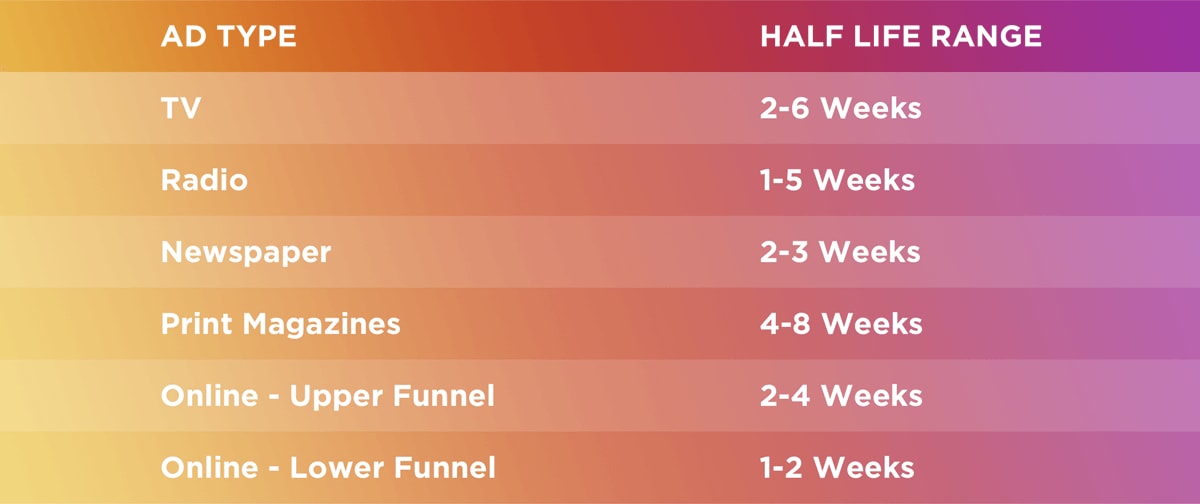
Table defining the half life range of ad effectiveness among different advertisement medias for a company.NOTE: Upper funnel means ads delivered to a general audience on a high-traffic web page. Lower funnel means ads targeted to specific people in the market for what you’re selling.

Upper funnel ads outlast their lower funnel counterparts because they’re seen by more total people and more uninitiated people—those who weren’t previously aware of the offer. Typically, the fewer, but more targeted recipients of lower funnel ads are already product-aware, and they’ll either immediately act on or ignore the ad.

Before jumping to conclusions or applications, we should ask, “Why such differences between and within each category?” There are many reasons.

  • First, we’re not looking at homogenized results. These decay rates are based on a variety of different ads, products, industries, and target audiences. We shouldn’t be surprised to find irregularities in that kind of salmagundi.
  • Second, some ads are more flavorful than others. Think 30-second TV commercial vs. static web banner. No matter how good the banner is, it can’t compete with video, audio, and the full storytelling power of a commercial.
  • Third, you can’t know exactly when some ads will be consumed. TV, radio, and especially, magazines fall into this category. They’re harder to track. There’s no running count of clicks or impressions. You know when ad goes out, but not when someone will see or act on it. A patient at the dentist may pick up a magazine five months from now, see an ad, and decide to buy.
  • Fourth, the ingredient quality varies. Excellently prepared and packaged ads will outlast their generic or half-baked counterparts. Like we’ve said before, there’s no substitute for grade A content.

Even with those issues and variations, Steve’s half life benchmarks give us a good starting point for determining how long our ads will keep. If we begin by figuring the average decay rate for each ad type, here’s what we get.
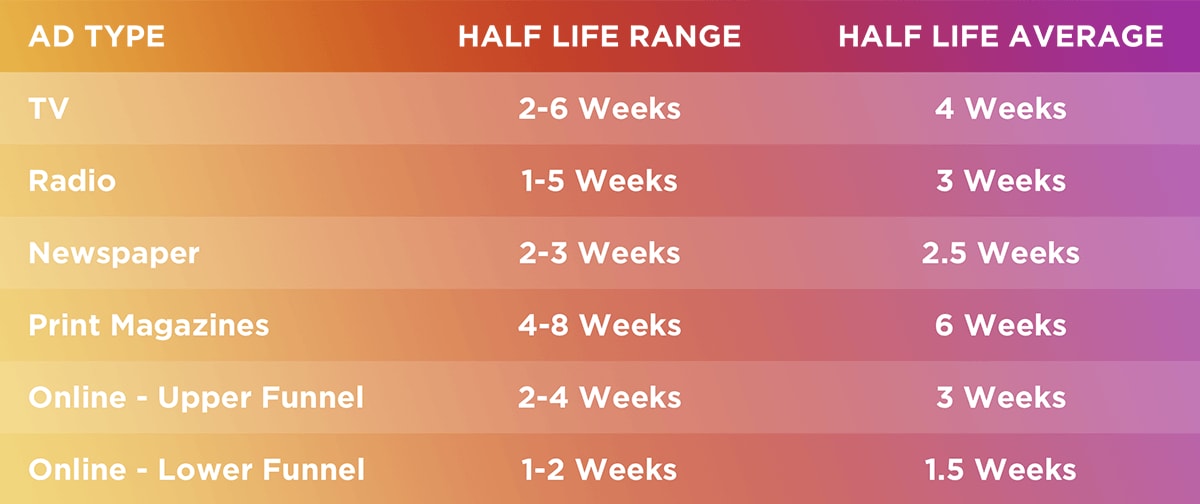
Another table, defining the half life range and average of ad effectiveness for different media types.

Based on those averages, we can estimate that the typical shelf life of a campaign is six to eight weeks. Clearly that measurement isn’t set in stone—set in jello, maybe—but after that long, every ad type except magazines has lost 3/4 or more of its potency, and even magazines have lost over half.

So as a rule of thumb, campaigns expire after six to eight weeks, but some ads in those campaigns expire even faster—especially those online. So how do we get ads with shorter shelf lives to last to the end of a campaign? Simple. We introduce new ingredients or substitutes.

Like Geico, we can cook up different flavors and variations of the same basic idea, and it doesn’t have to be a grueling process. Sometimes it’s as easy as rewording a headline or replacing an image. The key is to keep some fresh ingredients in what you’re serving up.

Again, as any good recipe will tell you, your own cook times will vary. The measurements we’ve provided are a baseline, but you’ll need to regularly monitor and make adjustments as you go. That brings us our final point—not just of this article, but the whole series.

Measuring like a chef is no cakewalk.

After four helpings of the subject, that much should be plain—perhaps even painful considering the the portion sizes of information and work involved. If that’s the case, know we can relate. Really. Even after doing this for years, peeling back all the layers of ad measurement can sometimes still bring a tear to the eye.

That’s to be expected, especially when you’re first starting out, but don’t let it discourage you. No one becomes a head chef or expert advertiser (if there is such a thing) overnight. With time and practice, you can master this skill.

And for anyone who’s convinced they really can’t measure up, we’d still say not to give up. If you can’t stand the heat, don’t get out of the kitchen. Just get someone to join you. We’d be glad to come alongside and prepare something great together.

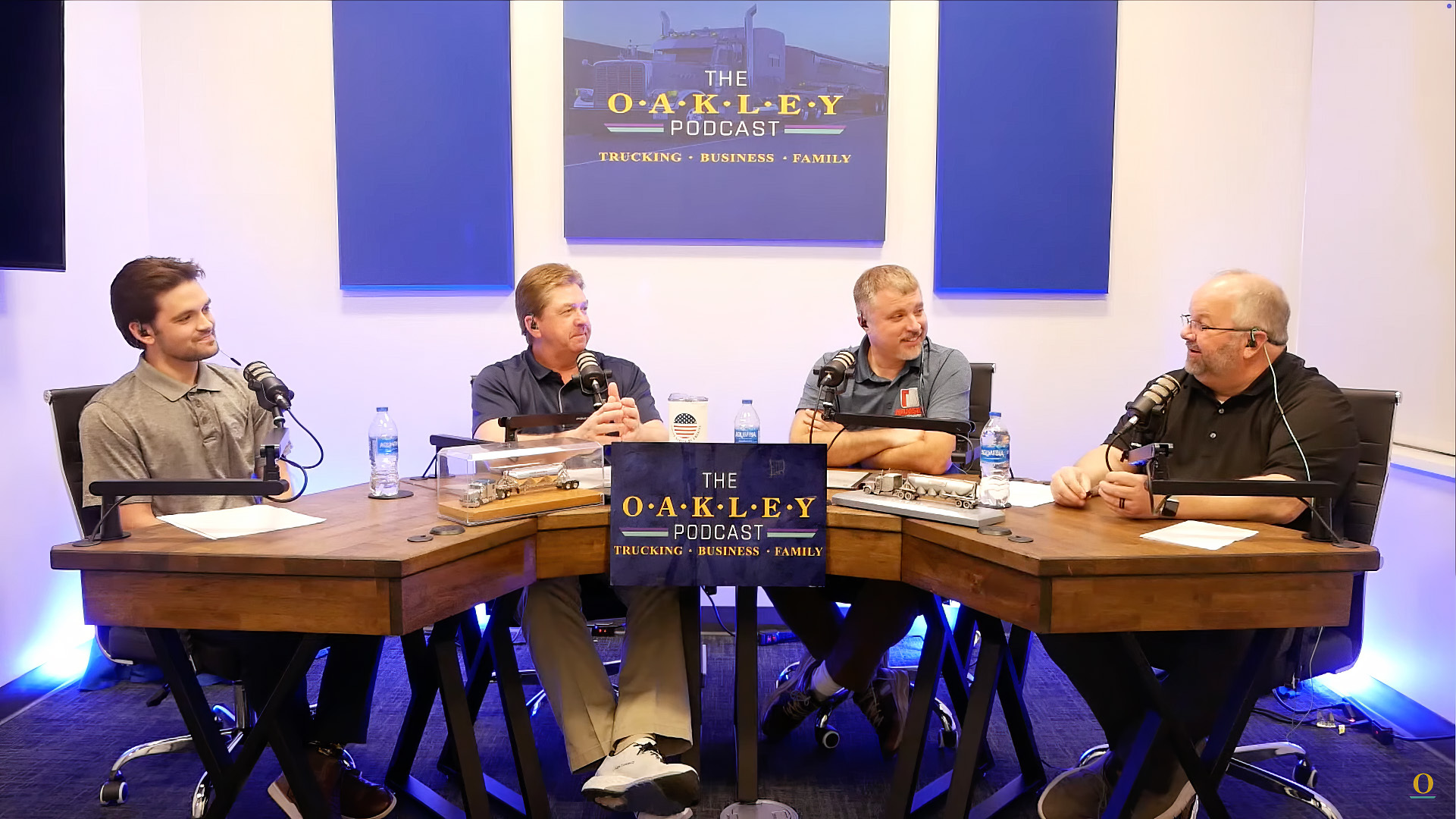
Two people grabbing food from a buffet table.

Share this article:
Measure Advertising Like a Chef, Part 3

Measure Advertising Like a Chef, Part 3

2017-04-10 Marketing and Advertising
← Back to Blog

In case you arrived fashionably late to this meal, er, series, here are parts one and two.

Time it right.

A Zassenhaus timer with 15 minutes set.

In cooking, the timing makes or breaks a dish just as much as the ingredients or measurements. It does the same in advertising. Undercook a campaign, and it’s too rare to be consumed. Overcook it, and people get burnt out (not to be confused with burnt ends which can be eaten and enjoyed indefinitely).

Burnt ends of steak.Mmmh, so good.

Although campaigns and their cook times will vary, there are some good rule-of-thumb timelines we can follow for

1. What to measure when and
2. How long to run a campaign overall

We’ll cover the first of these in this article and the second in the next.

Assisting us this time around is another completely cooked-up restaurant, Chop and Go—a popular lunch stop in Chicago’s West Loop known for slow-cooked meaty eats served quick—or you might say “chop-chop”. Their business depends on impeccable timing, so they’ll help illustrate a thing or two about getting it right. Plus, it gives us an excuse for this meme.

Arnold Schwarzenegger yelling to get to the choppa.

What to Measure When

Our last article discussed several advertising metrics we should track, but didn’t say how often, so here are some helpful guidelines.

Daily, track your traffic.

People line up outside of a restaurant.

Chop and Go counts its customers each day, and they especially watch for sudden pickups or dropoffs. An extra busload of people on Monday is probably just an extra bus-y day. But if the bus returns Tuesday and Wednesday, then a new bus-iness trend is emerging, and the restaurant needs to catch it (and maybe start splitting tips with the driver...which would give a whole new meaning to the term “bus boy.”)

Similarly, we should check website traffic—how many people are arriving to which pages—on a daily basis. We’re mainly watching for those spikes and dips. A sharp decline, in particular, could indicate a technical malfunction or site crash, and we can get back up and running a lot faster if we’re paying attention.

Along with how many people are coming, check where they’re coming from—what Google Analytics calls your “Acquisition” report. This provides an overview of your different channels of traffic such as search, social, direct, referral, etc. It also lets you see the specific web addresses within each.

Take, for example, referral traffic. That’s where another site links and directs visitors to yours—kind of like that bus driver taking people to Chop and Go. If the restaurant is getting loads and loads of new traffic by bus, they could make a deal with the driver to keep bringing people.

Not really. That’s illegal. But what’s not illegal is checking your channels, looking for any that are really delivering, and then optimizing them. Of course, it doesn’t have to be referral traffic. It could be any source—from paid search to email—that’s bringing an unexpected number of visitors.

Before getting carried away, here’s the big speed bump. You should mainly track traffic, not tinker with your ad mix on a daily basis. You’re looking for significant deviations from the norm—good or bad—that you’d need to act on right away. If everything’s going more or less as expected, just let it ride.

Weekly, keep a lookout for campaign metrics.

A soldier eating in uniform.Admittedly, MREs don't qualify as fine dining, but this soldier does look like a sharp sentry.

On Monday, Chop is launching their new JI Gyros On The Go—pita sandwiches that are ready on the double for hurried customers and for which 10% of the proceeds go to the Wounded Warrior Project.

To send the word out, they’re kicking off a multi-channel campaign that includes:

  • Posters going up and flyers going out for the next few weeks
  • A series of social media posts starting Monday
  • An email blast to customers on Tuesday
  • A radio interview Wednesday morning and a blog post that afternoon
  • And a month of paid search, display, and social ads

Eager as Chop may be to see campaign results right away, they know it doesn’t make sense to check them until all the different parts are mobilized. That’s just the nature of a campaign. It’s not a one-time blitz, but a series of coordinated activities across different places and times. That’s why it’s best to wait and review results weekly. Otherwise, we’ll fail to see the combined effects of different moves.

Of course, the metrics to check each week depend entirely on the campaign goal. For Chop, the initial goal is product awareness. That means they’ll pay close attention to ad impressions, likes and shares on social media, email open rates, blog post views, and similar indicators of recognition.

But campaigns can have several other objectives. For example, if the goal is to...

...convey more traffic to your site, then you should focus on clicks and click-through rates, search terms people are using, and corresponding search keywords you’re using.

...win more conversions, then monitor and marshall the campaign around the messages, calls to action (CTAs), and channels that are converting the best. Also be sure to route ads to relevant landing pages with clear CTAs.

...fortify your ROI, then focus on conversions, but also compare the progress of the current campaign with other present or past efforts. This provides an eagle eye view of which approaches and strategies consistently win, lose, or stay neutral.

Weekly tracking works not just because it’s long enough to see combined results, but because it’s short enough to react quickly. If Chop discovers they’re getting thousands of impressions on social media, but just a fraction of those through paid search, they can devote more resources to the former and make course corrections to the latter. That way, they’re not letting opportunities or dollars get away. Speaking of money...
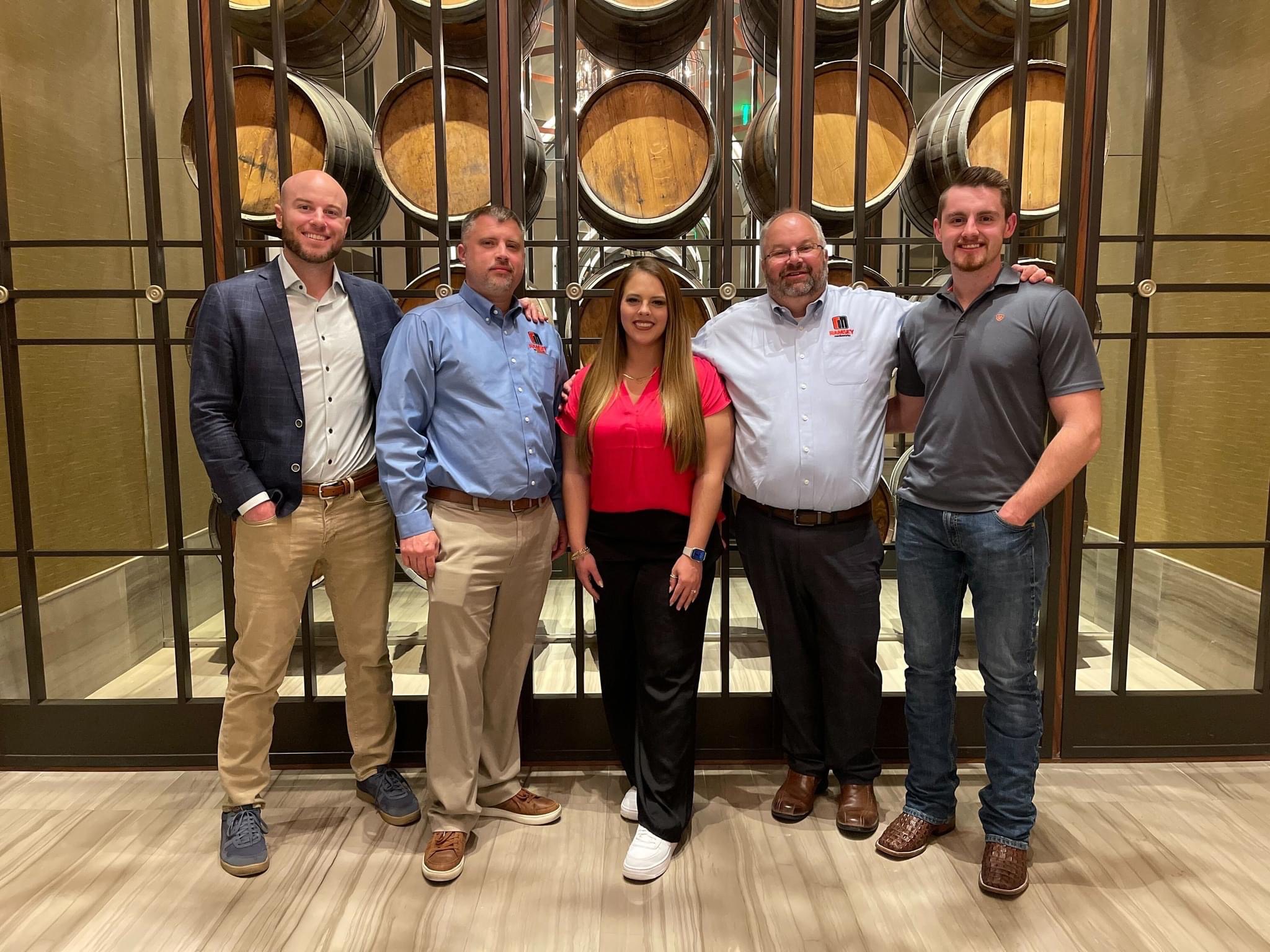
Monthly, take stock and make changes.

Man budgeting and checking his finances.

Like most businesses, Chop does the bulk of its budgeting and buying on a monthly basis. Looking ahead to the specials planned and sales projected, they make arrangements with food suppliers, secure volume discounts, line up regular deliveries, eat cetera, eat cetera.

Although they inevitably make weekly adjustments—an extra case of brisket on Wednesday or another 50 pounds of onions on Friday—they do a more substantial reconciliation and variance report at month-end. And they use that information to update next month’s plan.

Running a campaign is very similar. Weekly, you make those changes to meet unexpected opportunities or problems. But monthly, you take a closer look at how actual results matched up to the projected plan and budget. And based on that reckoning, you change the plan as needed.



For Chop, that definitely means canceling next month’s supply of fresh-caught Oklahoma spoonbill. It’s been on the menu four weeks, and has yet to reel in any sales (for reasons that are obvious if you’ve ever had the misfortune of tasting one).

Likewise, after a full month, you can cut loose the spoonbills from your ad plan and cast your budget in a better direction. Before this slippery mixed metaphor of finance and fishing gets completely away from us, we’d better move on to the final point, which is...

Finally, review and critique your ROI.

Craig Claiborne seated in a diner at a typewriter.Notable restaurant critic and food journalist, Craig Claiborne, working on a review.


No one’s surprised when a food critic publishes a review—even a bad one.

After what I can only describe as a nauseating, sea-sick dining experience at Chop and Go, I assure you they’d be better off serving the fish bait rather than the spoonbill it caught.
—Greg Glaiborne, Faux Food Critic

We would be surprised, however, if Greg published his review halfway through the meal. (Okay, maybe not in this case. But normally.)

Sometimes we make a similar mistake in advertising—prejudging a campaign before it’s done. While the daily, weekly, and monthly numbers tell us a lot, we can’t know the full effects until we finish and review the campaign in light of other data—whether it’s sales, customers, or hires. Like we discussed last time, that requires bringing together information from different systems.

That’s Chop and Go’s plan with their Gyros campaign. They’ve baked all the right traceable ingredients into their promotional materials—everything from URL tags in web ads to promo codes in their emails. In conjunction with their sales data, they’ll be able to discern which ads led to impressions, conversions, sales, and return on dollars invested.

Of course, this brings up the question: how do you decide when a campaign is done? And that’s what we’ll discuss in the next article.

Share this article:
Extra in the Ordinary: Cloud

Extra in the Ordinary: Cloud

2017-04-03 Extra in the Ordinary
← Back to Blog

A large cumulus cloud.

This is a cloud.


A large elephant.

A hundred of these are as light as a cloud.

An average cumulus cloud weighs 1.1 million pounds. That's like having a hundred elephants floating overhead. Of course, you'd have to seek shelter immediately if they started falling.


A creative viewpoint finds what's extra in the ordinary.

Share this article: